There is a peculiar tragedy unfolding silently in yoga studios around the world one that the Instagram feeds and wellness influencers will never capture. Practitioners arrive on their mats with hungry eyes and depleted bodies, believing that sixty minutes of flowing movement will restore what they’ve lost during the previous twenty-three hours. Some return week after week. Others vanish, their mats gathering dust, their intentions dissolving into the very exhaustion they came to heal.
This is the hidden energy crisis in modern yoga. On the surface, it appears to be a simple failure of consistency a lack of discipline, a wavering commitment, a prioritization problem. But beneath this surface narrative lies something far more subtle and far more troubling: practitioners are being systematically drained of the very energy they need to sustain their practice. They are caught in a paradox so profound that many cannot even articulate it. The crisis is not merely physical or psychological. It is energetic. It is spiritual. It is the slow, almost invisible depletion of prana the animating life force that yoga itself claims to cultivate
The Invisible Hemorrhage: Energy in the Modern World
Before understanding the crisis within yoga, we must first recognize the crisis without. The modern human exists in a perpetual state of high alert. Our nervous systems are designed for occasional stress the sudden threat, the brief exertion, the temporary challenge. But we have constructed a civilization that demands constant vigilance.
Our screens glow before our eyes are even open. Notifications arrive like tiny electrical shocks throughout the day, each one a micro-jolt of cortisol that keeps our bodies in a shallow state of fight-or-flight. Social media has become an architecture of comparison and validation-seeking, where our self-worth is algorithmically determined and our attention is the commodity being harvested. We are rarely if ever truly resting.
The consequence? A normalization of fatigue so complete that most of us no longer recognize it as abnormal. We accept tiredness as the baseline condition of modern life. We consume caffeine to mask it, we scroll to numb it, we push through it. What has been lost, almost entirely, is the capacity to feel what energy depletion actually means at the subtle level.
Read This Article Also: How to Prepare for Any Exam: Without Losing Consistency with Spirituality A Deep Dive
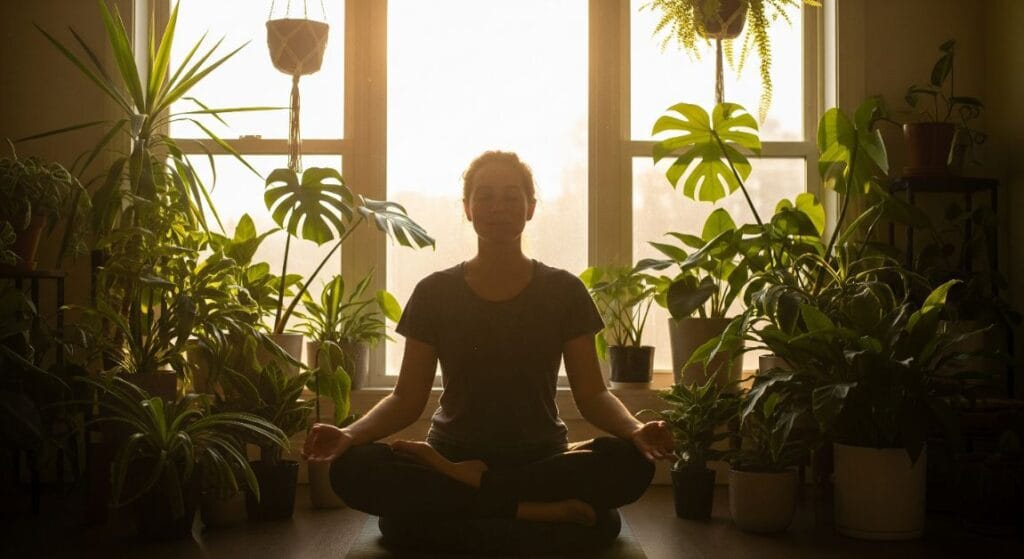
This is the first crisis: we are running on fumes and calling it normal
Enter yoga, often positioned as the solution to this very problem. Practitioners arrive believing the practice will restore what has been lost. And in a shallow way, it sometimes does. A vinyasa class can produce an endorphin rush, a meditation session can offer temporary quietude, a restorative practice can coax the nervous system toward parasympathetic activation. But here is the uncomfortable truth that few teachers dare to speak: these are band-aids on a hemorrhage.
The prana cannot be genuinely restored in a ninety-minute bubble of peace if the practitioner returns to a world designed to extract every drop of it. The energy cannot flow freely through channels that are deliberately constructed to remain blocked. And this is where the paradox deepens.
The Paradox: Yoga as Energy Drain
Consider the traditional understanding of prana as presented in yoga philosophy. Prana is not merely breath or physical vitality it is the invisible thread that animates all life, the constant motion that gives rise to consciousness itself. It governs not only physical energy but emotional wellness and spiritual clarity. A balanced pranic flow creates harmony between mind, body, and spirit, unleashing creativity and vital enthusiasm.
But in modern yoga culture, something has shifted.
The discipline of yoga the tapas, or inner fire that once burned through obstacles and transformed practitioners has been repackaged as a consumable experience. The practice that was meant to build profound resilience through long-term commitment and deep respect (the three pillars of Yoga Sutra 1.14: dirghakala, nairantarya, and satkara) has instead become another item on the endless to-do list. Another commitment competing for energy that practitioners don’t have.
This creates a vicious cycle. A practitioner, already depleted by the demands of modern life, arrives at their yoga class seeking energy. But they are asked to show up with consistency, to push through resistance, to “honor their commitment” even on days when they are utterly exhausted. This is where the philosophy of tapas becomes distorted. Tapas is not punishment; it is not grinding through fatigue.
True tapas is disciplined action aligned with purpose the deliberate redirection of heat and energy toward transformation. When a depleted practitioner forces themselves onto their mat out of guilt or obligation, they are not practicing tapas. They are practicing depletion. They are burning through the last reserves of prana in the name of spiritual discipline.
And the teachings themselves, often misunderstood or incomplete, can become complicit in this energy theft. When teachers speak of consistency without also teaching discernment when they encourage practitioners to “show up no matter what” without acknowledging that sometimes true wisdom is knowing when to rest the practice becomes another tyranny.

The Role of Ego: When Practice Becomes Performance
There is another layer to this crisis, one that modern yoga studios are particularly skilled at ignoring: the inflation of ego that can accompany spiritual practice. Counterintuitively, research has shown that yoga and meditation, rather than quietly diminishing the ego as promised, may actually amplify it. The more a practitioner focuses on the self even for supposedly transcendent purposes the more self-central that practitioner becomes.
In a culture obsessed with optimization, quantification, and personal branding, yoga has become yet another arena for self-enhancement. The perfect downward dog, the effortless handstand, the posts from yoga retreats in Bali these become markers of a self that is supposedly evolving spiritually, when in reality they are markers of a self that has become increasingly absorbed in its own image.
The original purpose of pratyahara sense withdrawal was to free consciousness from the tyranny of sensory stimulation and habitual patterns, to quiet the mind so that intuition could awaken. But modern yoga has largely inverted this. Practitioners are encouraged to feel their bodies acutely, to experience their sensations intensely, to become hyper-aware of every micro-movement and energetic sensation. Under the guise of “presence,” this is often just another form of sensory overstimulation the same fragmentation of attention that dominates their lives off the mat.
And there is a deeper ego trap still. When practitioners unconsciously use spiritual practice to bypass their unresolved psychological wounds using yoga philosophy as a spiritual anesthetic for real pain they are no longer practicing authentic yoga. They are enacting their ego’s most sophisticated defense: the use of transcendence to avoid transformation.
This spiritual bypassing drains energy because it requires constant effort to maintain the illusion. The practitioner must work harder and harder to keep the spiritual narrative intact, all while the underlying wounds continue to fester. The result? Energy is not accumulated; it is consumed. The practice that was meant to build a reservoir of prana becomes another mechanism for its depletion.

The Disconnect Between Philosophy and Practice
What makes this crisis particularly insidious is how well-hidden it is beneath layers of legitimate yoga philosophy.
In the Yoga Sutras, Patanjali speaks to the very foundation of lasting practice: “Your practice becomes well-rooted when it is attended to diligently for a long time, without ceasing.” This is true. Consistency is essential for genuine transformation. But the how of consistency is almost never discussed with the nuance it deserves. There is a vast difference between the consistency that grows from sustainable discipline and the consistency that emerges from compulsion and fear.
When a practitioner shows up to their mat because they are addicted to the neurochemical hit of practice, or because they are anxious about falling away from their identity as a “yoga person,” or because they are driven by the fear of becoming the person they were before this is not the consistency Patanjali described. This is a sophisticated form of bondage masquerading as liberation.
Similarly, the philosophy of tapas one of the five niyamas is presented in modern yoga almost as a kind of spiritual fitness craze: “Burn away your impurities! Ignite your inner fire! Transform through austerity!” What is lost is the essential understanding that tapas must be balanced, intentional, and always linked to a higher purpose. When tapas becomes mere willpower-grinding in service of an ego identity, it becomes the very opposite of its intended function. Instead of liberating energy, it imprisons it.
The same confusion surrounds the balance between effort (sthira) and ease (sukha) in practice. For a genuinely depleted practitioner, this balance is not a 50-50 split. It is not even possible to achieve in the short term if the practitioner returns immediately to a lifestyle designed to extract prana. Yet modern yoga teachers, operating within a capitalist framework that demands visible progress and tangible results, rarely teach this radical honesty.
The Unseen Architecture of Blockage
Beyond philosophy and ego lies a reality that yoga has always understood but that modern practitioners have largely forgotten: energy blockages. In the traditional understanding of the chakra system, when prana cannot flow freely, the body and mind begin to deteriorate. A blocked root chakra the seat of safety and survival creates a nervous system locked in chronic anxiety, exhausting the immune system. A blocked heart chakra stores unprocessed emotional trauma, requiring constant energy to suppress. A blocked solar plexus the seat of personal will leads to chronic suppression of authentic power, creating internal conflict that hemorrhages vitality.
Modern practitioners often have comprehensive blockages. They live in environments that trigger root chakra fear (financial instability, social fragmentation, existential uncertainty). They navigate relationships through social media, leaving their hearts chronically constricted. They surrender their agency to algorithms and systems designed to override their will. By the time they arrive at yoga, they are energetically fractured in multiple places. And here is the painful truth: yoga asana and pranayama alone cannot unblock chakras that are congested by genuine unresolved trauma, chronic stress, and systemic powerlessness. To believe otherwise is to fall into spiritual bypassing.

Rebuilding the Practice: Authenticity Over Ideology
What would change if yoga studios and teachers began to prioritize honest assessment over inspirational messaging? What if consistency were redefined not as showing up rigidly on a predetermined schedule, but as showing up authentically to where the practitioner actually is?
This is not a plea for laziness or a rejection of discipline. Rather, it is an invitation to reconsider what discipline truly means. Real tapas involves reflection and restraint, not merely willpower. It means asking: Is this practice genuinely restoring my energy, or am I consuming the last reserves to feed an identity? Am I practicing in alignment with my actual capacity, or am I performing consistency for others?
A truly responsive practice would honor the fluctuations of energy that are natural to human existence. There are seasons of deep practice and seasons of gentle restoration. There are times to push through resistance because the resistance itself is an obstacle to freedom and times to honor the body’s wisdom when it says “no more.” The ability to discern the difference is itself a profound yogic skill.
Similarly, the philosophy of prana management must move beyond the simplistic notion of “more practice = more energy.” If genuine energy restoration is the goal, then addressing the sources of energy depletion in daily life becomes unavoidable. This means cultivating what pratyahara truly offers: a genuine withdrawal from the sensory overstimulation that characterizes modern life, not through escape but through authentic presence.
It means developing the capacity to say no to notifications, to step away from social comparison, to create genuine silence and solitude not as luxuries but as necessities. It means recognizing that the inner fire of tapas cannot burn if it is constantly wet by the rain of modern distractions.

The Deeper Truth: Energy as a Measure of Alignment
There is a profound teaching hidden within this crisis: energy is a truth-teller. When practitioners consistently feel depleted by their practice, when they struggle to maintain consistency despite believing in yoga’s transformative power, when they find themselves oscillating between desperate commitment and complete abandonment their energy is trying to communicate something.
- It may be saying: “This practice is not aligned with your actual needs right now.”
- It may be saying: “You are still carrying unresolved trauma that this practice alone cannot heal.”
- It may be saying: “Your yoga has become another performance, another way of avoiding yourself.”
- It may be saying: “The life you are living is fundamentally depleting, and no practice can overcome a structure designed for exhaustion.”
The invitation is not to abandon yoga, but to listen more deeply to what the energy crisis within it is revealing. The practice was never meant to be a band-aid solution for a broken system. It was meant to be a path toward genuine transformation a path that requires not just physical dedication but a complete reorganization of how we understand energy, effort, consistency, and purpose.
When practitioners reclaim this depth when they use yoga not as another way to drain themselves in pursuit of an ideal self, but as a tool for genuinely understanding and honoring the self that exists right now then prana begins to flow again. Not as a product of forcing consistency, but as a natural consequence of practicing in truth.
The hidden energy crisis in modern yoga is ultimately an invitation. It is an invitation to examine whether our practice is truly serving our liberation or whether it has become yet another mechanism of bondage. It is an invitation to reconsider what commitment means, what discipline actually builds, and what consistency serves. And perhaps most importantly, it is an invitation to trust that the deepest wisdom often lies not in doing more, but in understanding more deeply what we are already doing and whether it is genuinely leading us home.
Read This Article Also: Brahmacharya in Yoga: How Energy Conservation Builds Consistent Practice
Conclusion:
The hidden energy crisis in modern yoga is not a failure of the practice it is a reflection of the world we now live in. Yoga was never meant to compete with exhaustion, overstimulation, ego pressure, or the constant demands of modern life. Yet many practitioners unknowingly step onto their mats already emptied from within, expecting the practice to refill what their lifestyle continuously drains.
Real transformation does not come from forcing consistency, pushing through fatigue, or performing spirituality. It comes from listening deeply to our own energy, honoring our inner cycles, and allowing yoga to become a space of restoration instead of another arena for struggle. When we move from performance to presence, from pressure to honesty, and from depletion to alignment, yoga once again becomes what it truly is a path back to ourselves.
The crisis is real, but it is also an invitation: to slow down, to reconnect, and to practice in a way that nourishes rather than empties us. When we choose authenticity over ambition, prana begins to flow again. And in that flow, the true purpose of yoga is rediscovered not as a trend, not as a task, but as a living, breathing journey toward wholeness.
About The Author

 Creator Adarsh