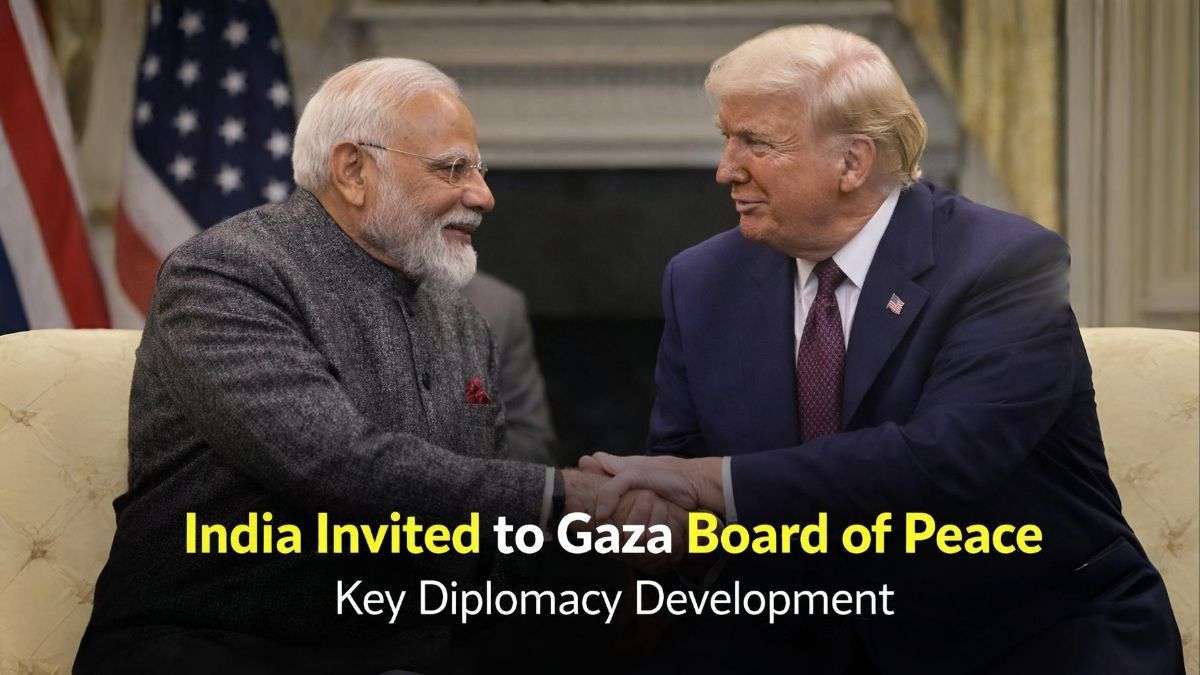
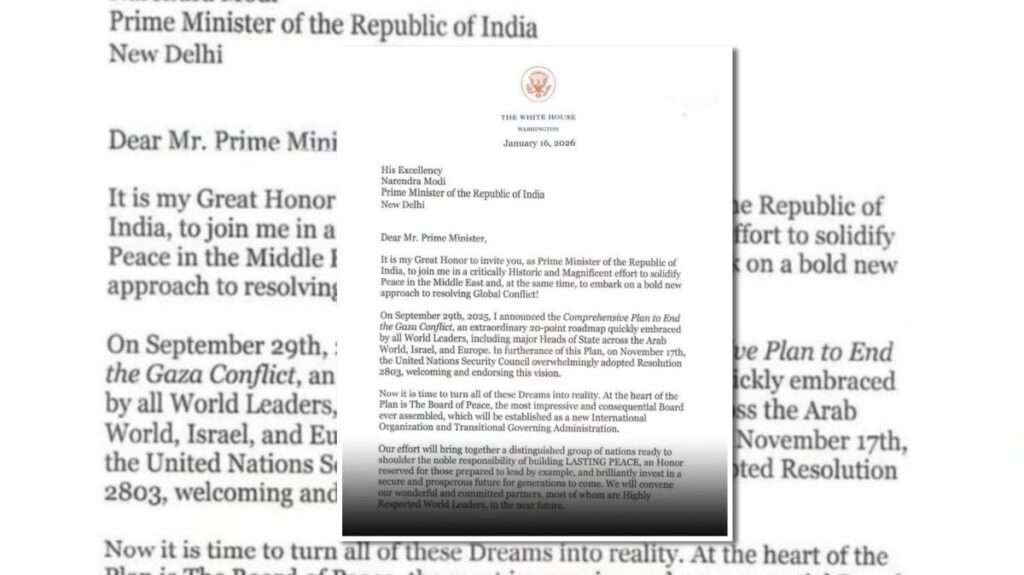
In a development that has drawn global attention, former United States President Donald Trump has formally invited India to join a proposed international body known as the Board of Peace, aimed at overseeing post-war governance and reconstruction in Gaza.
The invitation, reportedly sent through official diplomatic channels, places India among a select group of countries being considered for a significant role in shaping the future of the conflict-torn region.
This move comes at a sensitive moment in global politics, as the Israel–Hamas conflict continues to influence diplomatic alignments, humanitarian priorities, and international security discussions.
Understanding the ‘Board of Peace’ Proposal
The Board of Peace is envisioned as a new international mechanism designed to manage Gaza’s transition from conflict to stability. According to available information, its core responsibilities would include supervising reconstruction efforts, supporting administrative governance, and coordinating international assistance once hostilities end.
The proposal gained momentum after the United Nations Security Council adopted a resolution welcoming broader international cooperation for Gaza’s future.
While the Board is linked to this diplomatic framework, it is important to note that it is not a permanent United Nations body. Instead, it is being shaped as a coalition-based initiative, largely driven by the United States with participation from willing partner nations.
READ THIS: Donald Trump Says Ukraine Is Delaying Peace Talks
India’s Invitation: A Strategic Signal
India’s inclusion in the invitation list is not incidental. Over the years, India has maintained a carefully balanced position in the Middle East, sustaining diplomatic ties with Israel while consistently supporting the Palestinian cause through dialogue and humanitarian assistance. This dual approach has earned India credibility across multiple sides of the conflict.
An invitation to the Board of Peace reflects recognition of India’s growing global influence and its reputation as a responsible stakeholder in international peace efforts. However, as of now, India has not officially confirmed whether it will accept or decline the invitation.
Government sources indicate that the proposal is under evaluation, with attention being given to its mandate, legal framework, and long-term implications.
Other Countries and Diplomatic Sensitivities
Several other nations including Australia, Canada, Egypt, Turkey, Argentina, France, and Pakistan have reportedly received similar invitations. At the same time, the proposal has triggered diplomatic sensitivities. Reports suggest that Israel has expressed reservations about the participation of certain countries, highlighting the political complexities involved in forming such a body.
These dynamics underline the fact that the Board of Peace, while ambitious in intent, faces significant challenges in achieving broad consensus and operational clarity.
Why This Matters for India
For India, the decision carries both opportunity and risk. Participation could strengthen its role as a global peace facilitator and enhance its diplomatic presence in West Asia. It could also allow India to contribute meaningfully to humanitarian reconstruction and stability efforts.
On the other hand, joining a politically sensitive body without a clearly defined structure could expose India to diplomatic friction or unintended strategic entanglements. This is why New Delhi’s cautious approach so far aligns with its long-standing foreign policy principle of strategic autonomy.
READ THIS: Donald Trump and the Nobel Peace Prize – What Is the Truth?
The Bigger Picture
The Board of Peace proposal highlights a broader shift in global diplomacy, where ad-hoc coalitions and issue-based groupings are increasingly being explored alongside traditional international institutions. Whether this model succeeds or struggles will depend on transparency, inclusivity, and genuine cooperation on the ground.
For now, India’s invitation itself is a significant signal of its rising stature in global affairs. The final decision whenever it comes will be closely watched, not just in the Middle East, but across the international community.
Conclusion:
India’s invitation to join the proposed Gaza Board of Peace is real, diplomatically significant, and still unfolding. While no final commitment has been made, the development underscores India’s growing relevance in global peace initiatives.
As discussions continue, clarity on the Board’s authority, legitimacy, and objectives will be crucial in determining whether participation aligns with India’s national interests and long-term foreign policy vision.
“India’s invitation to the Gaza Board of Peace marks a notable moment in its evolving role in international diplomacy.”
About The Author