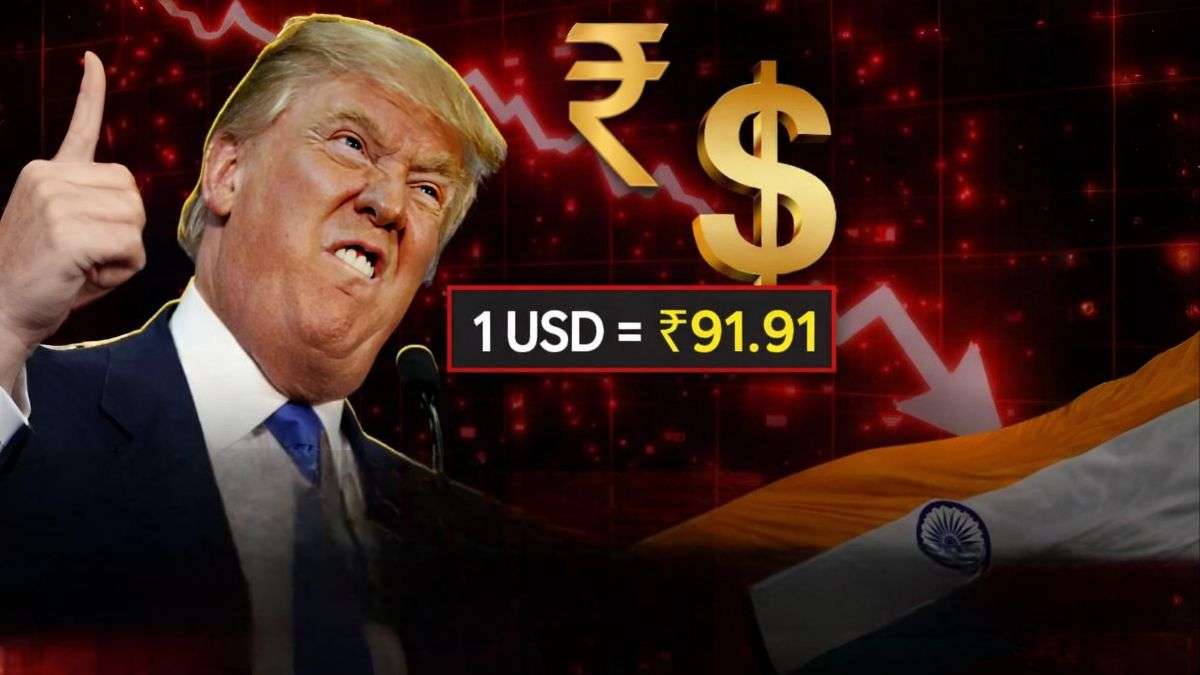
The Indian rupee has recently slipped to one of its weakest levels against the US dollar, crossing the ₹91 per dollar mark in the foreign exchange market. This sharp fall has triggered concern among investors, businesses, and the general public, especially after viral posts claimed that $1 now equals ₹91.91.
But what is the real situation? Is this truly a historic low? And more importantly, why is the rupee falling so fast?
What Is the Current USD to INR Situation?
In recent trading sessions, the Indian rupee has been hovering in the ₹91–₹92 range against the US dollar. While exchange rates fluctuate every minute, this level represents one of the weakest phases for the rupee in India’s financial history.
Such movements are not sudden accidents. They reflect deeper global and domestic economic pressures that have been building for months.
Is ₹91+ an All-Time Low for the Rupee?
The term “all-time low” needs context.
- The rupee has touched similar levels earlier in late 2025
- Recent sessions pushed it slightly further, creating new intra-day lows
- Forex markets change constantly, so records are often broken by small margins
So while ₹91.91 is not a permanent fixed rate, it does reflect a historically weak phase for the Indian currency.
READ THIS: fastest growing economies 2026
Why Is the Indian Rupee Falling Against the Dollar?
Several strong factors are working together:
1. Strong US Dollar Globally
The US dollar has strengthened worldwide due to higher interest rates and strong demand for safe assets. When the dollar rises, most global currencies including the rupee weaken.
2. Foreign Investor Outflows
Foreign institutional investors have been pulling money out of Indian equity and bond markets. When investors exit, they convert rupees into dollars, increasing dollar demand and pushing the rupee down.
3. Rising Import Costs
India imports large quantities of crude oil, electronics, and industrial goods. Higher import bills increase demand for dollars, putting additional pressure on the rupee.
4. Global Economic Uncertainty
Geopolitical tensions, trade disputes, and fears of global slowdown make investors cautious. In such situations, money usually flows toward the US dollar instead of emerging market currencies.
5. Limited Currency Intervention
The Reserve Bank of India manages volatility but does not defend a fixed exchange rate. Allowing gradual depreciation helps preserve foreign exchange reserves.
How Does a Weak Rupee Affect Common People?
A falling rupee has mixed effects:
- Negative Impacts
- Imported goods become more expensive
- Fuel prices face upward pressure
- Foreign education and travel costs increase
Positive Impacts
- Indian exports become more competitive
- IT and service companies earning in dollars benefit
- Export-driven industries may see higher profits
Should Indians Be Worried About ₹91+ Dollar Rate?
A weak rupee is not automatically a crisis. What matters is stability, not just the number.
As long as:
- Inflation remains under control
- Foreign exchange reserves are adequate
- Economic growth continues
- the situation stays manageable.
Currency cycles are normal in a globalized economy, especially for developing countries like India.
What Happens Next? Future Outlook
Forex experts believe:
- The rupee may remain under pressure in the short term
- Global cues will play a bigger role than domestic news
- Any easing of US interest rates could support recovery
Long-term strength will depend on exports, investment inflows, and economic reforms.
READ THIS: Top 10 countries by youth population
Conclusion:
The Indian rupee crossing the ₹91 mark against the US dollar is a serious economic signal, but not an unexpected one. Global forces, strong dollar demand, and investor behavior are driving this trend. Understanding the reasons helps avoid panic and misinformation.
For readers, investors, and students, the key takeaway is simple: currency movements reflect economic cycles, not overnight failures.
About The Author