India’s National Anthem and the Geography of Unity: Every year on 26 January, India celebrates Republic Day, marking the day when the Constitution of India came into force in 1950. Along with the grand parade and national pride, one symbol that stands tall on this day is “Jana Gana Mana”, the Indian National Anthem. Often sung with respect, the anthem carries a deeper meaning that many overlook. It is not merely a song of praise it is a poetic representation of India’s geography, cultural diversity, and collective identity.
When and Why “Jana Gana Mana” Was Written
“Jana Gana Mana” was composed by Rabindranath Tagore in 1911. At that time, India was under British rule, and the idea of a united nation was still taking shape. Tagore chose not to describe political power or rulers. Instead, he highlighted the land, people, and regions that together formed India’s civilizational identity. The song was officially adopted as India’s National Anthem on 24 January 1950, just two days before India became a republic.
Geographical References in the National Anthem
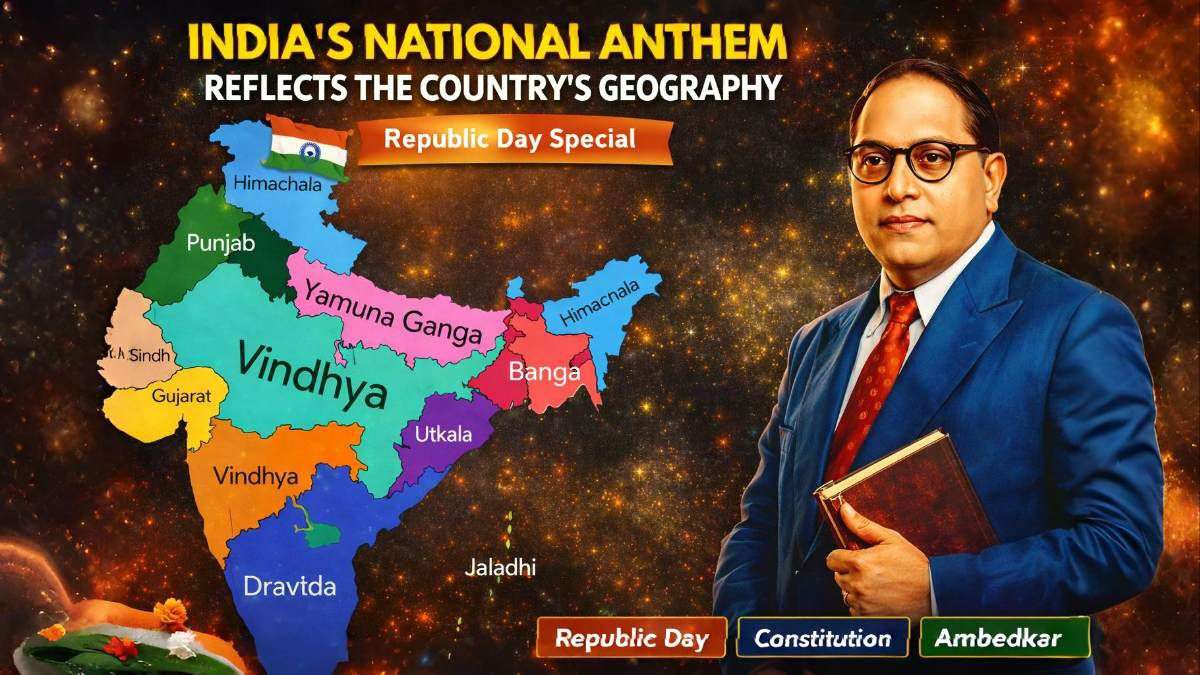
The anthem mentions several regions that symbolically represent India from north to south and east to west:
- Punjab, Sindh, Gujarat, Maratha – Representing the north-west and western regions
- Dravida – Referring to southern India
- Utkala – Present-day Odisha
- Banga – Bengal region
- Vindhya and Himachala – Central and northern mountain ranges
- Yamuna and Ganga – Sacred rivers that have shaped Indian civilization
- Uchchhala, Jaladhi, Taranga – Metaphors for oceans and waves surrounding the nation
These references are not political boundaries. They reflect the natural and cultural geography of India as understood in the early 20th century.

Republic Day and the Constitution: The Real Connection
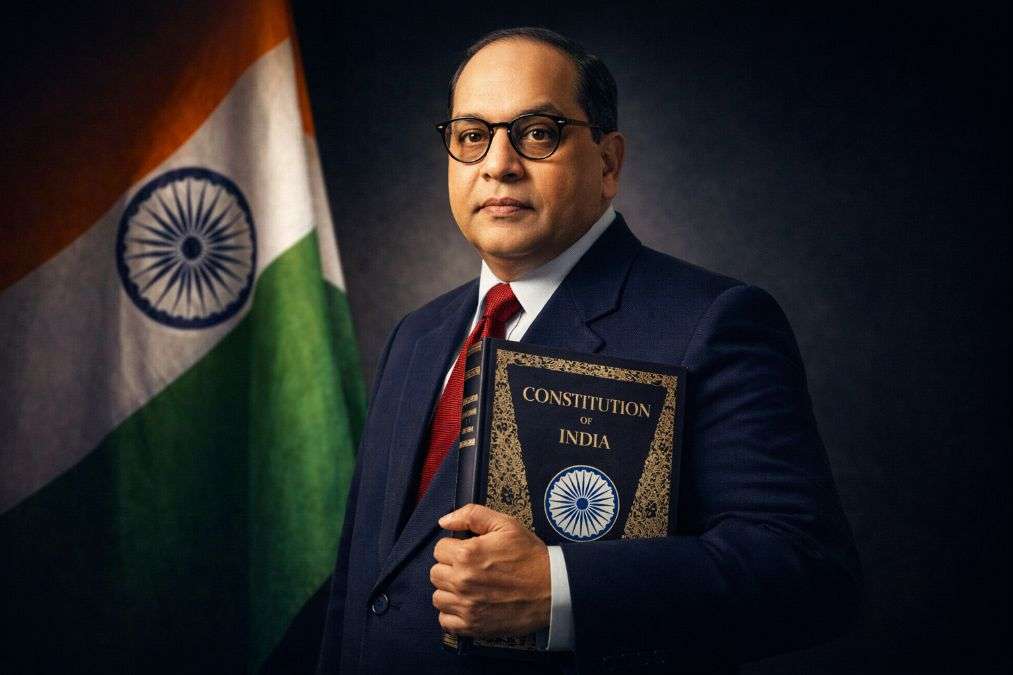
Republic Day is significant because it marks the day when India adopted its own Constitution, replacing colonial laws with a system based on justice, liberty, equality, and fraternity. The drafting of the Constitution was led by Dr. B. R. Ambedkar, who served as the Chairman of the Drafting Committee. His role was not symbolic; it was foundational. He ensured that the Constitution protected the rights of all citizens, regardless of caste, religion, language, or region.
READ THIS: prime ministers of india
Dr. Ambedkar’s Vision and the Spirit of the Anthem
While Dr. Ambedkar did not write the National Anthem, the values reflected in “Jana Gana Mana” align closely with his constitutional vision.
- The anthem speaks of unity in diversity
- The Constitution guarantees equality and national integration
- Both reject regional superiority and promote collective identity
Ambedkar believed that political democracy would survive only if supported by social unity. The anthem reinforces this idea by placing the nation above all divisions.
Why This Message Matters Today
In modern times, discussions around language, region, and identity often dominate public discourse. The National Anthem reminds us that India’s strength lies in inclusion, not uniformity. On Republic Day, when the Constitution is honoured, the anthem serves as a cultural reminder of what the Constitution legally guarantees one nation, many identities, equal respect.
READ THIS: ravindra kaushik
Conclusion:
“Jana Gana Mana” is not a political statement or a historical mystery. It is a geographical and cultural portrait of India, written with foresight and adopted at a defining moment in the nation’s journey. As we celebrate Republic Day, understanding the anthem in its true context helps us appreciate not only our past but also the constitutional values that continue to guide India today.
Frequently Asked Questions (FAQ)
1. What is the meaning of India’s National Anthem?
India’s National Anthem, “Jana Gana Mana,” reflects the country’s unity, geography, and cultural diversity through poetic regional references.
2. Who composed Jana Gana Mana and in which year?
Jana Gana Mana was composed by Rabindranath Tagore in the year 1911.
3. When was the National Anthem officially adopted?
The song was adopted as India’s National Anthem on 24 January 1950.
4. Why is the National Anthem important on Republic Day?
Republic Day marks the adoption of the Constitution, and the anthem represents national unity and collective identity.
5. What is Dr. B. R. Ambedkar’s connection to Republic Day?
Dr. B. R. Ambedkar was the Chairman of the Drafting Committee of the Indian Constitution, which came into force on 26 January 1950.
About The Author