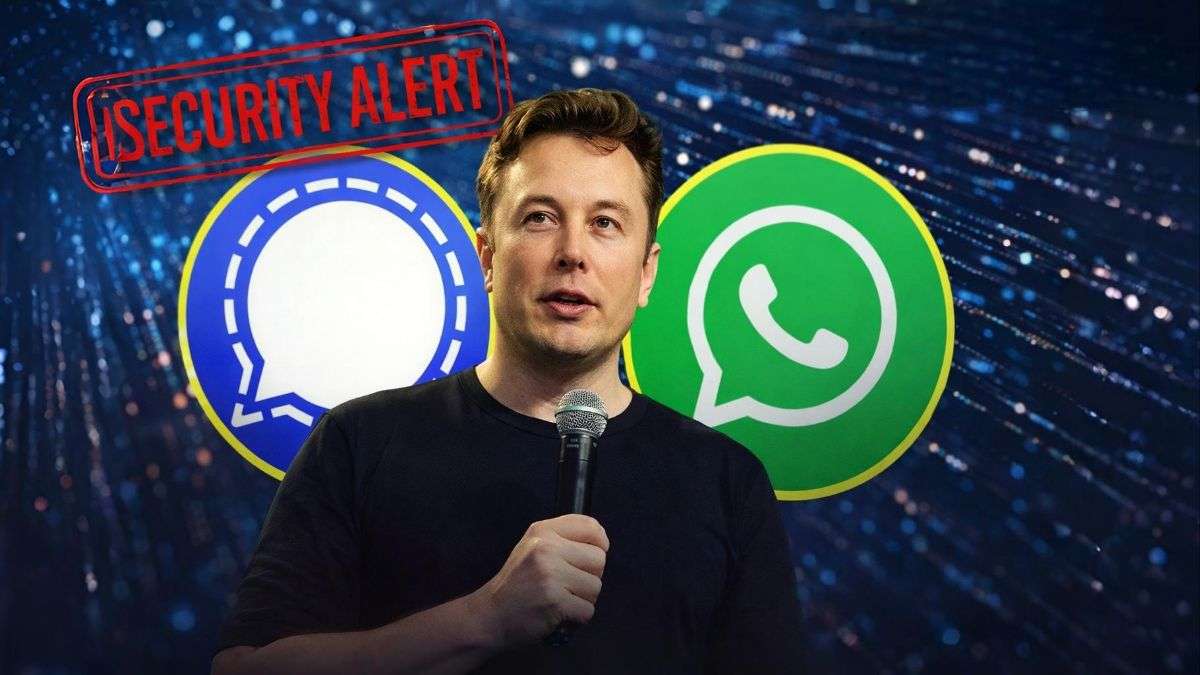
In recent days, a statement by Elon Musk has triggered widespread debate about digital privacy and encrypted messaging apps. Posting on X (formerly Twitter), Musk claimed that “WhatsApp is not secure” and even questioned the reliability of Signal, while encouraging users to adopt X Chat instead.
The statement gained traction after being linked to reports of a lawsuit against Meta Platforms, alleging misleading claims about WhatsApp’s privacy protections. This has raised an important question for users worldwide:
👉 Can WhatsApp really read private messages, or is this misinformation?
What Exactly Did Elon Musk Say?
Elon Musk publicly stated:
“WhatsApp is not secure. Even Signal is questionable. Use X Chat.”
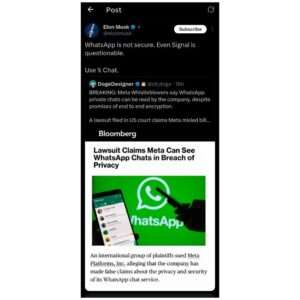
This remark was shared alongside posts referencing whistleblower claims and legal filings, suggesting that Meta may have misrepresented the privacy of WhatsApp chats.
However, it is critical to understand what is proven, what is alleged, and what is technically impossible.
The Meta Lawsuit: What Is Being Claimed?
A lawsuit filed in a US court alleges that Meta Platforms Inc. made false or misleading statements regarding the privacy and security of WhatsApp.
Important clarification:
❗ This is an allegation, not a court verdict
❗ No judgment has confirmed that Meta reads WhatsApp messages
❗ Lawsuits often challenge policies, disclosures, or edge cases, not core encryption itself
At present, no court or independent security audit has proven that WhatsApp’s end-to-end encryption is broken.
How WhatsApp Encryption Actually Works
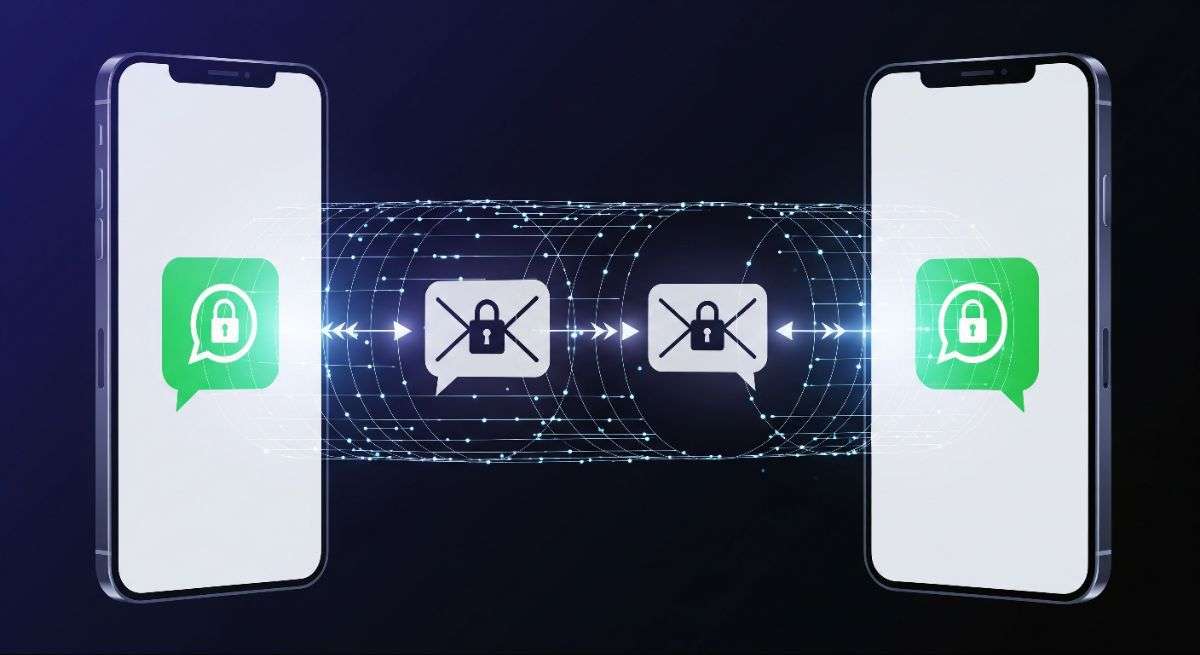
WhatsApp uses the Signal Protocol, one of the most respected encryption systems in the world.
What this means:
- Messages are encrypted on your phone
- Only the sender and receiver can read them
- Even WhatsApp servers cannot decrypt message content
✅ This encryption system is openly documented and reviewed by security researchers.
Where Privacy Concerns Actually Exist
While message content remains encrypted, privacy is more than just messages.
1.Metadata Collection
- WhatsApp may collect:
- Who you communicate with
- When you communicate
- Device and usage information
This does not include message content, but metadata can still reveal patterns.
2.Cloud Backups
If chat backups are stored on cloud services:
- They may be accessible if encryption is not enabled
- Governments or legal orders can target cloud data
(Users must manually enable encrypted backups)
3.Device-Level Surveillance
If a phone is infected with spyware or malware:
- Messages can be read before encryption
- This is not an encryption failure

What About Signal?
Signal:
- Collects almost no user metadata
- Stores no cloud chat history by default
- Is open-source and independently audited
There is no technical evidence supporting claims that Signal’s encryption is compromised.
Why Is Elon Musk Saying This?
Experts believe Musk’s statement is:
- A criticism of Big Tech data practices
- A strategic promotion of his own platform
- An opinion, not a technical proof
Opinion ≠ Evidence.

READ THIS: Why Apple Rejected India’s Sanchar Saathi App Order
Fact vs Fear
| Question | Reality |
|---|---|
| Is WhatsApp encryption broken? | ❌ No proof |
| Can Meta read message content? | ❌ No evidence |
| Are lawsuits proof of spying? | ❌ Allegations only |
| Is metadata collected? | ✅ Yes |
| Is Signal safer than WhatsApp? | ✅ Generally yes |
Simple Explanation (for common users)
- WhatsApp messages are encrypted, so even WhatsApp/Meta cannot read your chats.
- Privacy concerns are mainly about metadata, not message text.
- Signal is considered more privacy-focused, because it stores almost nothing and is run by a non-profit.
How Users Can Protect Their Privacy
- Enable encrypted backups
- Keep phone OS updated
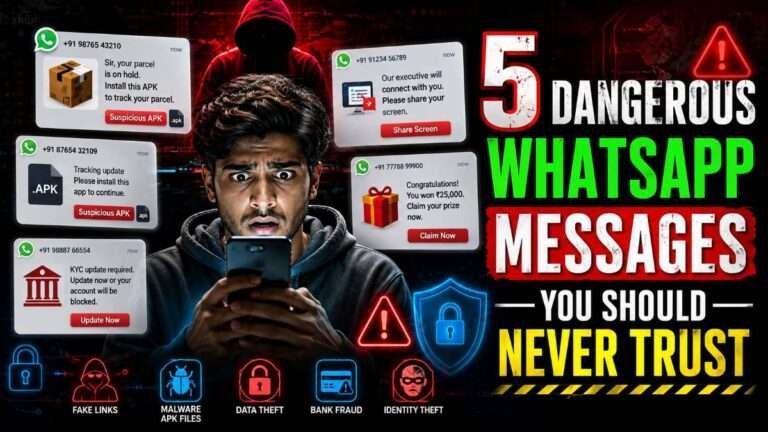
- Avoid unknown links and apps
- Use strong device locks
- Prefer privacy-focused platforms for sensitive communication
Conclusion:
Claims that “encryption is dead” are misleading and exaggerated. Encryption remains strong, but user privacy depends on how platforms handle metadata, backups, and transparency.
Fear spreads faster than facts — but facts still matter.
Frequently Asked Questions (FAQ)
1. Is WhatsApp really not secure as Elon Musk claims?
No verified technical evidence proves that WhatsApp’s end-to-end encryption is broken. Elon Musk’s statement reflects concern, not a confirmed security failure.
2. Can Meta read WhatsApp private messages?
WhatsApp messages are end-to-end encrypted, meaning Meta cannot read message content. However, a lawsuit alleges misleading privacy claims, which remain unproven in court.
3. What does end-to-end encryption actually protect?
End-to-end encryption ensures that only the sender and receiver can read messages. Even the platform hosting the service cannot decrypt the content.
4. What information can WhatsApp still collect?
While message content stays private, WhatsApp may collect metadata such as contact interactions, device details, and usage timing.
5. Is Signal safer than WhatsApp?
Signal is generally considered more privacy-focused because it collects minimal metadata and stores no cloud chat history by default.
6. Are cloud backups a privacy risk?
Yes. If chat backups are not end-to-end encrypted, they may be accessible through cloud providers under legal requests.
7. What is the biggest real threat to message privacy?
Device-level threats like spyware or malware are the biggest risks, as they can access messages before encryption is applied.
8. Is encryption really “dead”?
No. Encryption remains strong and reliable. Most privacy concerns today relate to metadata, backups, and device security rather than broken encryption.
About The Author