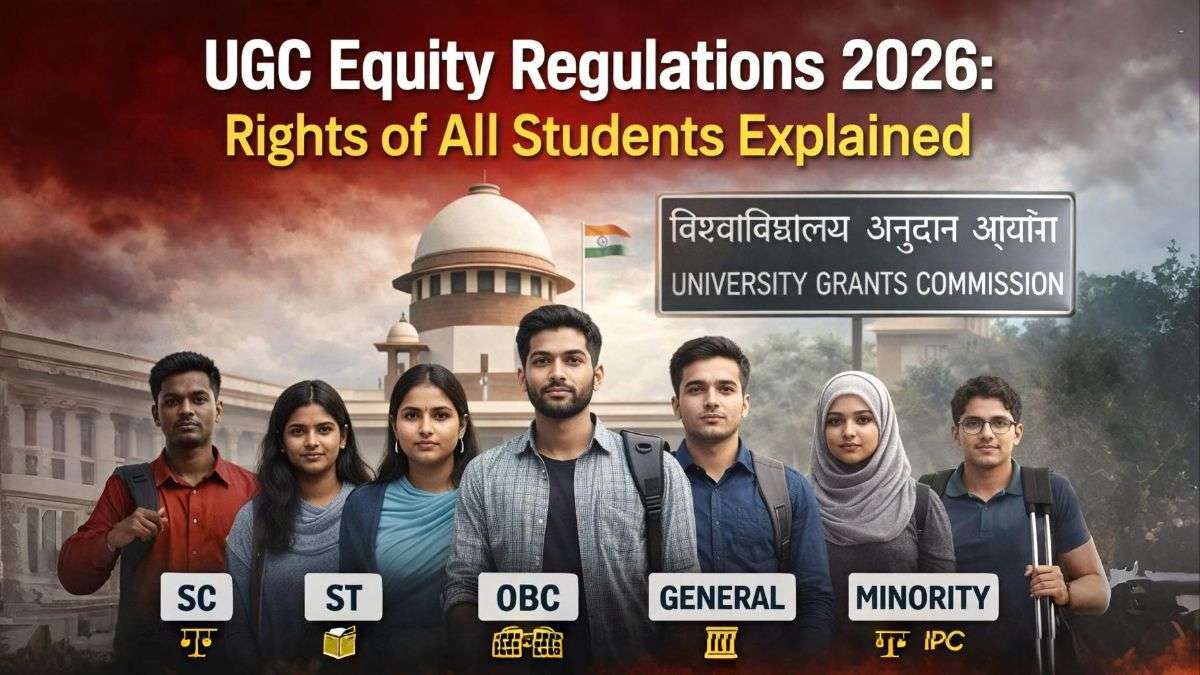
In recent months, UGC Equity Regulations 2026 have become a widely discussed topic on campuses and social media. Many students are confused after hearing claims that these rules apply only to SC/ST students and not to others. This article is written in a clear, factual, and neutral manner to help every student understand what the regulations actually mean, whom they apply to, and how Indian law protects all categories of students. The focus here is clarity, accuracy, and practical guidance.
What Are UGC Equity Regulations 2026?
The University Grants Commission (UGC) introduced the Equity Regulations 2026 to ensure that all universities and higher education institutions in India provide an equal, safe, and non-discriminatory environment for students. Earlier, universities followed advisory guidelines. Under the 2026 framework, equity-related rules are now mandatory and enforceable, meaning institutions can face penalties for non-compliance.
The regulations aim to prevent:
- Discrimination based on caste, gender, religion, disability, or region
- Harassment and unfair academic treatment
- Neglect or delay in handling student grievances
Do These Rules Apply Only to SC/ST Students?
No. This is one of the biggest misunderstandings.
UGC Equity Regulations 2026 apply to:
- SC students
- ST students
- OBC students
- General category students
- Minority students
- Persons with disabilities
- All enrolled students without exception
The regulations are designed to protect every student from discrimination and institutional injustice.
Why Is There a Separate SC/ST Act Then?
India has a specific law called the Scheduled Castes and Scheduled Tribes (Prevention of Atrocities) Act. This law exists because SC/ST communities have historically faced severe and systematic social discrimination.
This does not mean that other students have no legal protection. Instead:
- General laws protect everyone equally
- Special laws provide additional safeguards to historically oppressed groups
Special protection does not cancel or replace equal protection under the Constitution.
Indian Laws That Protect Non-SC/ST Students
Indian law provides multiple layers of protection to students from all categories.
Constitutional Protection
- Article 14: Equality before law for all citizens
- Article 15: Prohibition of discrimination by the State on grounds of caste, religion, sex, or place of birth
These articles apply to every student in India, including general category students.
Criminal Law Protection
Students from any category can seek legal remedy under:
- Indian Penal Code (IPC) for abuse, threats, assault, or intimidation
- Laws against harassment, defamation, and mental cruelty
Institutional Protection
Universities are legally bound to follow:
- UGC Regulations
- Anti-ragging rules
- Internal grievance redressal mechanisms
If a university fails to act, students can approach higher authorities, courts, or regulatory bodies.
What Changes Under UGC Equity Regulations 2026?
The 2026 regulations introduce clear accountability mechanisms:
- Mandatory Equity and Grievance Committees in every institution
- Time-bound resolution of complaints
- Annual compliance reporting to UGC
- Strict penalties for institutions that ignore or violate rules
This ensures that complaints are not ignored or delayed indefinitely.
Why Is Social Media Creating Confusion?
Many online discussions focus only on one part of the legal framework and ignore the broader constitutional and legal structure. Statements such as “only SC/ST students have laws” are incomplete and misleading.
Indian law follows two principles at the same time:
- Equality for all
- Additional protection where history demands correction
Understanding both together is essential.
Why the 2026 Regulations Replaced the 2012 Framework
The 2012 “equity” rules were only advisory and lacked teeth meaning institutions did not have a mandatory obligation to act, and there were no clear penalties for failing to address discrimination. The new 2026 Regulations are enforceable and punitive, requiring compliance or institutions risk consequences. This shift from guidelines to regulations shows a major policy change to hold universities legally accountable for discrimination complaints.
Specific Institutional Requirements Under the Regulations
Under the 2026 Regulations, every higher education institution must set up:
- Equal Opportunity Centres (EOCs)
- Equity Committees
- A 24×7 helpline and complaint channel
- Timely review and action plans for complaints
These bodies are meant to institutionalise equity mechanisms so complaints are not ignored or delayed.
Spike in Campus Bias Complaints
The UGC introduced these regulations in part because reported caste-based discrimination complaints had risen significantly one report mentioned an 118 % jump in caste discrimination cases in recent times.This trend influenced the regulator to create a stricter system with clear processes and timelines for resolving grievances.
Legal Challenge in the Supreme Court
A PIL has been filed in the Supreme Court challenging the constitutionality of certain provisions of the regulations. Petitioners argue that the draft excludes general category students from certain redressal pathways and could violate equality principles under Articles 14–18 of the Constitution.The Court has taken up this issue, and hearings are ongoing, which could lead to judicial clarifications or modifications.
Nationwide Protests & Public Debate
These rules have sparked protests across India:
- Students and general category groups have protested, claiming the rules disadvantage them.
- Lawyers and citizens have also voiced opposition, calling the rules divisive or calling for withdrawal.
Political reactions vary some parties support the regulations as necessary for inclusion, while others call for dialogue and reassurance that no group will be unfairly treated.
What the Government Says
The Union Education Minister has publicly stated that the regulations are intended to be implemented within the constitutional framework and are not meant to be misused or cause injustice to any student or staff member, including general category students. This official clarification is important for your readers/viewers to balance the protest narratives.
Clear Shift in Enforcement Focus
Unlike the earlier rules, the 2026 Regulations:
- Define discrimination more clearly
- Set deadlines for complaint handling
- Make institutional leadership personally responsible for compliance
- Provide for external UGC oversight
This reflects a shift from passive grievance redressal to proactive campus governance.
READ THIS: Indian Constitution Day : History Facts Untold Stories
Conclusion:
The 2026 UGC Equity Regulations are a landmark attempt to move beyond advisory guidelines and create a mandatory, enforceable system to prevent discrimination in India’s higher education institutions. These regulations require formal structures, transparent complaint mechanisms, and accountability at multiple levels from campuses to the UGC itself.
While they aim to protect students from discrimination based on caste, gender, disability, and other identities, debate and legal challenges highlight the need for inclusive safeguards and clear implementation plans. Ultimately, the success of these rules will depend on fair enforcement, responsiveness to all students’ concerns, and continuous review to uphold both equity and constitutional rights.
Frequently Asked Questions (FAQs)
1. What are UGC Equity Regulations 2026?
UGC Equity Regulations 2026 are mandatory rules issued by the University Grants Commission to ensure equality, non-discrimination, and fair treatment of students in higher education institutions across India.
2. Do these regulations apply only to SC/ST students?
No. The UGC Equity Regulations apply to all students, including SC, ST, OBC, General category, Minority students, and Persons with Disabilities. The aim is equal protection for everyone.
3. Why is there a separate SC/ST Act if laws already exist?
The SC/ST Act provides additional legal protection due to historical discrimination faced by these communities. However, the Indian Constitution and criminal laws protect all citizens equally.
4. What happens if a university does not follow UGC Equity Regulations?
Universities that fail to comply may face penalties, funding restrictions, regulatory action, or even loss of UGC recognition.
5. Are general category students protected under Indian law?
Yes. Articles 14 and 15 of the Indian Constitution guarantee equality and prohibit discrimination for all citizens. General category students can also seek protection under IPC and UGC rules.
6. What is the main difference between 2012 guidelines and 2026 regulations?
The 2012 framework was advisory, while the 2026 regulations are legally enforceable with strict accountability and penalties for non-compliance.
7. Can these regulations be misused?
Any law can be misused, which is why experts stress the need for due process, transparency, and safeguards. Courts remain the final authority in case of misuse.
8. Is there any legal challenge to these regulations?
Yes. A Public Interest Litigation (PIL) has been filed in the Supreme Court seeking clarity on certain provisions. The matter is under judicial consideration.
9. How should students file complaints under these rules?
Students should first approach the university’s Equity Committee or Grievance Redressal Cell. If unresolved, they can escalate the matter to UGC or legal authorities.
10. What is the real purpose of UGC Equity Regulations 2026?
The real objective is to create safer, fairer campuses by ensuring complaints are addressed quickly, institutions are accountable, and discrimination is not ignored.
About The Author