Total Lunar Eclipse 2026: Will the Moon Turn Blood Red on March 3? What Real & What Hype
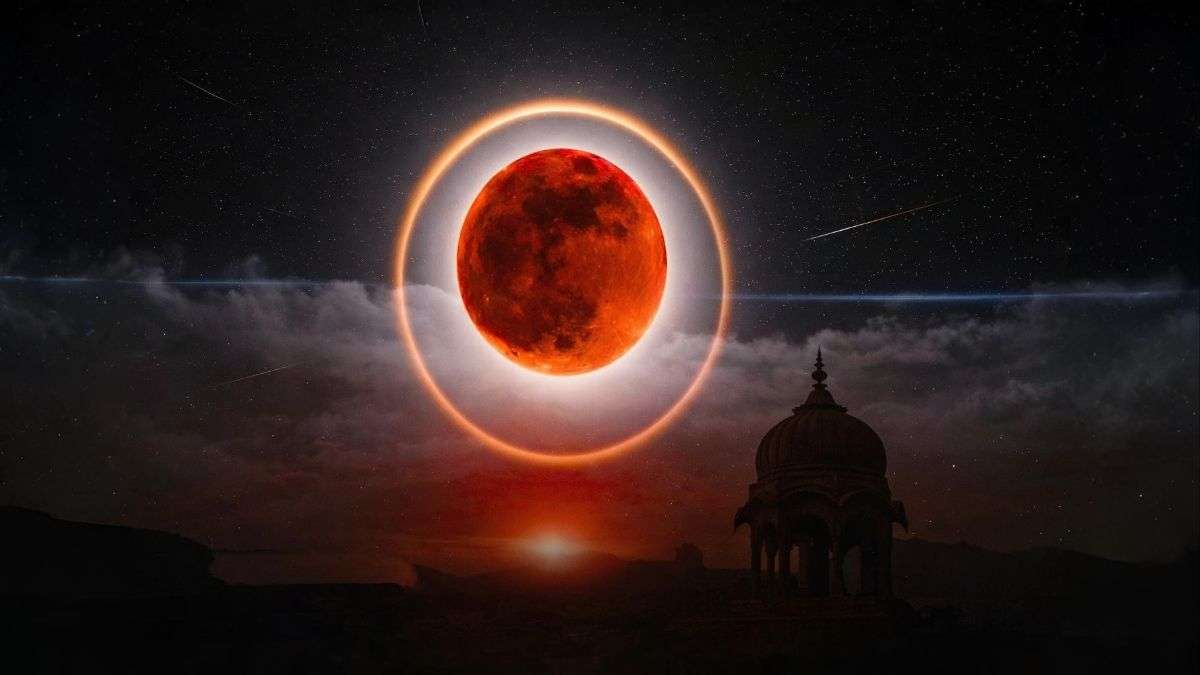
A dramatic image claiming that a Total Lunar Eclipse on March 3 will turn the Moon blood red for 58 minutes has gone viral across social media. The bold claim that “It won’t happen again until 2028” has sparked curiosity and confusion alike.
But what is the scientific truth behind this event? A total lunar eclipse occurs when the Earth moves directly between the Sun and the Moon. During this alignment, Earth’s shadow fully covers the Moon.
Instead of disappearing, the Moon takes on a reddish glow often called a Blood Moon. This is not a supernatural event. It is pure orbital mechanics.
Why Does the Moon Turn Red During a Lunar Eclipse?
When sunlight passes through Earth’s atmosphere, shorter blue wavelengths scatter in different directions. The longer red wavelengths bend around Earth and reach the Moon.
The result: The Moon appears coppery-red during the total phase of the eclipse.
This is the same reason sunsets appear red.The deeper the eclipse and the clearer the atmosphere, the darker or brighter the red shade may appear.
What Does “58 Minutes” Mean?
The 58 minutes refers to the totality phase the period when the Moon is completely inside Earth’s umbra (darkest shadow).
However, the entire lunar eclipse event typically lasts 3 to 5 hours, including:
- Penumbral phase (light shadow begins)
- Partial phase (shadow visibly covers Moon)
- Total phase (complete red Moon)
- Reverse partial & penumbral phases
Totality duration varies from eclipse to eclipse.
Is It True That It Won’t Happen Again Until 2028?
This statement requires context.
Total lunar eclipses occur approximately every 1–2 years globally. However:
- Not every eclipse is visible from India.
- Not every eclipse has long totality.
- Some eclipses are partial, not total.
So while another similar long-duration eclipse visible in a specific region might occur in 2028, total lunar eclipses themselves are not extremely rare.
The viral claim is partially exaggerated.
Is It Safe to Watch?: Yes completely safe.
Unlike a solar eclipse, a lunar eclipse:
- Does NOT require special glasses
- Does NOT damage eyesight
- Has NO proven harmful radiation effects
You can watch it safely with naked eyes, binoculars, or telescopes.
Myths vs Scientific Reality
Throughout history, lunar eclipses were linked to omens and superstitions. In modern science, there is no evidence supporting:
- Health risks
- Food contamination
- Pregnancy dangers
- Religious harm
A lunar eclipse is simply Earth’s shadow at work.
What’s Real & What Hype?
- Real: The Moon can turn red during totality.
- Real: Total phase may last around 1 hour depending on alignment.
- Real: It is completely safe to observe.
⚠ Hype: “Won’t happen again until 2028” without location clarification. The science is clear. The drama is optional.
Conclusion: The Total Lunar Eclipse is a breathtaking astronomical event not a mysterious or dangerous occurrence. While viral posts amplify excitement with dramatic language, the reality is rooted in predictable celestial motion.
If visible in your region, this eclipse offers a rare chance to witness Earth’s shadow painting the Moon red a reminder of the precision of our solar system.
Stay informed. Stay scientific.RAAD WORLD
About The Author