
Sleep is one of the most essential biological functions for humans, yet it remains one of the least understood aspects of daily life. Scientists and researchers continue to uncover fascinating insights about how sleep affects the brain, body, memory, and overall health. From the way our brain works during dreams to how sleep deprivation impacts decision-making, sleep holds many surprising secrets.
Here are 10 fascinating sleep facts you probably didn’t know that reveal just how important rest is for human life.
1. Humans Spend Nearly One-Third of Their Life Sleeping
On average, a person spends about one-third of their lifetime sleeping. If someone lives for around 75 years, roughly 25 years are spent asleep. Despite this large portion of life dedicated to sleep, scientists are still studying why sleep is so crucial for survival and health.
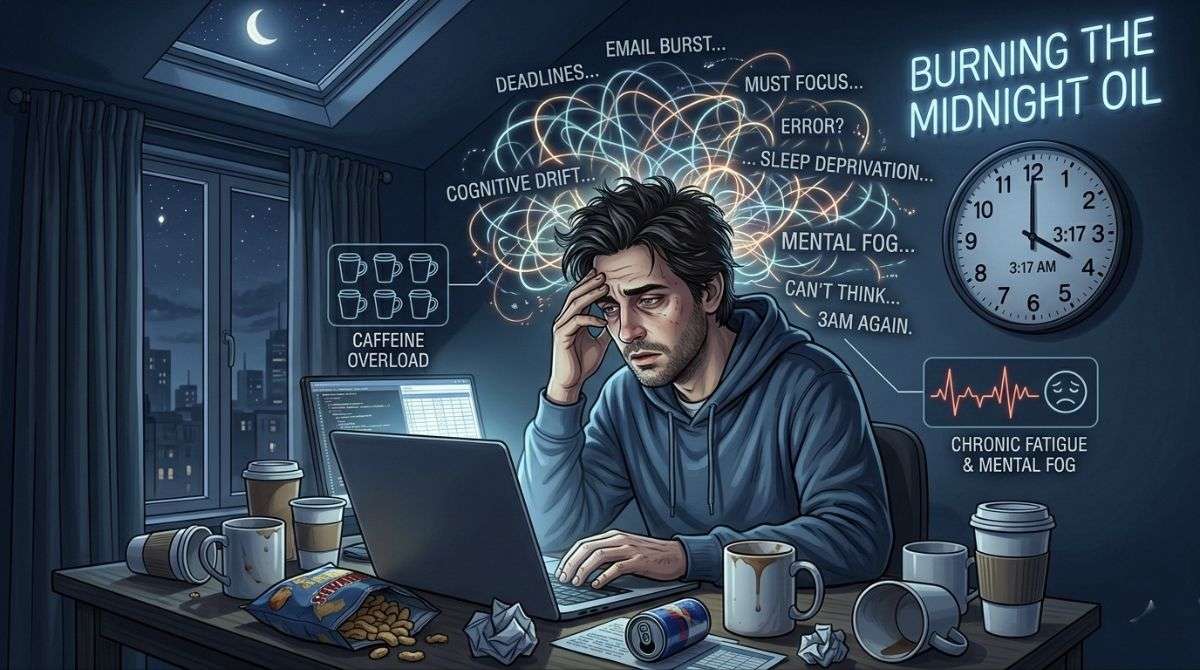
Image Credit: RAAD WORLD AI Generate Image
READ THIS: psychology behind human
2. Your Brain Becomes Highly Active During Sleep
While it may seem like the brain shuts down when we sleep, the opposite is true. During REM (Rapid Eye Movement) sleep, brain activity increases significantly and can be nearly as active as when we are awake. This stage of sleep is responsible for most dreaming and is essential for emotional processing and memory consolidation.
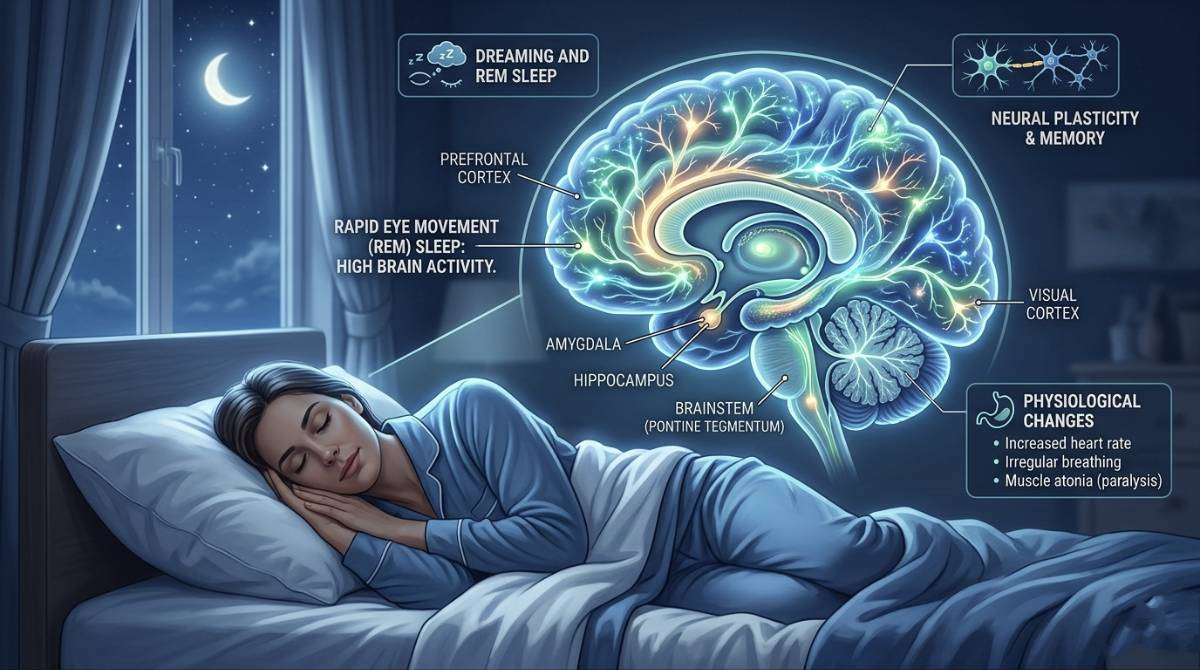
Image Credit: RAAD WORLD AI Generate Image
3. The Body Temporarily Paralyzes Itself During Dreams
During REM sleep, the brain sends signals that temporarily paralyze most muscles in the body. This mechanism prevents individuals from physically acting out their dreams, which could otherwise lead to injuries.
4. Lack of Sleep Impacts the Brain Like Alcohol
Research shows that staying awake for 17 hours straight can reduce cognitive performance similar to having a 0.05% blood alcohol level. This means sleep deprivation can significantly affect reaction time, concentration, and decision-making ability.
5. The Longest Recorded Time Without Sleep Is 11 Days
In 1964, a high school student named Randy Gardner stayed awake for 264 hours (approximately 11 days) as part of a science experiment. During this period, he experienced severe fatigue, memory problems, mood changes, and hallucinations, demonstrating the powerful impact of sleep deprivation.
6. You Cannot Sneeze While Sleeping
Sneezing is a reflex controlled by the nervous system. During sleep, many reflex signals are suppressed, making it extremely rare for people to sneeze while asleep.
7. Some Animals Sleep With Half Their Brain Awake
Certain animals, such as dolphins and some bird species, can sleep with one half of their brain at a time. This adaptation allows them to remain alert to predators and maintain essential functions like breathing.
8. Sleep Helps Strengthen Memory
Sleep plays a major role in memory consolidation, the process by which the brain organizes and stores information learned during the day. Without sufficient sleep, learning efficiency and concentration decline significantly.
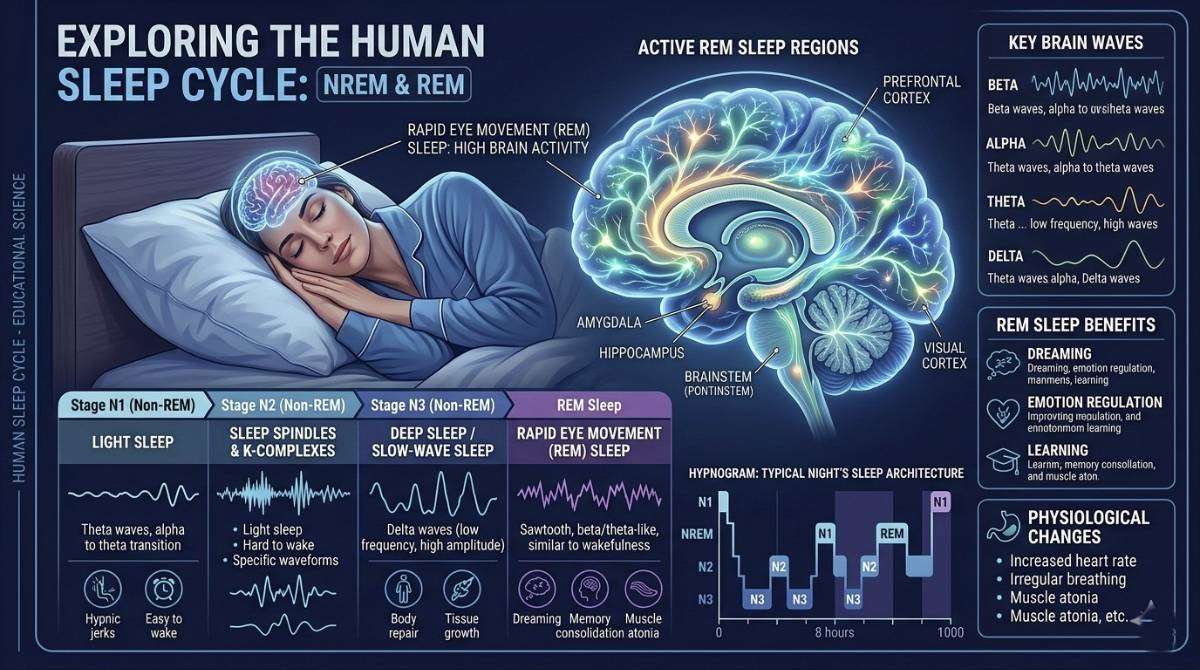
Image Credit: RAAD WORLD AI Generate Image
9. Adults Need Around 7–9 Hours of Sleep
According to sleep researchers, most adults require between 7 and 9 hours of sleep per night to maintain optimal physical and mental health. Chronic sleep deprivation is associated with increased risks of heart disease, obesity, and mental health disorders.
10. Your Height Slightly Increases During Sleep
During the day, gravity compresses the spinal discs in the spine. When you sleep, the body relaxes and the spine decompresses, which can make you slightly taller in the morning by about 1 centimeter.
Why Sleep Is More Important Than You Think
Sleep is not simply a period of rest; it is a critical biological process that helps repair tissues, regulate hormones, strengthen immunity, and support brain function. Poor sleep patterns can negatively affect both physical health and mental well-being.
Conclusion:
Sleep remains one of the most fascinating aspects of human biology. From the brain’s activity during dreams to the way sleep restores the body, these surprising facts highlight why quality sleep is essential for a healthy life.
As scientific research continues, experts are discovering even more about how sleep shapes our physical, mental, and emotional health.
About The Author