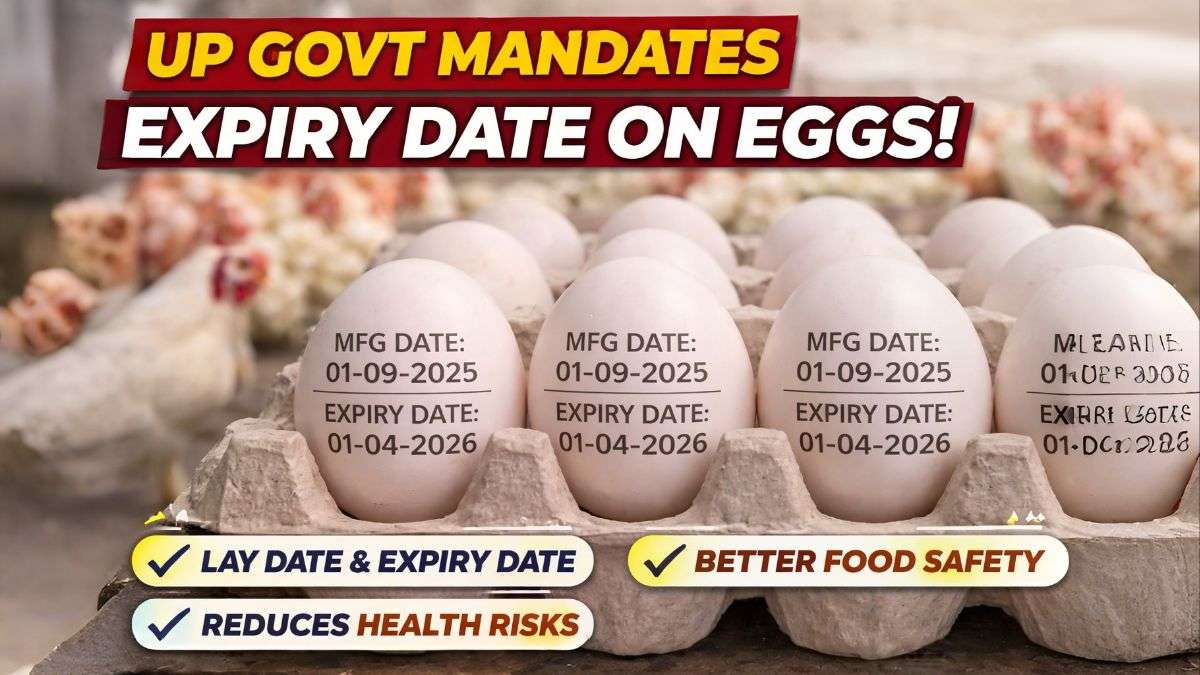
In a major step toward improving food safety and consumer awareness, the Government of Uttar Pradesh has announced that all eggs sold in the state must display expiry dates and laying dates.
The new rule will come into effect from April 1, ensuring that consumers can easily identify whether the eggs they purchase are fresh and safe to eat. The decision aims to prevent the sale of stale eggs and increase transparency in the poultry supply chain.
Why the New Rule Was Introduced
Many consumers currently buy eggs without knowing when they were laid or how old they are. Unlike packaged food items, eggs traditionally did not carry clear expiry information.
To address this issue, the Food Safety and Standards Authority of India guidelines encourage better labeling practices. Following this direction, the Government of Uttar Pradesh decided to implement mandatory labeling on eggs.
The rule aims to:
- Improve food safety standards
- Prevent sale of old or spoiled eggs
- Increase consumer transparency
- Strengthen the poultry supply chain regulation
What Information Will Be Printed on Eggs
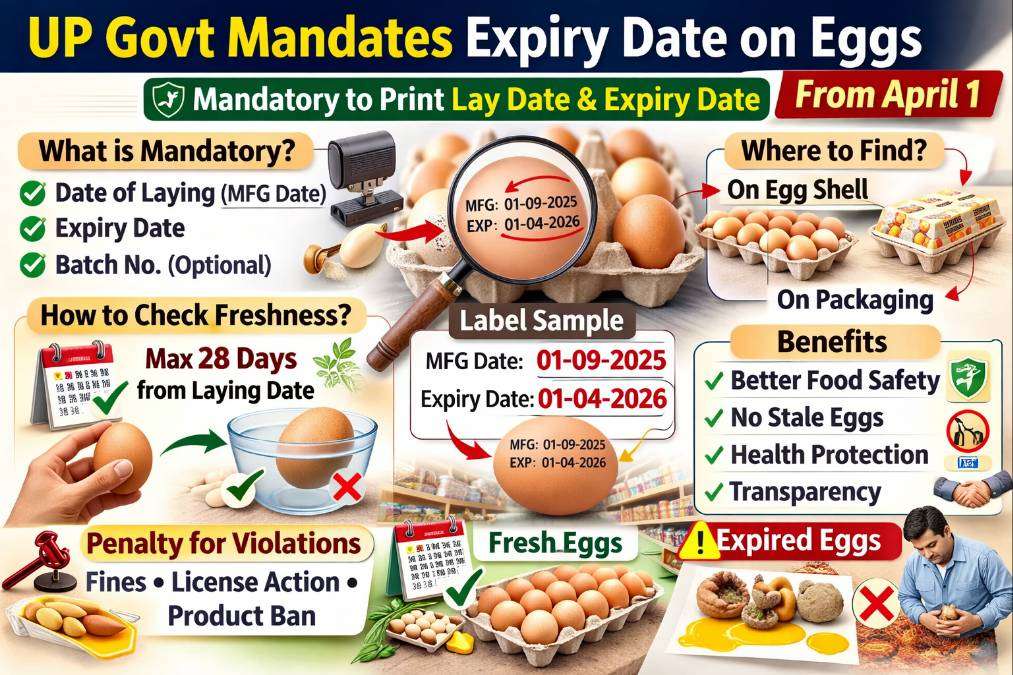
Under the new regulation, eggs sold in Uttar Pradesh must clearly display:
- Date of Laying (MFG Date) The exact date when the egg was laid by the hen.
- Expiry Date / Best Before Date The last recommended date for safe consumption.
- Identification or Batch Details (if required) Some suppliers may also include batch numbers for tracking.
Example:
| Information | Example |
|---|---|
| MFG Date | 01-09-2025 |
| Expiry Date | 01-04-2026 |
This will help consumers make better decisions while purchasing eggs.
How Long Eggs Stay Safe for Consumption
Generally, eggs remain safe for a limited period depending on storage conditions.
Typical shelf life:
- Room temperature: About 7–10 days
- Refrigerated storage: Around 3–4 weeks
- Best before period: Usually 28 days from the laying date
With the new labeling rule, consumers can easily check the freshness of eggs before buying them.
Who Must Follow the Rule
The new rule will apply to all stakeholders involved in the egg supply chain, including:
- Poultry farms
- Egg wholesalers and distributors
- Retail shops and supermarkets
- Online grocery sellers
All sellers must ensure that eggs are properly labeled before reaching consumers.
Penalties for Violating the Rule
If poultry farms or sellers fail to comply with the labeling requirement, they may face action under the Food Safety and Standards Authority of India regulations.
Possible consequences include:
- Financial penalties
- Product seizure
- Suspension of license for repeated violations
The move is expected to improve accountability across the egg supply chain.
Benefits for Consumers
The decision offers several advantages for buyers:
- Easier identification of fresh eggs
- Reduced risk of food poisoning
- Better food quality control
- Increased trust in poultry products
Consumers will now be able to choose eggs based on actual freshness rather than guesswork.
Impact on the Poultry Industry
For poultry farmers and suppliers in Uttar Pradesh, the new rule may require:
- Improved packaging and labeling systems
- Better inventory management
- Proper storage and distribution practices
While it may initially increase operational costs, experts believe it will boost consumer confidence and long-term demand for poultry products.
Conclusion:
The decision by the Government of Uttar Pradesh to mandate expiry dates on eggs from April 1 is an important step toward improving food safety and consumer awareness. By requiring eggs to display both the date of laying and expiry date, the rule will help consumers easily identify fresh eggs and avoid purchasing stale or unsafe products.
This initiative is expected to strengthen food quality standards and bring egg sales closer to the labeling practices followed for packaged foods under the Food Safety and Standards Authority of India. It will also encourage better storage, handling, and distribution practices across the poultry industry.
For consumers, the new rule offers greater transparency, safer food choices, and improved trust in poultry products. As the regulation comes into effect in Uttar Pradesh, it may also inspire similar food safety measures in other states across India in the future.
About The Author