Yana Caves Geoheritage Site:Real Location, Scientific Secrets & Official GSI Facts Explained
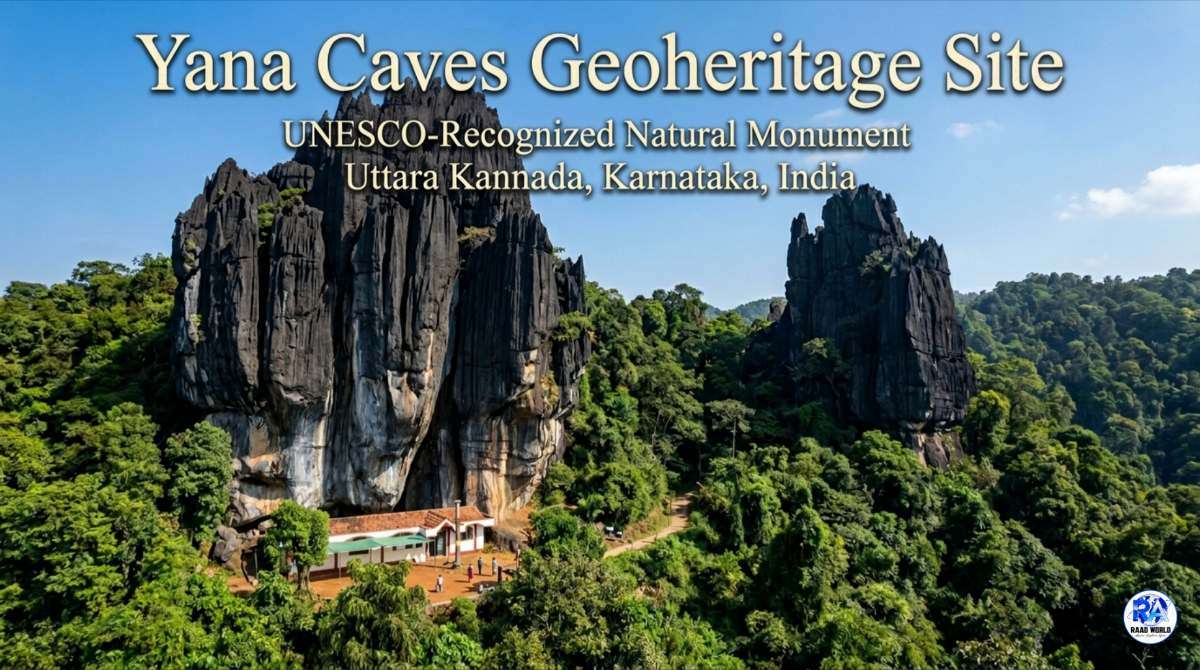
Yana, a unique geological landmark located in the Uttara Kannada district of Karnataka, has recently gained national recognition for its scientific and environmental importance.
The Geological Survey of India (GSI), the country’s apex organization for geological studies, has officially designated Yana as a Geoheritage Site of National Importance in April 2026.
This recognition places Yana among a select group of geological formations across India that are protected due to their scientific, educational, and cultural value.
This article presents verified, official information about Yana, its geological features, and the significance of its recent designation, based strictly on government and credible institutional sources.
Location and Administrative Details
Yana is situated in the Kumta taluk of Uttara Kannada district in the state of Karnataka. It lies within the ecologically sensitive Western Ghats mountain range, which is recognized as one of the world’s eight “hottest hotspots” of biological diversity. The site is accessible from major towns such as Kumta, Sirsi, and Gokarna.
According to official information from the Uttara Kannada district administration and Karnataka Tourism Department, Yana is a small village surrounded by dense forests.
known primarily for its extraordinary rock formations. The site is not located in Chitradurga district, and any such claim does not align with official geographical records.
Geological Significance of Yana
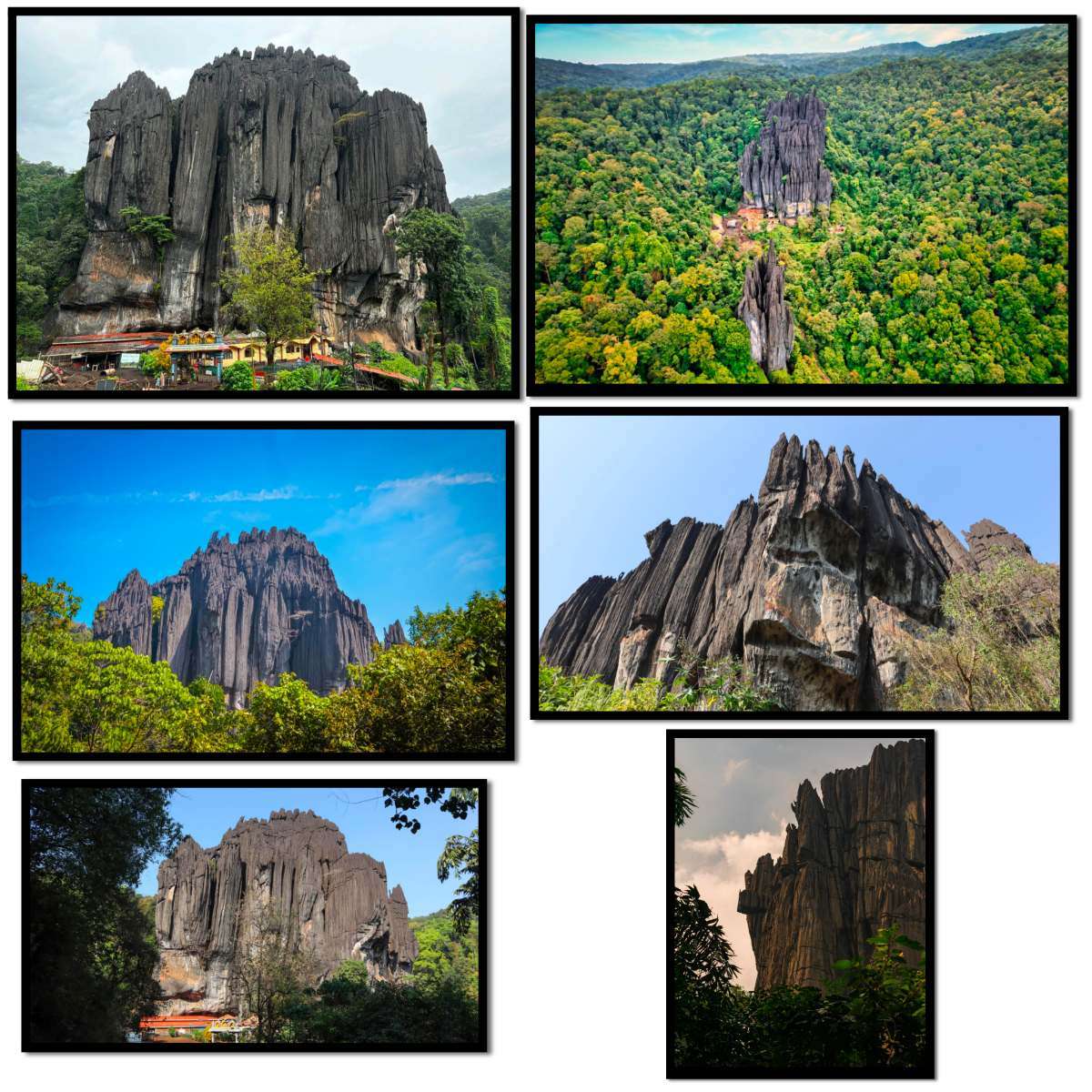
The primary scientific importance of Yana lies in its remarkable limestone rock formations, which are classified as karst topography. These formations are the result of long-term geological processes involving the dissolution of soluble rocks such as limestone, dolomite, and gypsum.
Over millions of years, natural processes such as rainfall, groundwater movement, and chemical weathering have shaped these rocks into towering structures with sharp vertical faces and intricate surface patterns. The black coloration of the rocks is attributed to the presence of organic compounds and moisture interaction over time.
Geological studies indicate that the region contains dozens of such limestone formations, making it an important site for research in geomorphology and earth sciences. The unique structure and preservation of these formations have contributed significantly to Yana’s recognition as a geoheritage site.
Major Rock Formations
Yana is particularly known for two prominent rock structures:
Bhairaveshwara Shikhara: Approximately 120 meters in height, this is the taller of the two formations. It is characterized by steep vertical cliffs and a commanding presence in the landscape.
Mohini Shikhara: Standing at around 90 meters, this structure complements the larger formation and together they create a visually striking geological ensemble.
These formations are considered among the most distinctive natural rock structures in India due to their scale, composition, and natural symmetry.
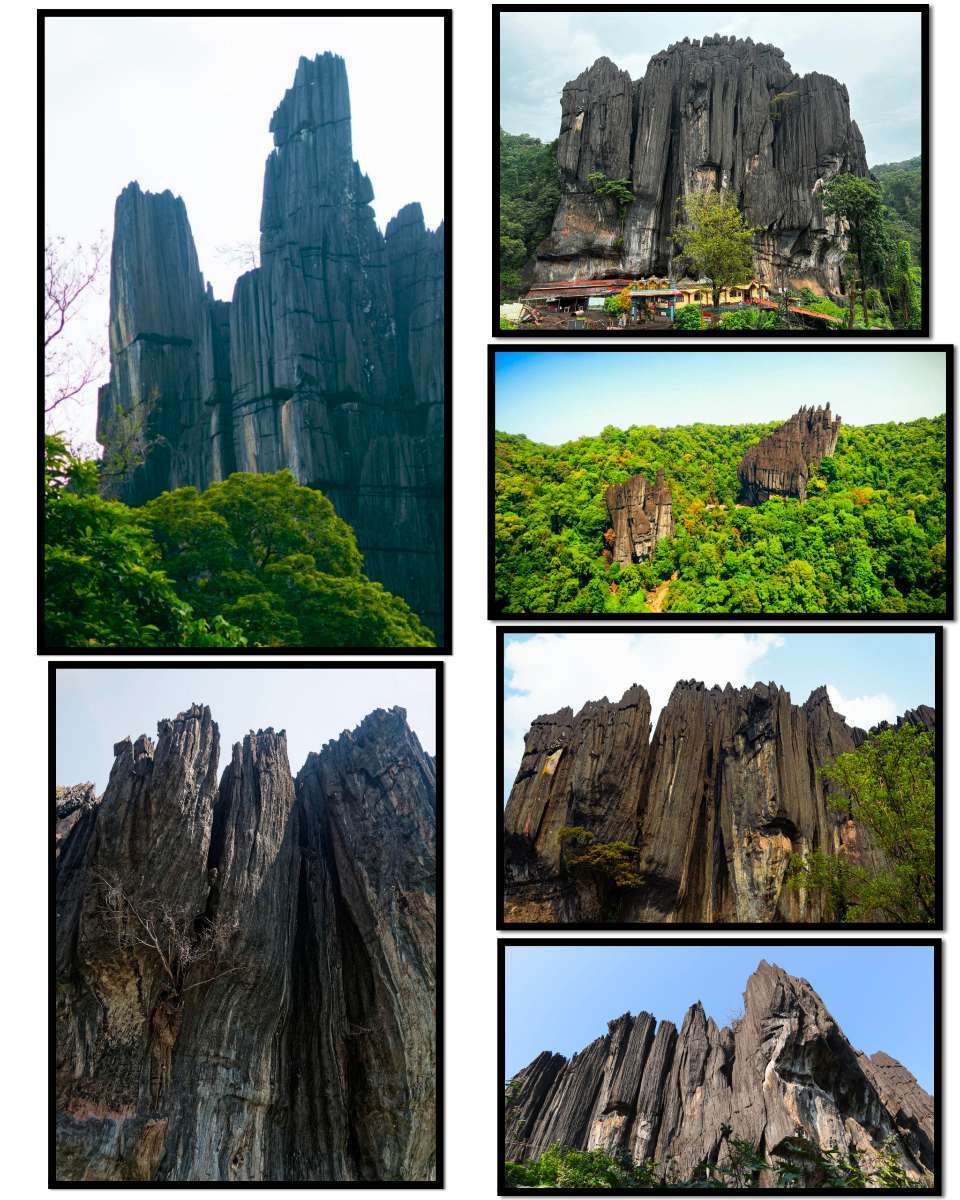
License: Creative Commons Attribution-ShareAlike (CC BY-SA)
Religious and Cultural Context
In addition to its geological importance, Yana holds cultural and religious significance. A natural cave located at the base of the Bhairaveshwara Shikhara houses a self-formed (swayambhu) Shiva Linga. This site attracts devotees, especially during the annual festival of Maha Shivaratri.
The integration of natural geological formations with cultural practices adds another dimension to Yana’s importance, making it a site of both scientific interest and spiritual value.
Declaration as Geoheritage Site
The Geological Survey of India, functioning under the Ministry of Mines, Government of India, is responsible for identifying and preserving geological heritage sites across the country.
In April 2026, Yana was officially included in the list of geoheritage sites, recognizing its exceptional geological features and the need for its conservation.
This designation ensures that Yana will receive focused attention for preservation, scientific study, and sustainable tourism development. It also places restrictions on activities that could potentially damage the natural structures, such as unregulated construction or exploitation of natural resources.
With this inclusion, Yana joins a list of over ninety geoheritage sites across India that are considered crucial for understanding the country’s geological history.
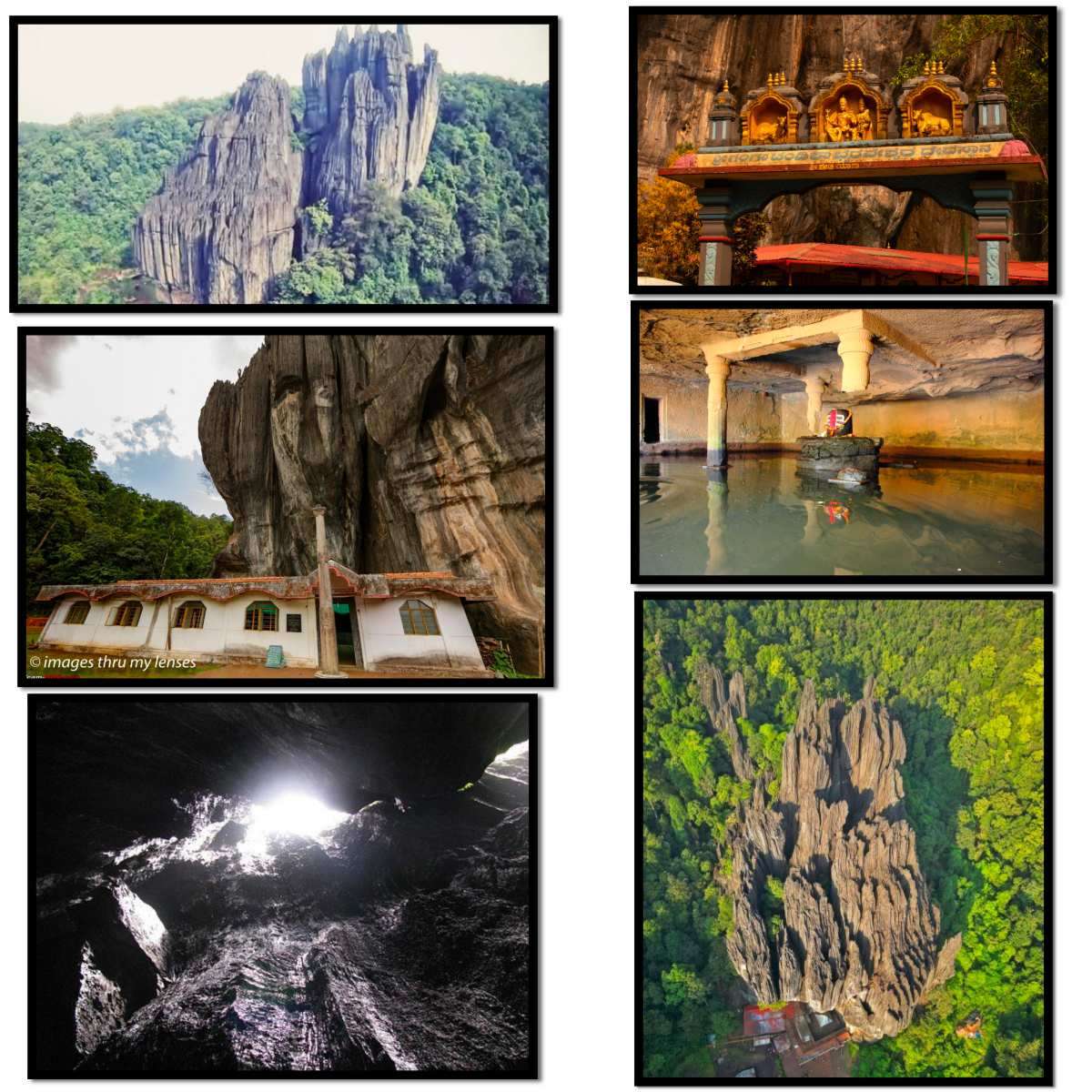
License: Creative Commons Attribution (CC BY-SA)
READ THIS: Is There a 2000-Year-Old Ashoka Stambha in China? Truth Behind the Viral Claim
Environmental Importance and Conservation Needs
Yana is located within the Western Ghats, a UNESCO World Heritage region known for its rich biodiversity and ecological sensitivity. The surrounding forests host a wide variety of flora and fauna, many of which are endemic to the region.
The increasing popularity of Yana as a tourist destination has raised concerns about environmental degradation. Issues such as littering, unregulated foot traffic, and infrastructure expansion pose potential threats to the fragile ecosystem.
The geoheritage designation is expected to strengthen conservation measures, promote responsible tourism, and encourage awareness among visitors regarding the importance of preserving such natural landmarks.
Tourism and Accessibility
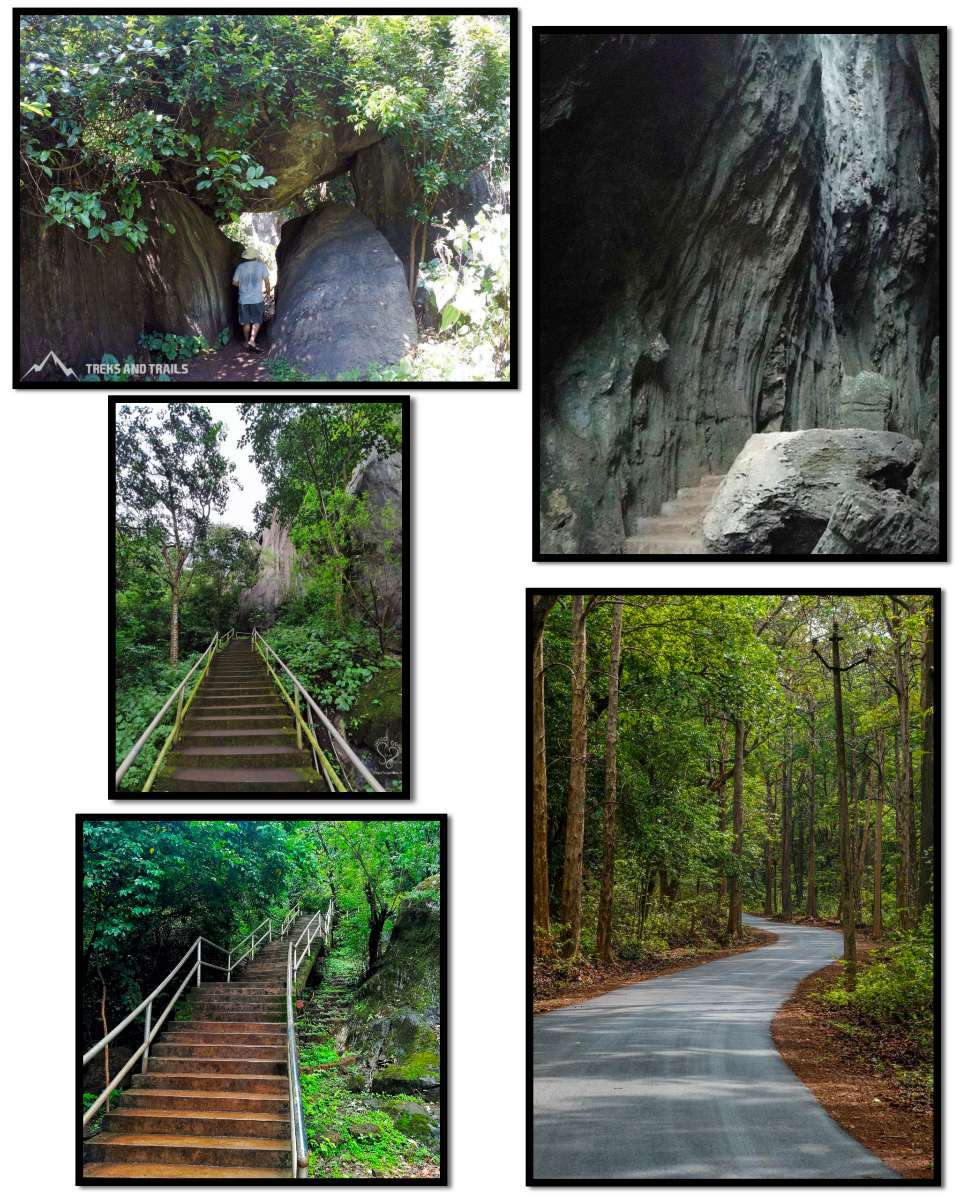
Yana is accessible via a short trek through forested terrain, which adds to the overall experience of visiting the site. The Karnataka Tourism Department promotes Yana as a destination for eco-tourism, trekking, and nature exploration.
Basic facilities have been developed to accommodate visitors, but authorities continue to emphasize the need for sustainable practices to ensure that tourism does not compromise the site’s integrity.
READ THIS: Shroud of Turin DNA Study 2026: Does Indian DNA Prove Jesus Christ Origins?
Scientific and Educational Value
Geoheritage sites like Yana serve as natural laboratories for researchers, students, and geologists. They provide valuable insights into earth processes, rock formation, and environmental changes over geological time scales.
Educational institutions often use such sites for field studies, enabling students to observe geological phenomena directly. The preservation of Yana ensures that future generations will have the opportunity to study and understand these natural processes.
Conclusion
The official recognition of Yana as a Geoheritage Site of National Importance marks a significant step in acknowledging and preserving India’s geological diversity. Located in Uttara Kannada district, Yana stands as a testament to the natural forces that have shaped the earth over millions of years.
Its towering limestone formations, ecological surroundings, and cultural relevance make it a site of multifaceted importance. With the support of government authorities and responsible public engagement, Yana has the potential to serve as a model for conservation, education, and sustainable tourism.
As awareness grows about the importance of geoheritage, sites like Yana highlight the need to protect and respect natural formations that are both scientifically invaluable and culturally significant.
About The Author