Rajat Patidar Controversial Dismissal: Was Jason Holder Catch Legal in RCB vs GT IPL 2026?
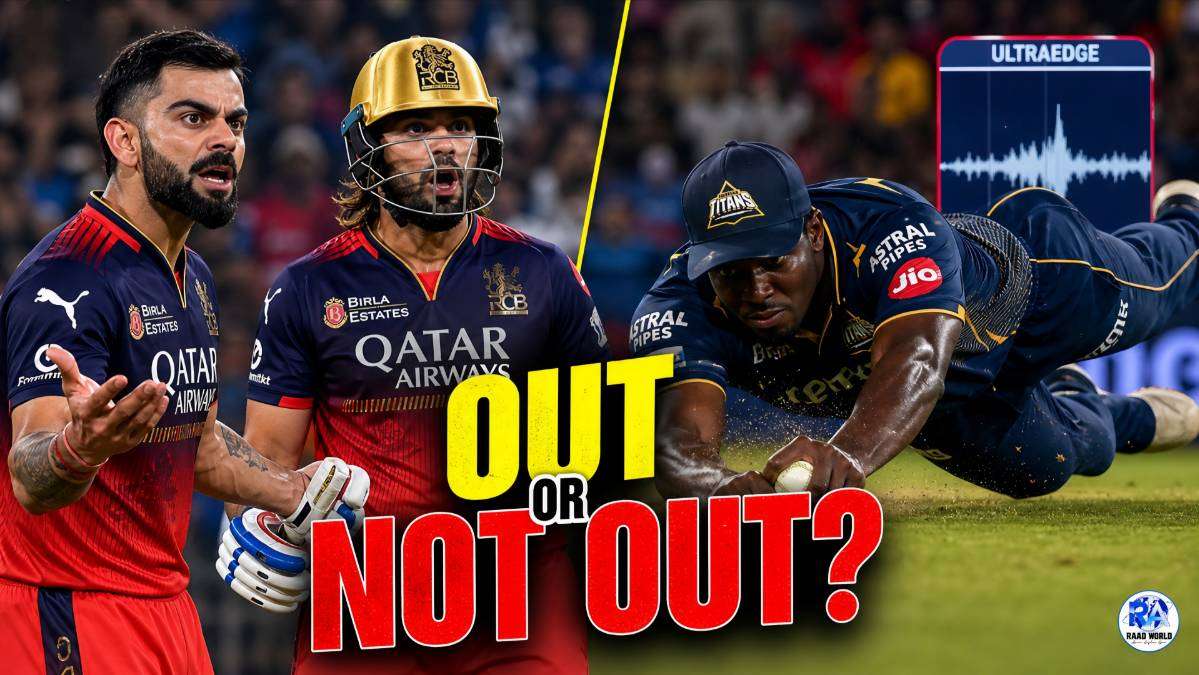
Cricket is often called a game of glorious uncertainties, but in the modern era of high-definition cameras and the Decision Review System (DRS), fans expect a level of certainty that was previously impossible.
However, Match 42 of IPL 2026 between Royal Challengers Bengaluru (RCB) and Gujarat Titans (GT) proved that even with the best technology, human error and split-second decisions can change the course of a tournament.
The dismissal of Rajat Patidar has sparked a massive debate across the cricketing world, raising questions about player awareness, the consistency of third umpires, and the rigid application of MCC laws.
The Moment of Conflict: What Actually Happened?
The incident occurred during the 8th over of the RCB innings. Rajat Patidar, who was looking dangerous and timing the ball beautifully, attempted a lofted shot off Arshad Khan. The ball soared toward the long-off boundary where Jason Holder, known for his safe hands and immense reach, sprinted in and executed a full-length diving forward catch.
At first glance, it looked like a “Catch of the Tournament” contender. The on-field umpire raised his finger almost immediately, signaling ‘Out’.However, as the slow-motion replays began to roll on the stadium’s big screen, a different story emerged.
As Holder made contact with the turf, the ball appeared to be pressed against the grass. While his fingers were partially under the ball, the impact with the ground seemed to help him secure the catch. This is the “grey area” that has haunted cricket for decades did the ball touch the ground before the fielder had complete control?
READ THIS: Bhuvneshwar Kumar 200 IPL Wickets: Truth Behind Viral Record Claim
The Umpiring Logic vs. Visual Evidence
In this specific match, Third Umpire Abhijit Bhattacharya upheld the on-field decision. The technical reasoning often cited in these cases is that if the fielder’s fingers are underneath the ball, it is considered a clean catch even if the ball simultaneously touches the blades of grass. The logic is that the hand is the primary point of contact, and the grass is merely incidental.
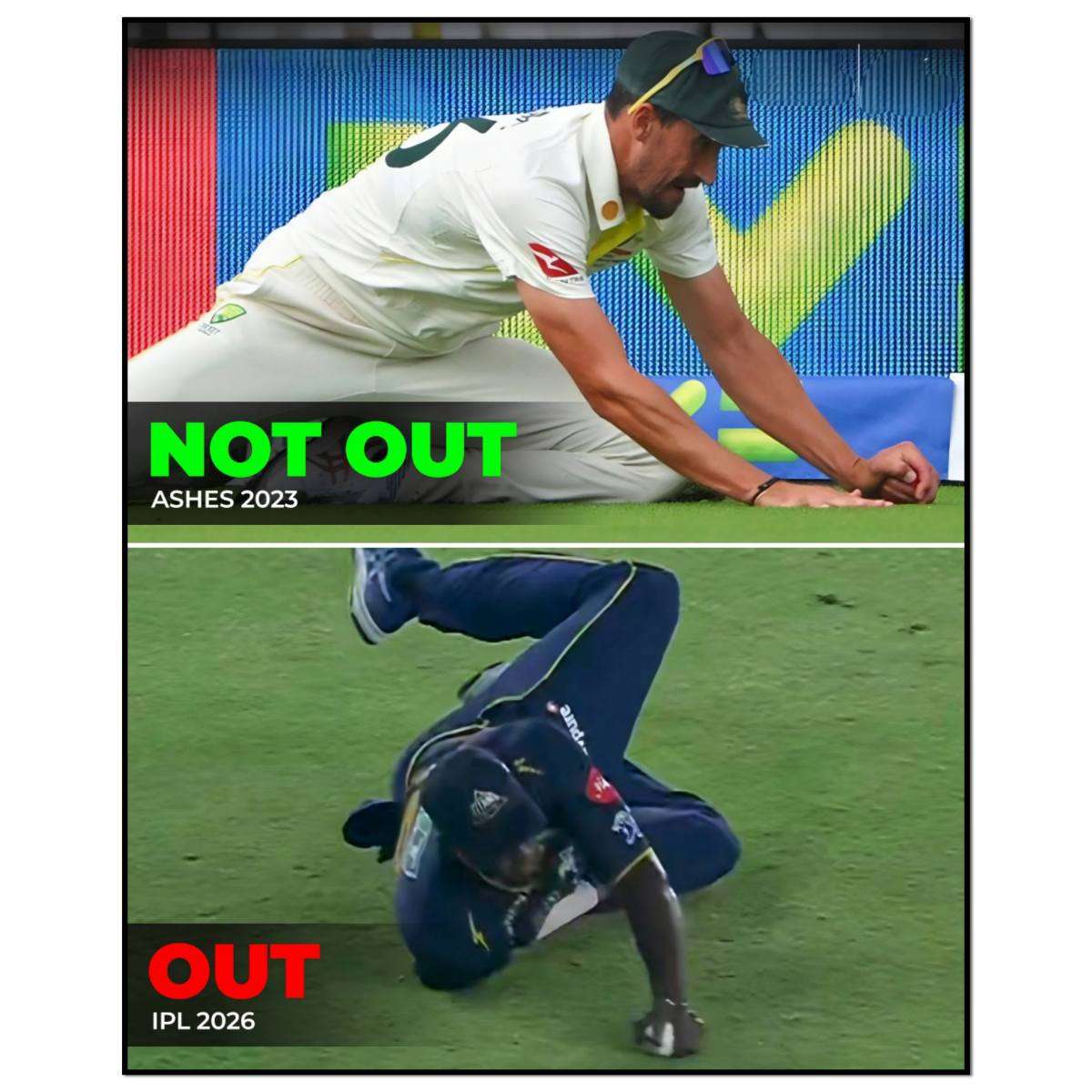
However, the video evidence sent by fans and analyzed by experts tells a more complicated story. In the 2023 Ashes series, a very similar catch by Mitchell Starc was ruled ‘Not Out’ because he used the ground to steady the ball while sliding.
In Patidar’s case, Holder’s hands appeared to bounce off the turf upon impact. According to MCC Law 33.2, a catch is only completed when the fielder has “total control over the ball and his own movement.” If the ground helps the fielder stop the ball from popping out of the hand, it is technically not a fair catch.
Video Credits: JioCinema / Star Sports / BCCI.
The Virat Kohli Factor and the DRS Blunder
Perhaps the most frustrating part for RCB fans wasn’t the umpire’s call itself, but the lack of a challenge. Rajat Patidar, seemingly convinced by Holder’s celebration or the umpire’s confidence, began walking back to the dugout without looking back.
Virat Kohli, watching from the non-striker’s end and later seeing the replay on the screen, realized the ball might have touched the ground.Kohli was seen gesturing frantically for Patidar to take the review. But there is a strict protocol in the IPL A player has exactly 15 seconds to signal for a DRS review.
Once a player crosses the boundary rope or leaves the field of play, they forfeit their right to challenge the decision. By the time the RCB camp realized the catch was suspicious, Patidar had already reached the boundary.
This lapse in communication highlights a psychological aspect of the game younger players often feel pressured to “walk” to show sportsmanship, but in a high-stakes league like the IPL, every review is a tactical weapon that cannot be wasted.
READ THIS: RCB vs GT IPL 2026 Result: Gujarat Titans Beat Royal Challengers Bengaluru in Match 42
Why This Matters for the IPL 2026 Season
The impact of this wicket was immediate. Patidar was the aggressor in a crucial partnership. His departure led to a mini-collapse, and although RCB fought hard, they fell short in a game that could have been won had their set batsman stayed at the crease for another five overs.
In a league where Net Run Rate (NRR) and single points decide the top four, such a controversial dismissal feels like a heavy blow.
Furthermore, the inconsistency in “fingers under the ball” rulings is frustrating for players. If a similar catch in the Ashes is ‘Not Out’ but in the IPL it is ‘Out’, where is the standard?.
The removal of the ‘Soft Signal’ was supposed to give the Third Umpire more freedom to judge based purely on video, but if the video is inconclusive, the benefit of the doubt is supposed to go to the batsman. In Patidar’s case, that benefit was nowhere to be found.
Technical Breakdown of the Catch Rule
To understand why this was likely an error, we have to look at the physics of the catch shown in the footage:
1. Initial Contact: Holder’s fingers are indeed near the ball.
2. The “Skid”: As the weight of his body hits the ground, the back of his hand flattens. This causes the ball to touch the soil.
3. The Bounce: Because the ball is a hard object hitting a hard surface (the ground) through a thin layer of gloves or skin, it usually bobbles. If the ground stops that bobble, the ground has assisted the catch.
READ THIS: KL Rahul 152 in IPL 2026: First Indian to Score 150+ Runs in History
Conclusion
The Rajat Patidar incident will be remembered as a classic example of why players should never “walk” until they have checked with their partner or looked at the replay.
For the GT fielders, it was a moment of brilliance and opportunistic fielding. For the umpires, it was another day of making a tough call under immense pressure. But for the fans, it remains a “what if” moment.
As we move forward in the 2026 season, this controversy should serve as a wake-up call for the BCCI and the umpiring committee to provide clearer guidelines on “grounded” catches.
Until the technology can provide a 100% clear answer, these debates will continue to rage on social media, in the stands of the Narendra Modi Stadium, and in the RCB dressing room.
Rajat Patidar might have lost his wicket, but he gained the sympathy of millions who saw the same thing we did: a ball that, for a split second, found its home on the grass before it found its way into the scorebook as an ‘Out’.
Frequently Asked Questions: Rajat Patidar’s Controversial Wicket
1. Was Rajat Patidar actually out in the RCB vs GT match?
Technically, he was ruled out by the on-field and third umpire. However, video replays showed the ball pressing against the grass as Jason Holder completed the dive. Under a strict interpretation of “control” in cricket laws, many experts believe it should have been overturned to Not Out.
2. Why didn’t Rajat Patidar take a DRS review?
Patidar appeared confused and started walking toward the pavilion immediately after the umpire raised his finger. By the time Virat Kohli signaled for a review, Patidar had already neared the boundary line, making him ineligible under the 15-second DRS rule.
3. What does the MCC Law say about grounded catches?
According to MCC Law 33.2, a catch is fair only if the fielder has complete control over the ball and their own movement. If the ball touches the ground before that control is established, it is Not Out. The debate here is whether the ball made ground contact before full control.
4. How is this different from Mitchell Starc’s catch in the 2023 Ashes?
In the Ashes 2023, Mitchell Starc’s catch was ruled Not Out because he used the ground to stabilize the ball. In Patidar’s case, the third umpire believed Jason Holder had control despite similar visual evidence of ground contact.
5. Can a player review a decision after leaving the field of play?
No. Once a batsman crosses the boundary rope, they lose the right to request a DRS review. This is why Kohli’s attempt to recall Patidar was unsuccessful.
6. Did the lack of a “Soft Signal” impact this decision?
Yes. With the removal of the Soft Signal rule, the third umpire must rely entirely on video evidence. In this case, the decision stayed as “Out” due to insufficient proof to overturn it.
Summary of the Incident
Click to view summary
The dismissal of Rajat Patidar remains one of the most debated moments of IPL 2026. While officially recorded as ‘Out’, the visuals raised serious doubts. The incident highlights the importance of quick DRS decisions, better communication between players, and the need for clearer interpretation of catch rules by officials.
About The Author