Commercial LPG Shortage Forces Bengaluru Hotels to Cut Services | Karnataka Hospitality Crisis
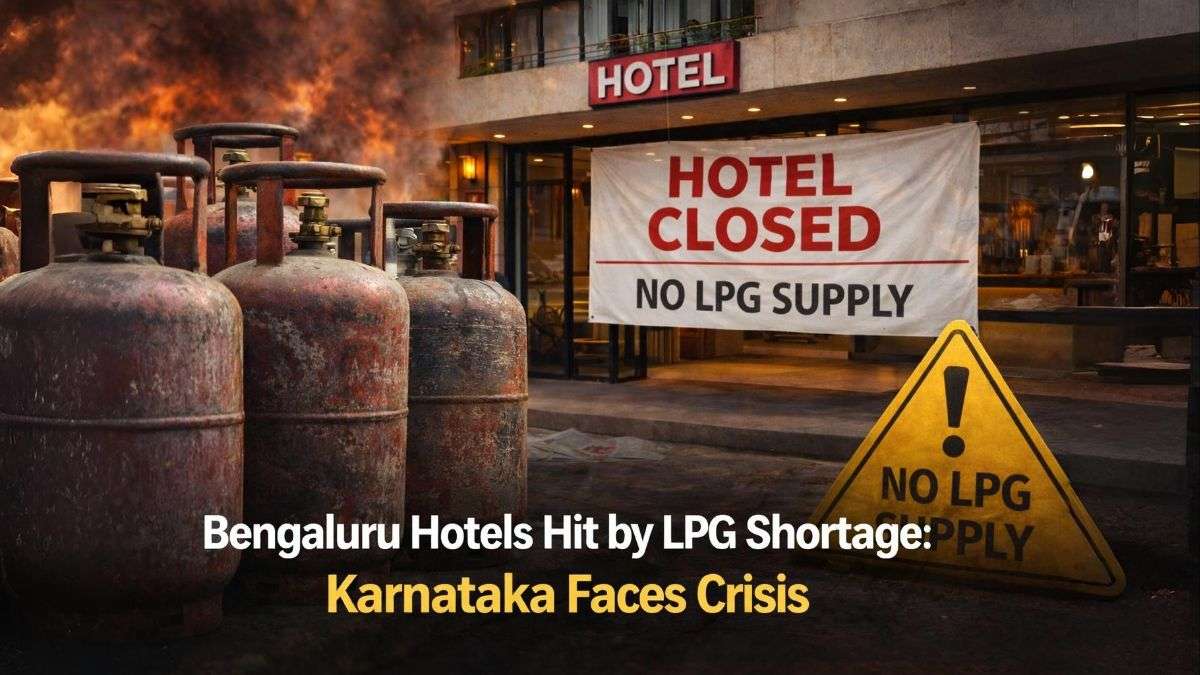
Hotels and restaurants in Bengaluru face operational challenges due to commercial LPG supply disruption in Karnataka.
Bengaluru | March 9, 2026:
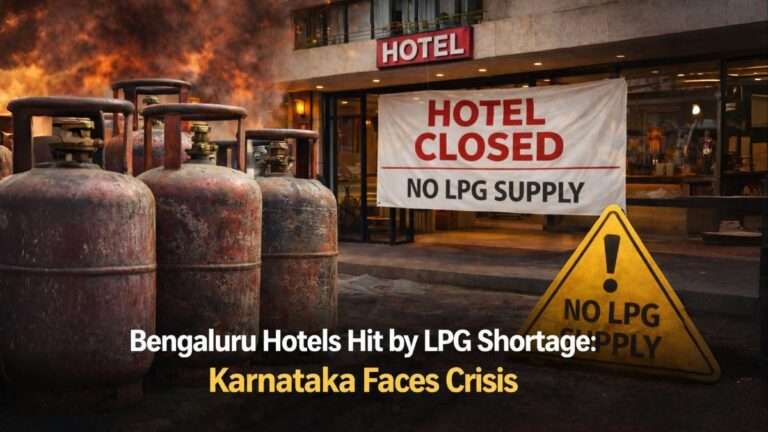
Hotels and restaurants across parts of South India, particularly in Karnataka, are facing operational challenges due to a sudden shortage of commercial LPG cylinders.
The issue came into focus on March 9, 2026, when the Bangalore Hotels Association warned that eateries in Bengaluru may be forced to suspend operations if commercial LPG supplies are not restored.
The situation has raised concerns among hospitality businesses as cooking gas remains the primary fuel for food preparation in hotels, restaurants, and small eateries.
Background of the Issue
The issue first became prominent in Bengaluru after the Bangalore Hotels Association issued a notice warning that many hotels might be forced to suspend operations if commercial LPG supplies were not restored immediately. According to the association, a large percentage of hotels rely entirely on LPG cylinders for daily cooking operations.
As supplies began to decline, several eateries reported difficulty in procuring new cylinders from distributors. Without LPG, many kitchens were unable to prepare food, leading some establishments to temporarily close or reduce their menu offerings.
States Experiencing the Impact
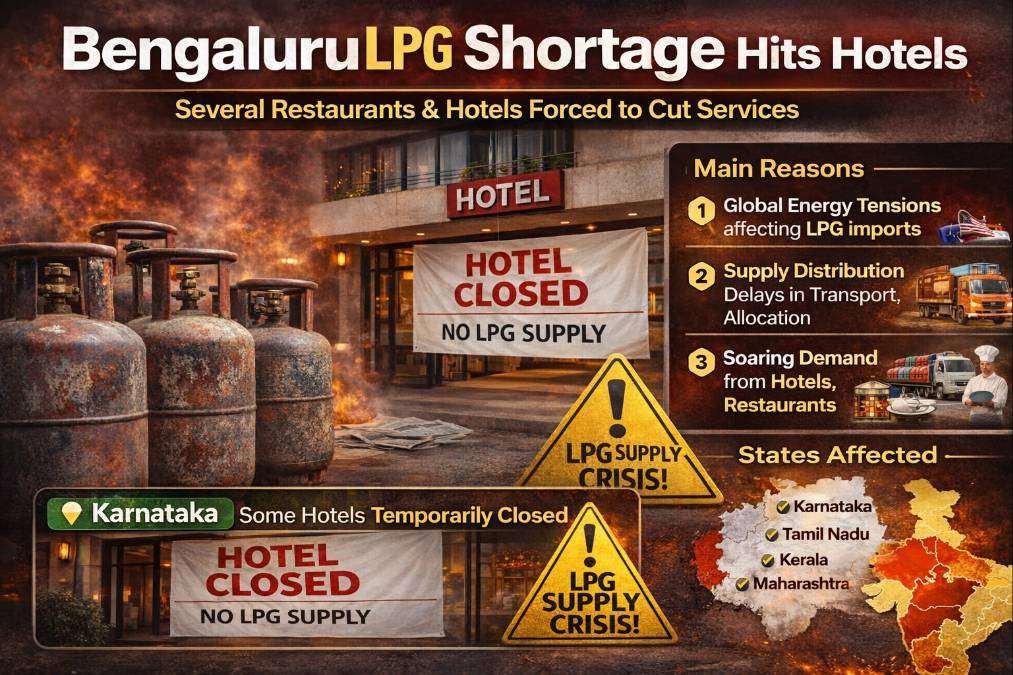
While the situation gained the most attention in Bengaluru, supply disruptions have raised concerns in other states as well. Hospitality industry groups in Tamil Nadu, Kerala, and Maharashtra have reported delays in receiving commercial LPG cylinders, although the severity varies by region.
Among these states, Karnataka has experienced the most visible impact due to the concentration of restaurants and food businesses in Bengaluru, one of India’s largest hospitality markets.
Key Reasons Behind the Shortage
Industry experts attribute the shortage to a combination of global and domestic supply factors.
1. Global Energy Supply Disruptions
Recent geopolitical tensions in West Asia have affected international energy logistics. LPG imports form a significant portion of India’s commercial gas supply, and disruptions in global shipping routes can delay deliveries to domestic distributors.
2. Distribution Bottlenecks
Hospitality associations have also pointed to logistical delays in the distribution network. Even when LPG imports reach Indian ports, delays in transportation and allocation to commercial users can lead to temporary shortages at the city level.
3. Rising Demand from the Hospitality Sector
Cities such as Bengaluru have witnessed rapid growth in restaurants, food delivery kitchens, and cafés. The increased demand for commercial LPG cylinders has placed additional pressure on supply chains.
Government Response
State and central authorities have been alerted to the issue by hospitality associations and public representatives. Requests have been made to prioritize commercial LPG allocation for restaurants and hotels to prevent disruption to food services.
Officials from the petroleum ministry and state administration are monitoring the situation, and steps are expected to ensure that LPG distribution stabilizes in the coming days.
Current Situation: Despite viral claims suggesting a complete shutdown of hotels in Bengaluru, industry sources clarify that the situation is not universal. Many establishments continue to operate by using alternative arrangements such as stored cylinders, limited menus, or shorter operating hours.
However, if supply delays continue, more restaurants may face operational challenges in the near term.
Conclusion
The current LPG shortage highlights how global energy supply disruptions can quickly affect local industries. For cities heavily dependent on the hospitality sector, consistent access to commercial cooking fuel remains critical.
Industry bodies are now urging authorities to strengthen LPG distribution mechanisms and ensure uninterrupted supply so that restaurants and hotels can continue to serve customers without interruption.
About The Author