In 2026, competitive exams are not failing students students are failing the process Over the last five years, exam patterns for government jobs have changed quietly but deeply. Exams conducted by bodies like UPSC, SSC, RRB, banking exams, and state PSCs now focus less on memory and more on understanding, logic, and application.
Yet, most aspirants still prepare using outdated methods That mismatch is the main reason behind repeated failure.
The Biggest Mistake (2021–2026): Studying Without Understanding
In the last five years, educators and mentors have repeatedly pointed out one common issue students study answers, not concepts.
Many aspirants memorise facts, formulas, and shortcuts without knowing why something works. This approach may help in coaching tests but collapses in real exams, where questions are twisted, indirect, and logic-based.
Recent exam analysis shows that questions now test:
- conceptual clarity
- elimination ability
- real-life application
Students who rely on rote learning fail to adapt.
Resource Overload Is Killing Preparation
Today’s generation has access to unlimited PDFs, Telegram channels, YouTube videos, AI notes, and paid courses. Ironically, this abundance has become a weakness.
Most students:
- start one book and leave it halfway
- jump between multiple sources for the same topic
- follow “expected questions” instead of the syllabus
As education experts explain, repeating one reliable source multiple times is more effective than touching ten sources once. Toppers from the last five years consistently say they limited their materials and focused on revision.
Read This Article Also: How to Prepare for Any Exam
Coaching Dependency and False Promises
Another major reason for failure is blind dependence on coaching institutes.
Coaching can guide, but it cannot replace:
- self-study
- revision
- practice
- self-analysis
In recent years, many institutes advertised unrealistic selection numbers, creating false confidence among students. When results didn’t match expectations, students were left confused and demotivated Mentors now clearly advise: use coaching as support, not as a guarantee.
Ignoring Previous Year Question Papers (PYQs)
One of the most surprising mistakes is that many aspirants do not seriously analyse previous year question papers.
PYQs Reveal:
- actual exam level
- repeated concepts
- topic weightage
- question style evolution
Students who ignore PYQs often study irrelevant topics deeply and miss high-probability areas. Over the past five years, successful candidates across exams have strongly emphasised
Mock Tests Without Analysis Are Useless
Many students take mock tests just to check scores. This is a critical mistake.
Mocks are meant to:
- identify weak areas
- improve time management
- train the brain for pressure
Without detailed analysis of mistakes, mock tests do not improve performance. In fact, repeated low scores without understanding mistakes damage confidence.
Misinformation, Shortcuts, and Exam Scams
From 2022 onwards, exam authorities have repeatedly warned about:
- fake leaked papers
- paid “sure-shot” PDFs
- viral shortcuts on social media
Students chasing shortcuts waste valuable time and lose focus on fundamentals. Real exam trends show that there are no shortcuts anymore only clarity and consistency work.
Mental Pressure and Burnout The Silent Reason
Another reality of recent years is rising mental stress among aspirants.
Continuous comparison, family pressure, financial burden, and repeated failures affect:
- memory
- concentration
- decision-making
A tired mind cannot perform in a competitive environment. Educators now openly stress the importance of balanced routines, proper sleep, and realistic expectations.
What Actually Works in Competitive Exams Today
Based on mentor guidance and successful student experiences from the last five years, effective preparation in 2026 follows a clear pattern.
First, students must understand the syllabus completely and prioritise high-weight topics. Second, they should focus on concept clarity using limited, standard sources and revise them repeatedly. Third, regular PYQ practice and mock test analysis should be part of weekly preparation, not an afterthought.
Reliable preparation sources include:
- NCERT textbooks for fundamentals
- official exam notifications and syllabi
- previous year question papers
- reputed educational platforms focused on concepts, not predictions
Most importantly, self-study with honest self-evaluation beats blind hard work.
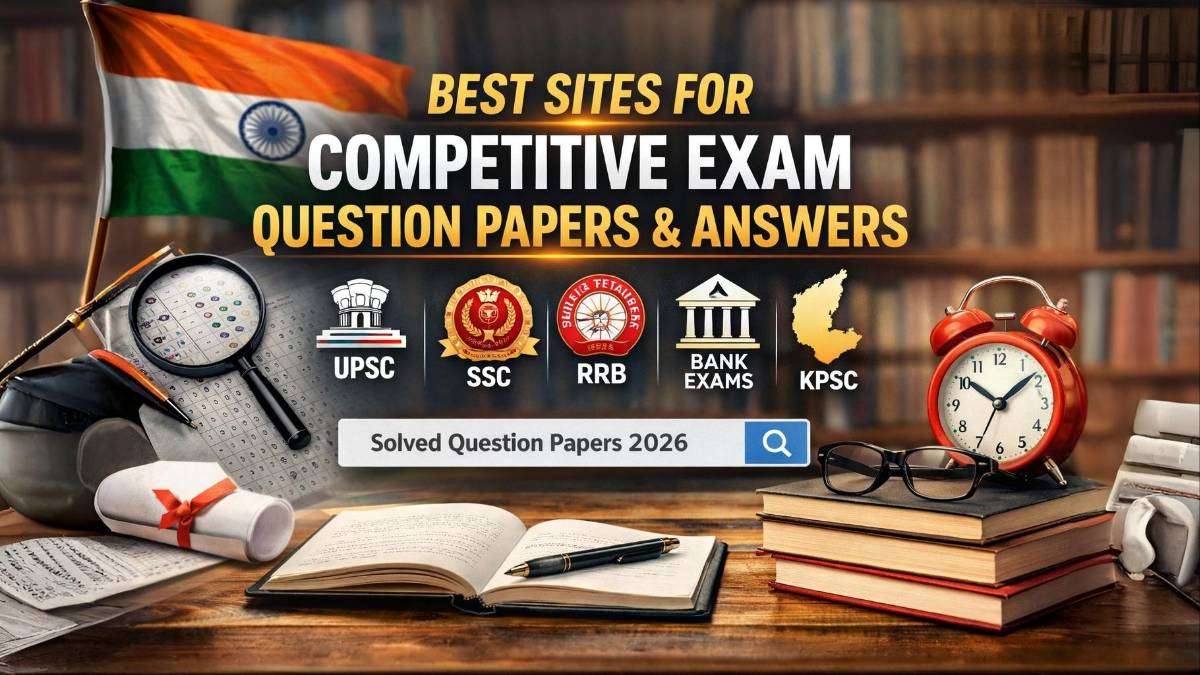
| No | Website Name | Exams Covered | Direct Link |
|---|---|---|---|
| 1 | UPSC Official | UPSC Prelims & Mains | Visit Site |
| 2 | SSC Official | SSC CGL, CHSL, MTS, GD | Visit Site |
| 3 | RRB Official | Railway Exams (NTPC, Group D) | Visit Site |
| 4 | Bankers Adda | Banking & Insurance Exams | Visit Site |
| 5 | Gradeup (BYJU’S Exam Prep) | SSC, Banking, Railways | Visit Site |
| 6 | Adda247 | SSC, Banking, State Exams | Visit Site |
| 7 | Testbook | All Major Govt Exams | Visit Site |
| 8 | Examrace | UPSC, State PSC, SSC | Visit Site |
| 9 | KPSC Official | Karnataka Govt Exams | Visit Site |
| 10 | FreeJobAlert | Multiple Govt Exams | Visit Site |
Read This Article Also: ATC Resume
Conclusion: Competitive exam preparation in today’s generation is no longer about collecting more study materials, but about using accurate and trusted sources.
Most students fail not because of a lack of effort, but because they depend on unreliable PDFs, social media forwards, or incomplete question papers. Using official exam websites and reputed education platforms for previous year question papers and verified answers helps aspirants clearly understand exam patterns, difficulty level, and important topics.
When students regularly practice authentic question papers, analyse their mistakes, and revise concepts based on real exam trends, preparation becomes focused and effective.
Choosing the right sources saves time, builds confidence, and reduces confusion. In competitive exams, clarity is more powerful than quantity, and accuracy always wins over shortcuts.
About The Author