CBSE 2026 New Exam Rule: Class 12 Answer Sheets to Be Evaluated Digitally Full Official Details
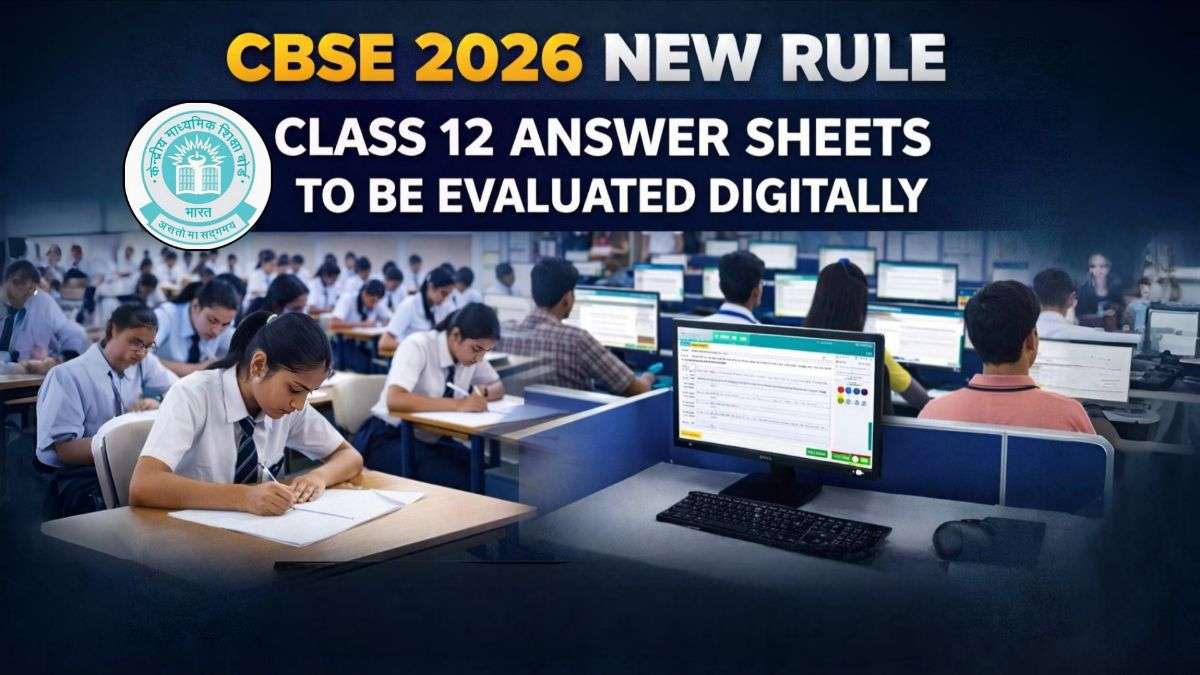
New Delhi: The Central Board of Secondary Education (CBSE) has introduced a major evaluation reform for board examinations starting 2026, bringing a technological shift in how answer sheets are checked. According to official examination system updates, Class 12 answer scripts will now be evaluated digitally using an On-Screen Marking (OSM) system.
What Is Changing?
From the 2026 board exams onward:
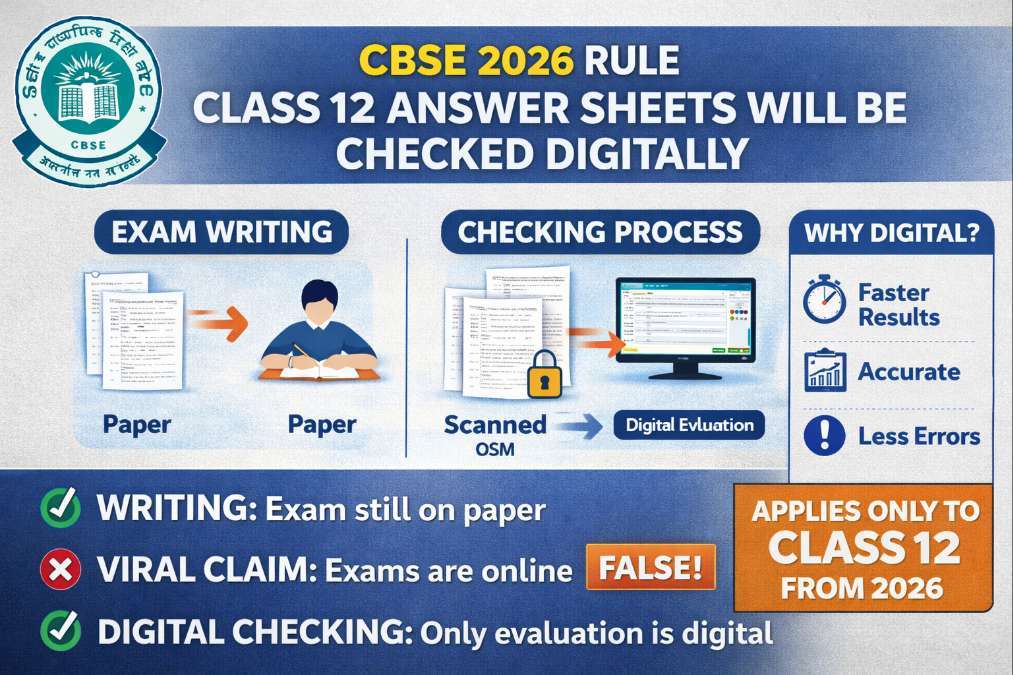
- Students will continue writing exams using pen and paper as before.
- After exams, answer sheets will be scanned and uploaded into a secure digital platform.
- Evaluators will check copies on computer screens instead of physical bundles.
This means the examination mode is unchanged, but the evaluation method becomes digital.
Purpose of the New System
CBSE aims to modernize evaluation with the following benefits:
- Faster result processing
- Reduced manual calculation errors
- Transparent marking system
- Standardized checking quality
- Better monitoring of examiners
Digital evaluation is already used by several competitive exam bodies and universities, and CBSE is expanding it for large-scale board assessment.
Who Will Be Affected?
- Applies to Class 12 students from 2026 onward
- Expected to cover lakhs of candidates across India and abroad
- Class 10 exams remain unchanged for now
Viral Claims vs Reality
Some viral social media posts claim CBSE exams will become computer-based.
This is incorrect.
👉 Reality:
- Writing exam → Offline (Paper)
- Checking exam → Digital (Computer)
No official announcement states that CBSE board exams will become fully online.
Why This Matters for Students
Students do not need to change preparation style because:
- Question pattern stays same
- Writing format stays same
- Marking scheme stays same
The only difference is the backend evaluation technology.
READ THIS: UPSC Civil Services Exam 2026 New Rules
Official Context
CBSE has been gradually introducing digital systems such as encrypted question paper distribution, barcode tracking of answer sheets, and centralized marking protocols. The new OSM system is part of this broader modernization effort.
Conclusion:
The rule is real Exams remain offline Only evaluation becomes digital This reform is designed to improve accuracy and speed of results, not to change how students write exams.
About The Author