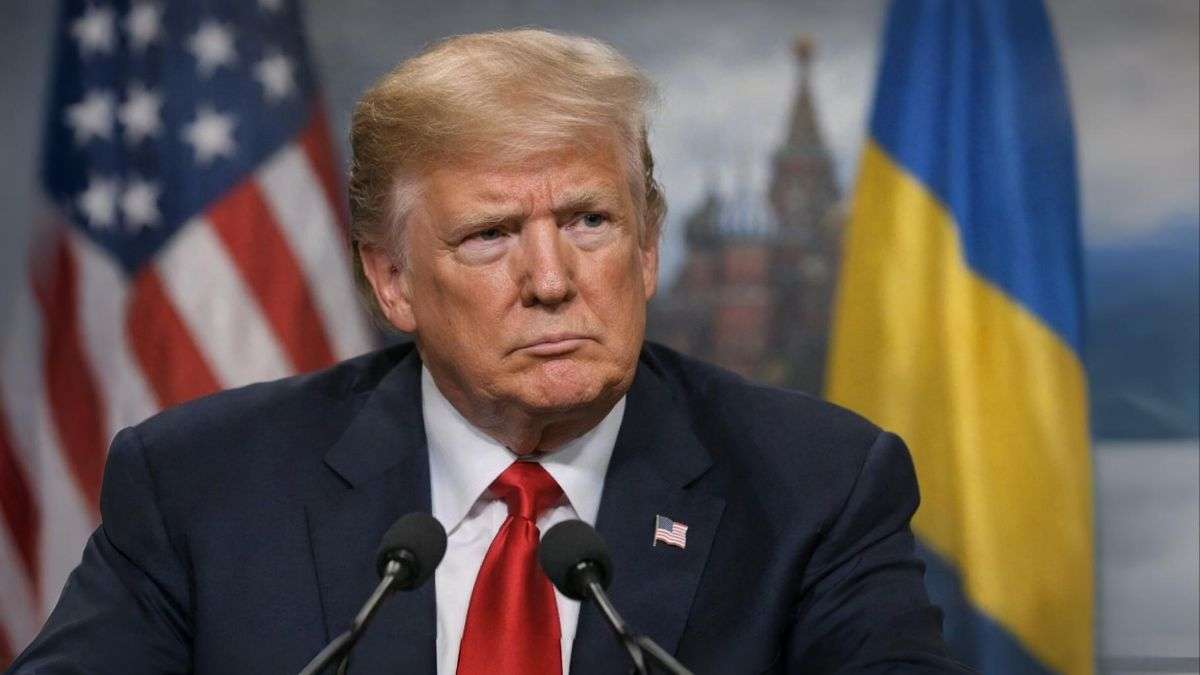
A fresh controversy has emerged in global politics after former U.S. President Donald Trump claimed that Ukraine is delaying peace talks aimed at ending the Russia-Ukraine war. The statement has quickly gained international attention because it challenges the dominant Western narrative that places responsibility for the prolonged conflict mainly on Russia. Trump’s remarks have sparked strong reactions from Ukraine, Russia, European leaders, and foreign policy experts, raising important questions about diplomacy, power politics, and the future of the war.
What Exactly Did Trump Say?
Donald Trump stated that peace negotiations could move faster if Ukraine were more willing to compromise. According to him, Moscow is “ready to make a deal,” while Kyiv is allegedly slowing down the process. This position marks a clear shift from the long-standing U.S. and NATO stance, which has consistently emphasized Russian aggression as the root cause of the conflict.
Trump’s comments were made in the context of his broader argument that the war would not have escalated under his leadership and that a negotiated settlement should be prioritized over prolonged military confrontation.
Ukraine’s Response to Trump’s Claim
Ukrainian leaders firmly rejected Trump’s statement. President Volodymyr Zelenskyy and his administration have repeatedly said that peace talks are impossible without guarantees of Ukraine’s sovereignty and territorial integrity. From Kyiv’s perspective, agreeing to negotiations without firm security assurances would reward aggression and set a dangerous precedent for international law.
Ukraine argues that the real obstacle to peace is Russia’s continued military actions, including missile strikes, drone attacks, and pressure on civilian infrastructure.
Russia’s Position and Reaction
Russia welcomed Trump’s remarks, with Kremlin officials saying his comments reflect “reality on the ground.” Moscow has often claimed that Ukraine, supported by Western allies, is unwilling to negotiate seriously. Trump’s statement therefore aligns closely with Russia’s public messaging, which has further intensified debate in diplomatic circles.
However, many analysts caution that Russia’s stated willingness to negotiate does not necessarily mean readiness to withdraw troops or accept terms acceptable to Ukraine.
Why Trump’s Statement Matters Globally
Trump is not just a former president; he remains a highly influential political figure in the United States. His words carry weight, especially as global leaders and markets closely watch U.S. foreign policy signals.
This statement matters because:
- It could influence U.S. public opinion on military aid to Ukraine
- It adds pressure on European allies, who are already divided over long-term support
- It reshapes the peace negotiation narrative, shifting focus from battlefield dynamics to diplomatic responsibility
If Trump returns to power or continues shaping Republican policy, his approach could significantly alter Washington’s role in the conflict.
Impact on US–Europe Relations
Many European leaders have expressed concern over Trump’s framing of the issue. For countries bordering Russia or Ukraine, the war is seen as an existential security threat. Any suggestion that Ukraine should compromise territory or political independence is viewed as unacceptable. Trump’s remarks risk widening existing gaps between the U.S. and its European allies, especially those pushing for sustained military and economic support for Kyiv.
Humanitarian Reality on the Ground
While political leaders debate responsibility, the war’s human cost continues to grow. Ukraine is facing severe challenges, including energy shortages, displacement of civilians, and economic strain. Winter conditions have made the situation even more difficult, with millions affected by power outages and damaged infrastructure. These realities underline why peace talks are such a sensitive issue for Ukraine, where compromise is often seen as coming at the cost of national survival.
What This Means for the Future of the War
Trump’s statement does not immediately change the situation on the ground, but it does influence the global conversation. It highlights growing fatigue with the war in some political circles and raises the possibility of renewed diplomatic efforts though under contested terms.
The future of the Russia-Ukraine war will likely depend on:
- Military developments on the battlefield
- The level of continued Western support
- Political changes in the U.S. and Europe
Whether meaningful, balanced peace talks become possible
Conclusion:
Donald Trump’s claim that Ukraine is delaying peace talks has added a new and controversial layer to an already complex conflict. While Russia has welcomed his remarks, Ukraine and its allies strongly disagree, arguing that peace without justice and security is not true peace at all.
As the war continues, Trump’s words serve as a reminder that global conflicts are shaped not only by weapons and armies, but also by narratives, political influence, and shifting international priorities. The coming months will show whether this renewed debate leads to real diplomacy or simply deepens existing divisions.
About The Author