India Assembly Elections 2026: Election Commission Announces Poll Dates for Assam, Kerala, Tamil Nadu, West Bengal and Puducherry
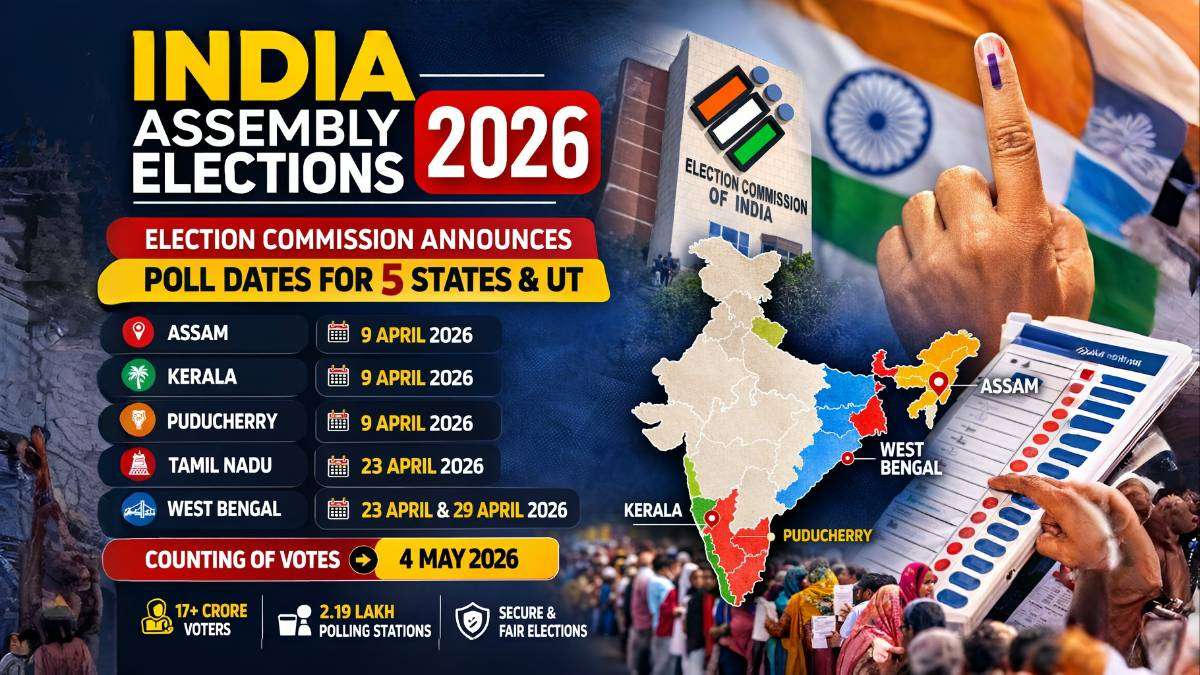
The Election Commission of India has officially announced the schedule for the 2026 Legislative Assembly elections in four states Assam, Kerala, Tamil Nadu, West Bengal and the Union Territory of Puducherry.
The announcement was made during an official press briefing in New Delhi, outlining the polling phases, voting dates, and counting schedule for these crucial regional elections. The elections will determine the formation of new governments in these regions before the end of the current assembly terms in mid-2026.

Election Schedule for 2026 Assembly Polls
According to the election timetable released by the commission, voting will be conducted on multiple dates during April 2026.
| State / Union Territory | Poll Date | Phase |
|---|---|---|
| Assam | 9 April 2026 | Single Phase |
| Kerala | 9 April 2026 | Single Phase |
| Puducherry | 9 April 2026 | Single Phase |
| Tamil Nadu | 23 April 2026 | Single Phase |
| West Bengal | 23 April & 29 April 2026 | Two Phases |
The counting of votes for all five regions will take place on 4 May 2026, after which results will determine the formation of new state governments.
Scale of the Elections
The upcoming assembly elections will involve hundreds of constituencies and millions of voters across India. The approximate number of assembly seats in each region is as follows:
| State / UT | Total Assembly Seats |
|---|---|
| Assam | 126 |
| Kerala | 140 |
| Tamil Nadu | 234 |
| West Bengal | 294 |
| Puducherry | 30 |
In total, more than 800 assembly seats will be contested across these five regions.
Election authorities are expected to deploy over two lakh polling stations and large numbers of election officials and security personnel to ensure smooth and secure voting.
Key Political Context
These elections are considered politically significant because they will decide the fate of major political parties governing these states:
In Assam, the government is led by the Bharatiya Janata Party (BJP) alliance. Kerala is currently governed by the Left Democratic Front (LDF) led by CPI(M).
Tamil Nadu is ruled by the Dravida Munnetra Kazhagam (DMK) alliance. West Bengal is governed by the All India Trinamool Congress (TMC). Puducherry is led by a BJP-supported alliance government.
The results will indicate whether voters continue supporting the current governments or opt for political change.
Election Process and Timeline
Following the announcement of election dates, the election process typically includes several stages:
- Issue of official election notification
- Filing of nomination papers by candidates
- Scrutiny of nominations by election authorities
- Deadline for withdrawal of candidature
- Polling on scheduled dates
- Counting of votes and declaration of results
During the election period, the Model Code of Conduct comes into effect, regulating government announcements and campaign activities to ensure fair elections.
Official Source and Verification
The election schedule and related information were released by the Election Commission of India, the constitutional authority responsible for conducting elections to Parliament, state legislatures, and the offices of President and Vice-President in India.
The announcement was made through an official press conference and published through verified government and media channels.
Conclusion:
The 2026 assembly elections in Assam, Kerala, Tamil Nadu, West Bengal, and Puducherry represent one of the most significant political events of the year. With millions of voters expected to participate and hundreds of constituencies at stake, the results on 4 May 2026 will shape the political landscape of these regions for the next five years.
About The Author