India Minimum Wage Rules 2026 Explained Salary Structure, Wage Code & Latest Updates
India’s wage ecosystem in 2026 is guided by a structured legal framework that focuses on minimum wage protection, standardized salary definitions, and social security alignment. Rather than uniform salaries, the system ensures that workers across sectors receive fair baseline compensation while allowing flexibility based on industry and region.
Legal Framework Governing Wages in India
The foundation of wage regulation is the Code on Wages, 2019, a comprehensive reform that consolidates multiple earlier labour laws into a single, streamlined system.
Key Objectives:
Establish a uniform definition of wages Ensure minimum wage coverage for all categories of workers Promote transparency in salary structures Strengthen compliance and enforcement mechanisms
This legislation applies across organized and unorganized sectors, creating a broader safety net for India’s workforce.
READ THIS: UP Govt Makes Expiry Date Mandatory on Eggs from April 1 Check New Rule
Role of Central Authorities in Wage Regulation
The Ministry of Labour and Employment plays a central role in shaping wage policies and issuing national-level guidelines.
Core Responsibilities:
Recommending a national floor wage Publishing advisories and compliance frameworks Coordinating with state governments for implementation Monitoring labour law enforcement across sectors
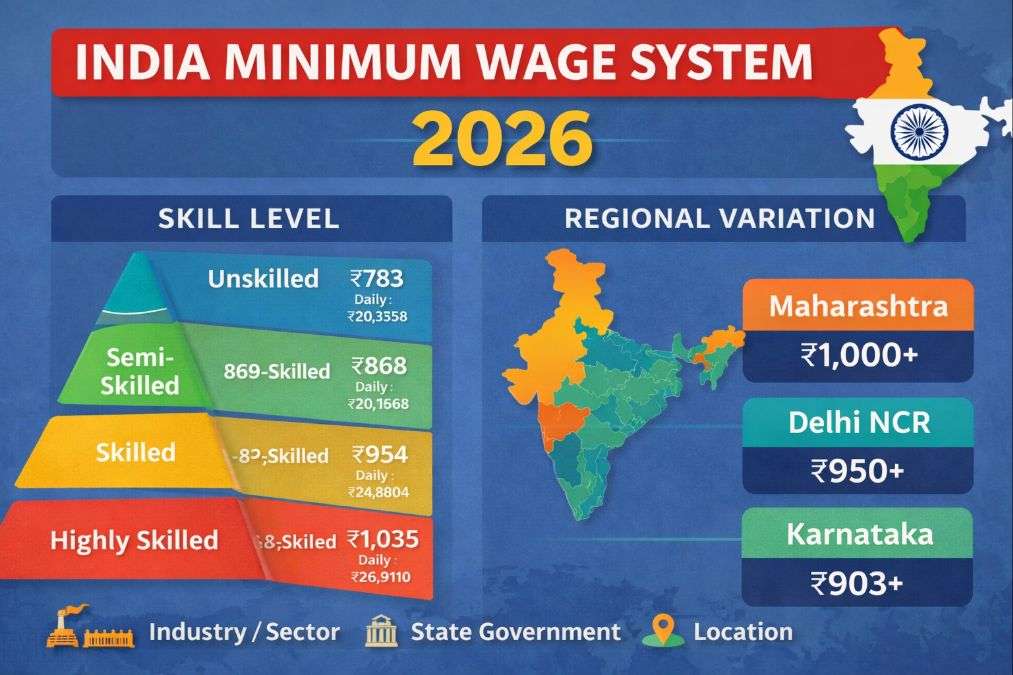
The national floor wage acts as a baseline reference, ensuring that no state sets wages below a minimum threshold Minimum Wage System in Practice India follows a multi-layered wage structure, where actual wages vary based on several critical factors:
Determining Factors:
Skill Level Unskilled, semi-skilled, skilled, highly skilled Geographical Location Urban, semi-urban, rural Industry Type Construction, manufacturing, services, agriculture State Regulations Each state determines its own wage rates above the national floor
This decentralized approach allows states to adjust wages based on local economic conditions and cost of living.
Salary Structure Reforms and Compliance
Recent regulatory updates emphasize a balanced salary composition, particularly affecting how companies structure compensation packages.
Important Structural Guideline:
Basic salary component should form at least 50% of total compensation (CTC) Impact on Employees Increased contributions to Provident Fund (PF) Higher gratuity benefits over time Improved long-term financial security
While take-home salary may vary depending on restructuring, the long-term benefits for employees are significantly strengthened.
State-Level Wage Variations
Unlike centralized salary systems, India’s wage model allows state governments to set region-specific minimum wages.
Why Variation Exists:
- Differences in cost of living
- Regional economic activity levels
- Availability of labour and industry demand
For example:
- Industrial states may offer higher wage floors
- Rural-focused states may maintain lower but regulated thresholds
- This ensures both economic flexibility and worker protection.
Compliance and Employer Obligations
Employers across India are legally required to Pay at least the notified minimum wage Maintain transparent salary records Adhere to timely wage payments Ensure compliance with labour inspections and audits Non-compliance can result in penalties and legal consequences under the wage code.
Conclusion:
India’s wage system in 2026 reflects a balanced approach between worker protection and economic flexibility. Through structured reforms, standardized definitions, and decentralized implementation, the framework ensures fair minimum compensation while allowing industries and states to operate efficiently.
The emphasis remains on sustainable wage growth, legal compliance, and long-term financial security for workers, rather than uniform salary structures.
About The Author