India and Russia Elevate Strategic Partnership to Comprehensive Economic and Technological Compact
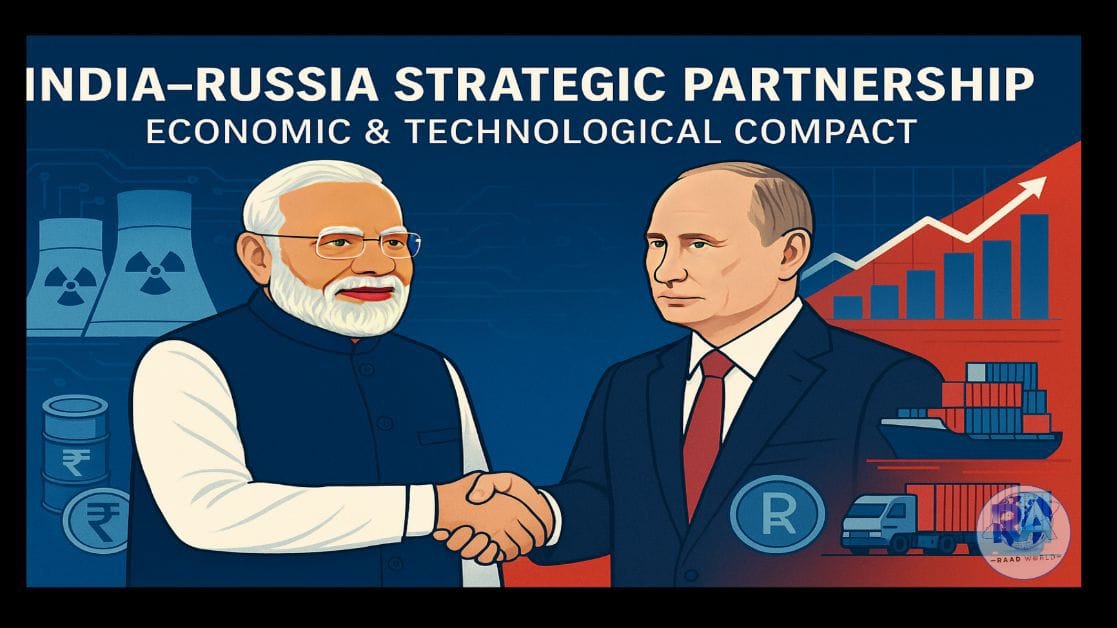
India and Russia are leveraging their latest summit to transition their relationship from a traditional strategic partnership to a more expansive economic and technological compact, with nuclear energy and bilateral trade standing out as the primary pillars of their engagement.
The deepening of nuclear cooperation, particularly around the Kudankulam project and discussions for a second Russian-designed plant, coupled with an ambitious target of 100 billion dollars in bilateral trade, underscores both nations’ pursuit of long-term interdependence amidst global geopolitical pressures.
Deeper Nuclear Cooperation
Both India and Russia have reiterated their commitment to civil nuclear energy as a cornerstone of their “Special and Privileged Strategic Partnership.” This collaboration encompasses critical areas such as fuel supply, life-cycle support, and the development of new high-technology applications.
Read This Article Also: Modi Gifts Bhagavad Gita to Putin: A Symbol of India’s Timeless Wisdom and Friendship
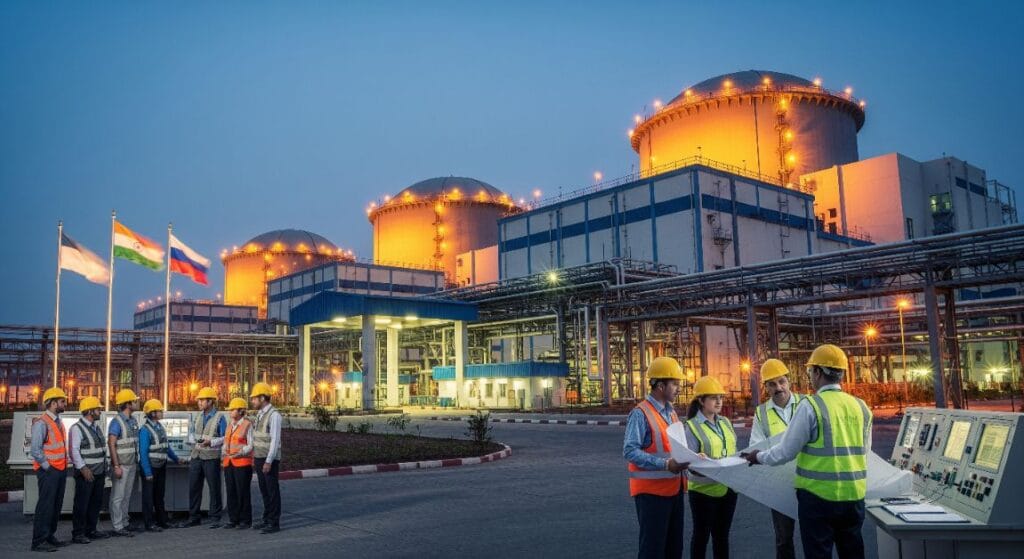
The Kudankulam Nuclear Power Plant in Tamil Nadu, already India’s largest, is slated for expansion to its full six-unit capacity. Concurrently, technical and commercial discussions are ongoing to identify a suitable site for an additional Russian VVER reactor project in India.
Beyond mere power generation, the two countries have agreed to collaborate on the joint manufacturing and localization of nuclear equipment and fuel assemblies. This initiative strongly aligns with India’s national objectives of promoting domestic manufacturing through its “Make in India” program and achieving greater self-reliance.
This enhanced cooperation is pivotal in supporting India’s long-term vision to significantly expand its nuclear capacity, aiming for approximately 100 GW by 2047, as part of its broader clean energy transition and climate change commitments.
Trade Surge and Imbalances
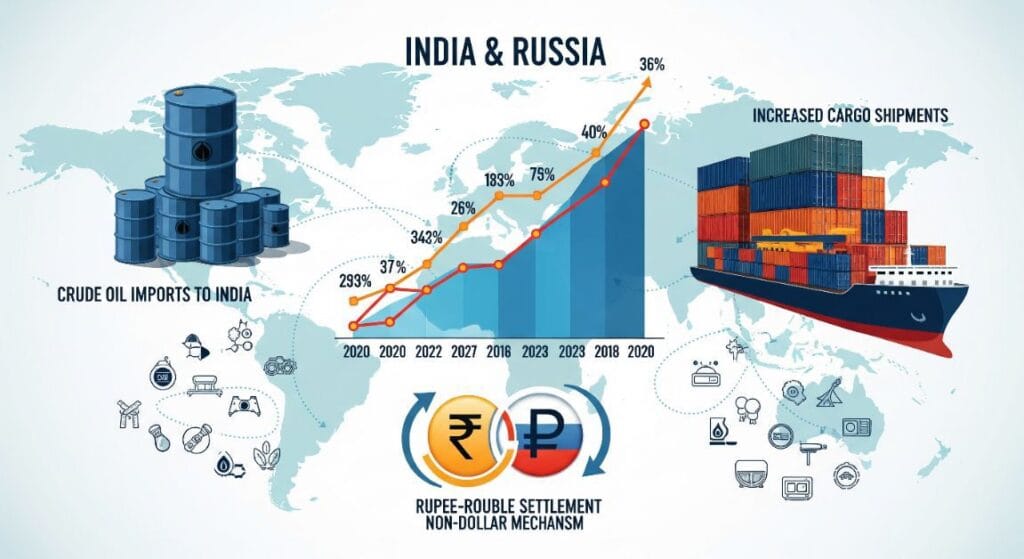
Bilateral trade has experienced a remarkable surge in recent years, reaching close to 69 billion dollars in the 2024–25 period. This growth has been predominantly fueled by India’s substantial imports of discounted Russian crude oil.
However, the current trade balance is significantly skewed in Russia’s favor. Indian exports remain relatively modest when compared to the considerable volume of energy products, fertilizers, and defense items flowing from Russia into India.
Both governments have jointly set an ambitious target to achieve 100 billion dollars in annual bilateral trade by 2030. To reach this goal and address the existing imbalance, both nations are actively exploring avenues to diversify trade into sectors including agriculture, pharmaceuticals, machinery, chemicals, and various services.
A notable structural shift in trade dynamics is the increasing adoption of national currencies for transactions. The majority of bilateral trade is now being settled in rupees and roubles, which effectively reduces the exposure to dollar-based sanctions and global financial pressures.
New Frameworks and Connectivity
An economic cooperation program, scheduled to run until 2030, has been established to guide collaborative efforts across key sectors such as energy, manufacturing, transport corridors, digital payment systems, and financial infrastructure. Furthermore, both sides are making progress in negotiations for a comprehensive free trade agreement between India and the Eurasian Economic Union. Such an agreement could potentially grant preferential market access for Indian goods and services in Russia and other member countries of the union.
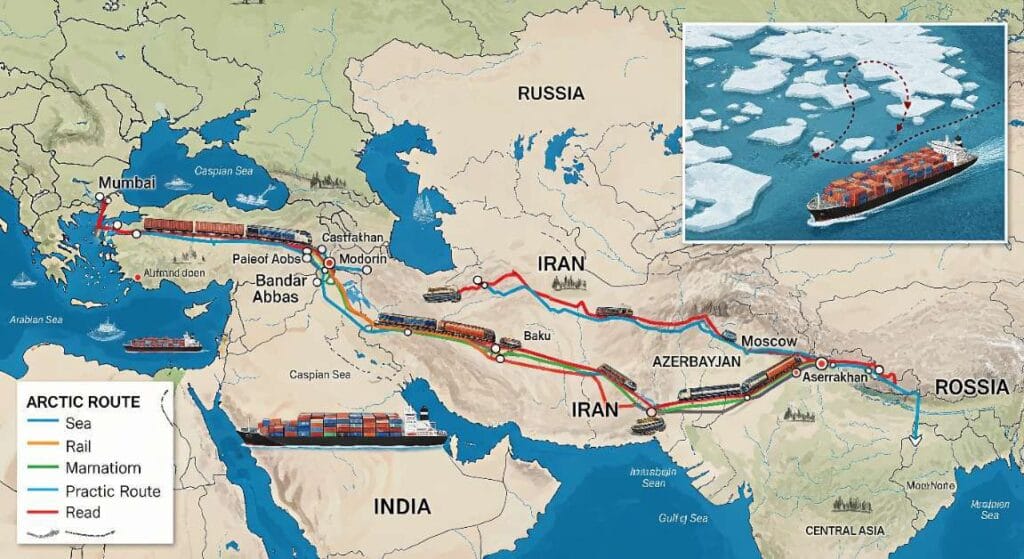
Initiatives focused on connectivity, including the International North–South Transport Corridor and the development of Arctic shipping routes, are being prioritized. These projects aim to reduce transit times and associated costs for Indian exports destined for Russia and onward to European markets. These connectivity routes, alongside sustained energy flows and joint industrial ventures, are designed to anchor the partnership in tangible economic benefits rather than relying solely on political symbolism.
Strategic and Geopolitical Significance
For India, fostering deeper cooperation in nuclear energy and trade with Russia provides crucial benefits, including enhanced energy security, access to advanced technologies, and increased geopolitical flexibility. This is particularly valuable amidst current global supply chain volatilities and great-power rivalries.
From Russia’s perspective, India represents a significant and reliable market, as well as a vital Asian partner. This relationship helps Russia to offset the impact of Western sanctions and economic isolation that followed the conflict in Ukraine. Despite its growing engagement with Western nations, India consistently refers to Russia as a time-tested partner and maintains a deliberate approach to preserve its strategic autonomy by engaging with multiple global power centers.
PM Narendra Modi | Putin Modi Meeting
Video Credits : Firstpost YT Channel
The expansion of bilateral cooperation, moving beyond defense and energy into critical areas like payments, logistics, agriculture, and high technology, indicates that the India–Russia relationship is evolving into a truly multi-dimensional economic partnership. This evolution is firmly anchored in mutually beneficial, long-term interests.
Read This Article Also: Fastest Growing Economies in 2026: India Leads Global Growth
Conclusion : India and Russia are entering a new era of long-term economic and technological cooperation. With expanding nuclear projects, a push towards $100 billion yearly trade, increased rupee rouble transactions, and major connectivity corridors, the partnership is becoming broader and more future-focused than ever. This upgraded strategic compact not only strengthens both countries’ economic resilience but also enhances their geopolitical stability in an evolving global landscape.
About The Author


 Creator Adarsh