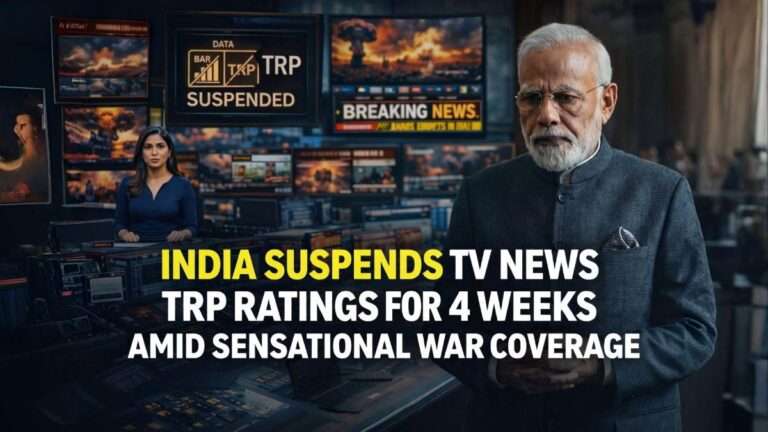
India Freezes TV News TRP Ratings for 4 Weeks Amid Sensational War Coverage
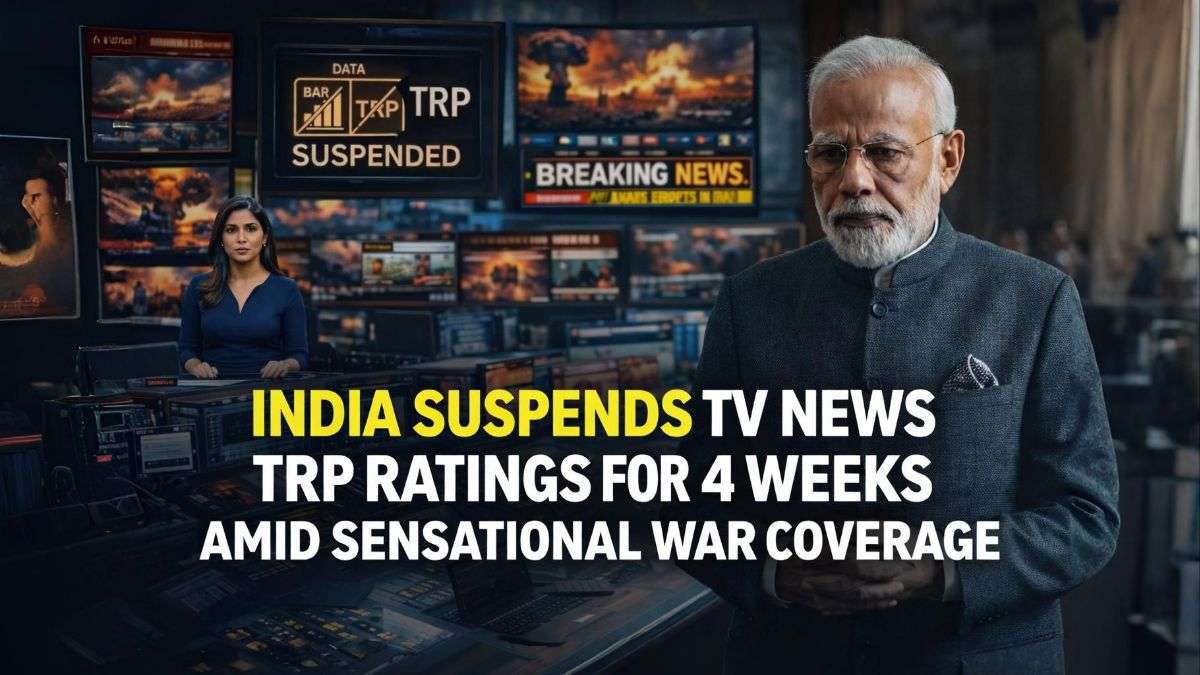
In a significant development in India’s media landscape, reports claim that the government has temporarily suspended Television Rating Points (TRP) for news channels for four weeks. The move reportedly comes amid concerns about sensational coverage related to the Iran war and global tensions, which authorities believe could create unnecessary panic among viewers. The decision is aimed at reducing the race for ratings among television news channels, encouraging responsible journalism during sensitive international developments.
What Are TRP Ratings?
TRP (Television Rating Points) measure the popularity and viewership of television programs. In India, TRP data is collected and analyzed by the Broadcast Audience Research Council (BARC).
How TRP Works
- Selected households are equipped with BAR-O-meters.
- These devices track which channels people watch and for how long.
- Data is compiled to determine viewership trends and program rankings.
Higher TRP ratings often translate into:
- Increased advertising revenue
- Greater channel influence
- Stronger competition among news networks
Why TRP Ratings Were Suspended
The temporary freeze reportedly aims to curb sensational reporting during sensitive global developments.
1. Preventing Sensationalism
When channels compete heavily for TRP, news presentation may become overly dramatic or exaggerated to attract viewers. Authorities believe the suspension could help reduce sensational headlines and panic-inducing narratives.
2. Responsible War Coverage
With global geopolitical tensions and war-related news dominating headlines, the government wants channels to focus on factual reporting rather than dramatic storytelling.
3. Maintaining Public Calm
The main objective behind the freeze is to prevent unnecessary public anxiety during conflict-related coverage.
Impact on Television News Channels
The TRP suspension could have several immediate effects on the television news industry.
Reduced Competition
Without weekly TRP rankings, channels may focus less on aggressive ratings battles.
Advertising Strategy Changes
Advertisers often rely on TRP data to determine where to place advertisements. A temporary suspension may lead advertisers to use historical data or alternative metrics.
Content Quality Focus
Experts believe this period may encourage balanced journalism instead of sensational news debates.

Background: TRP Controversies in India
India’s television rating system has faced scrutiny in the past. In 2020, authorities investigated allegations of TRP manipulation by certain channels, which triggered major reforms in the ratings process. Since then, regulators and media bodies have taken steps to increase transparency and credibility in the measurement system.
Government and Regulatory Oversight
India’s broadcasting sector is regulated under the supervision of the Ministry of Information and Broadcasting, which monitors media operations and ensures compliance with broadcasting guidelines. The TRP measurement system itself is operated by Broadcast Audience Research Council, an industry body representing broadcasters, advertisers, and advertising agencies.
Conclusion:
The reported four-week suspension of TV news TRP ratings highlights the growing concern about sensationalism in modern television journalism. By temporarily halting the ratings race, authorities aim to promote responsible reporting and reduce panic-driven narratives during sensitive global developments. Whether this move will significantly change the tone of news coverage remains to be seen, but it clearly signals a strong message to the television industry about prioritizing accuracy over ratings.
About The Author