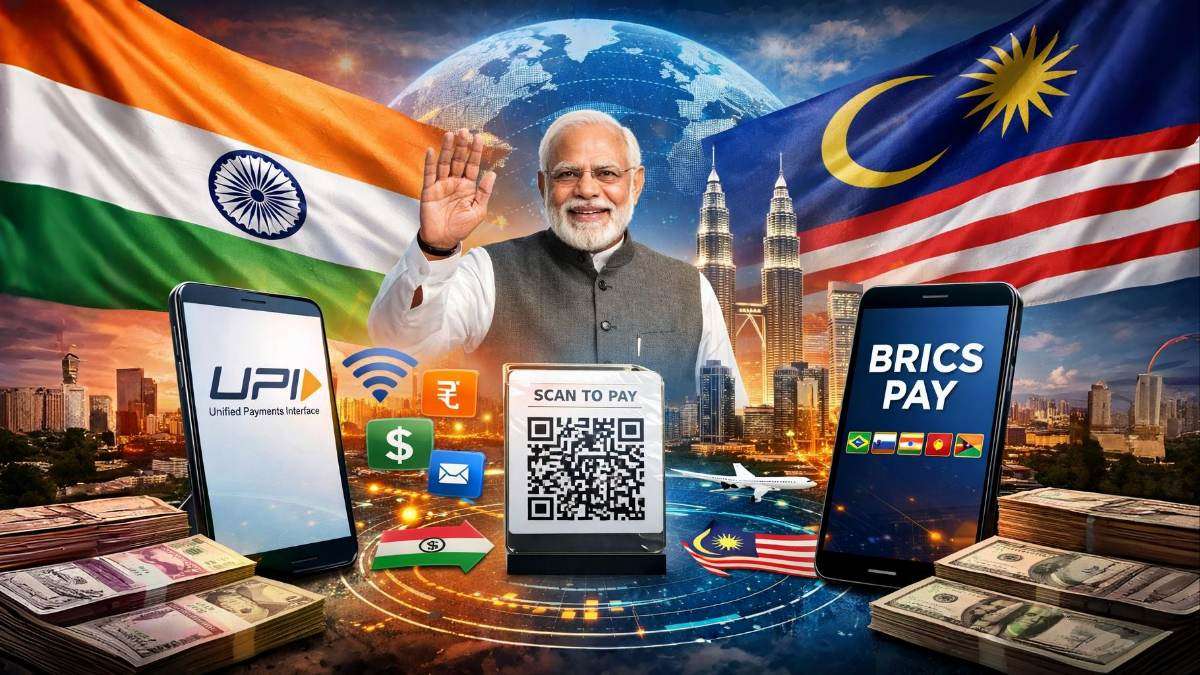
India’s digital payments success story continues to gain international attention as the Unified Payments Interface (UPI) prepares to enter Malaysia, marking another important step in India’s global fintech journey.
During Prime Minister Narendra Modi’s official visit to Malaysia, it was confirmed that UPI will be introduced in Malaysia soon, following discussions between Indian authorities and Malaysia’s national payments network. While the exact rollout timeline is yet to be announced, the move reflects growing trust in India’s digital payment infrastructure.
UPI’s Growing Global Footprint
UPI, developed by the National Payments Corporation of India (NPCI), has already proven its strength inside India by enabling fast, low-cost, real-time transactions. Over the last few years, India has been actively working to make UPI usable beyond its borders, especially in countries with strong tourism, trade, and diaspora connections.
Several nations have either already enabled UPI-based payments or are in advanced stages of integration. Malaysia now joins this expanding list, making it easier for Indian travellers and businesses to make digital payments without relying heavily on international card networks.
Importantly, reports claiming that Malaysia is “the ninth country after eight others” are simplified interpretations. Officially, India has held talks with multiple countries at different stages, and not all agreements are active at the same level. Malaysia’s case stands out because it is backed by a formal political announcement and bilateral cooperation.
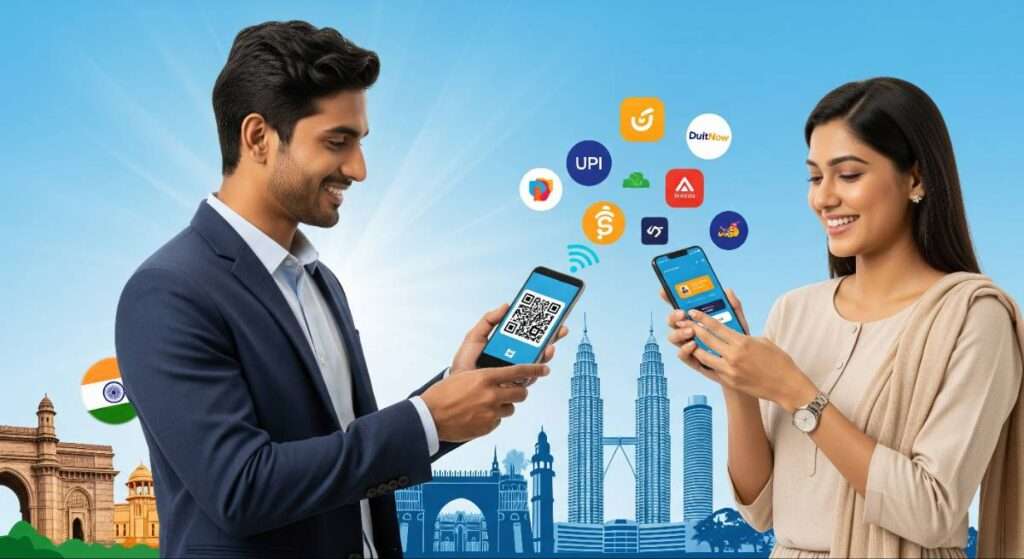
RAAD WORLD AI Generated Image
READ THIS : Artificial Intelligence
How UPI in Malaysia Will Work
Once implemented, UPI is expected to link with Malaysia’s domestic payment systems, allowing seamless QR-based and account-to-account payments. This can reduce transaction costs, speed up settlements, and improve convenience for both merchants and consumers.
However, UPI’s role remains focused on retail and merchant payments, not on replacing banking systems or international trade currencies.
Where Does BRICS Pay Fit In?
The term “BRICS Pay” has recently gained attention on social media, often presented as a direct alternative to Western financial systems. In reality, BRICS Pay is still a conceptual and developmental initiative. BRICS nations are exploring ways to improve cross-border payments using digital platforms, local currencies, and emerging technologies such as central bank digital currencies (CBDCs).
UPI’s international expansion aligns with this broader vision of reducing friction in cross-border payments, but BRICS Pay is not yet a single, operational global payment network.
Does This Threaten the US Dollar?
Claims that UPI or BRICS Pay will immediately weaken the US dollar are not accurate. The US dollar continues to dominate global trade, reserves, and international finance. UPI’s expansion improves payment efficiency, not global currency power.
What this development truly represents is India’s growing influence in digital public infrastructure, not a sudden shift in the global financial order.
The Bigger Picture
UPI’s entry into Malaysia highlights India’s ability to export scalable digital solutions. It strengthens people-to-people payments, boosts tourism convenience, and enhances bilateral economic cooperation. While it does not rewrite global finance overnight, it clearly positions India as a serious leader in digital payment innovation.
Conclusion:
UPI’s upcoming entry into Malaysia marks a steady and meaningful expansion of India’s digital payment ecosystem beyond its borders. It reflects international confidence in India’s fintech infrastructure and strengthens everyday cross-border transactions for travellers, businesses, and merchants.
While initiatives like BRICS Pay signal broader discussions on alternative payment frameworks, they remain in early stages and should not be confused with immediate global financial shifts.
Overall, this development is less about disrupting existing currency systems and more about India quietly setting global standards in fast, secure, and inclusive digital payments.
About The Author