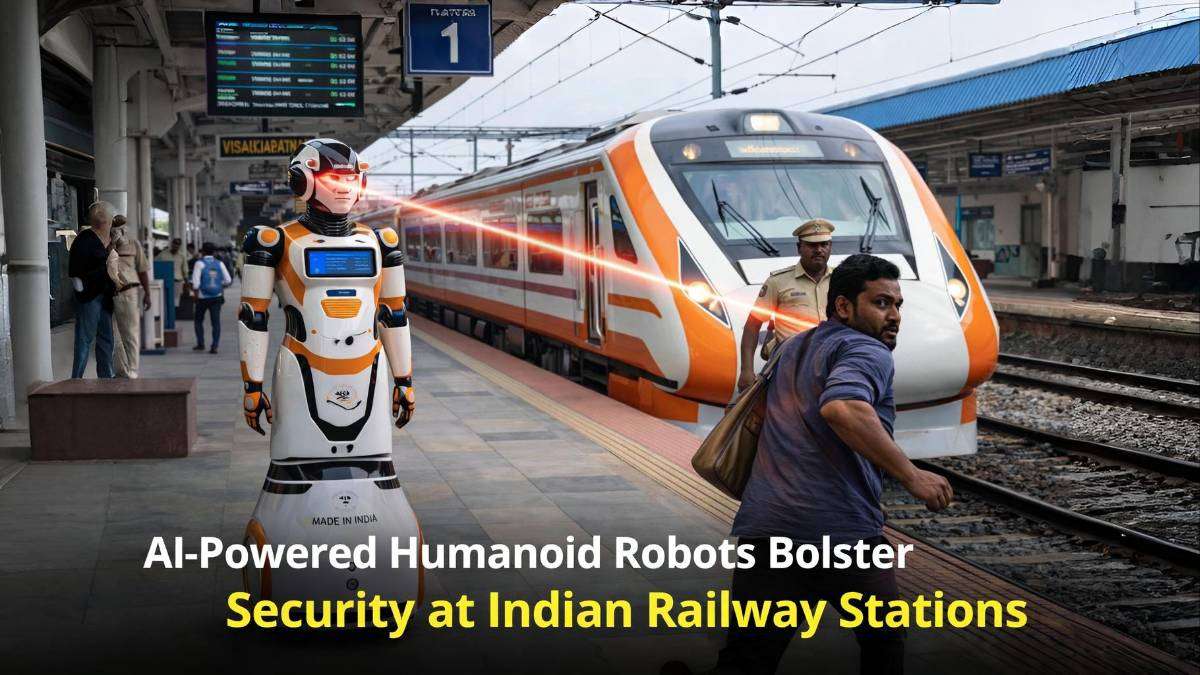
Indian Railways has taken a significant step toward modernizing railway security by introducing AI-powered humanoid robots at select railway stations in India.
This initiative reflects the growing role of artificial intelligence in public safety and infrastructure management, especially in high-footfall areas such as railway platforms.
The humanoid robot, deployed under the supervision of the Railway Protection Force (RPF), is designed to support on-ground security personnel rather than replace them.
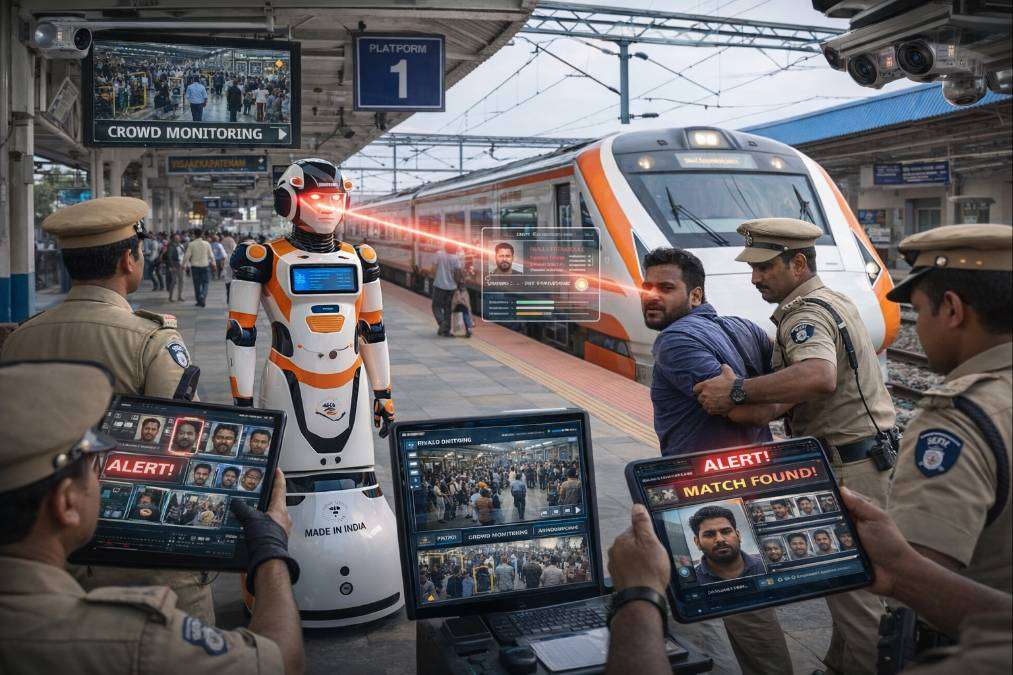
Equipped with advanced sensors, cameras, and artificial intelligence software, the robot can patrol platforms, monitor passenger movement, and assist officials in identifying suspicious activities.
How the AI Humanoid Robot Works
The robot uses an AI-based facial recognition system that scans faces in public areas and compares them with pre-authorized databases maintained by security agencies. When a potential match is detected, the system immediately alerts nearby RPF officers, who then verify the information and take appropriate action as per legal procedures.
READ THIS: Fake E-PAN Download Emails Are a Scam
Apart from crime detection, the robot also plays a key role in crowd management, passenger guidance, and public announcements. It can communicate in multiple languages, provide basic information to passengers, and act as a visible deterrent against unlawful activities.
Focus on Passenger Safety
Railway stations in India witness lakhs of passengers daily, making security management a complex task. The introduction of AI-enabled robots helps improve surveillance efficiency, reduces response time during emergencies, and allows human officers to focus on decision-making and field operations.
Officials have clarified that the technology operates strictly within legal and administrative guidelines. Human verification remains mandatory before any enforcement action, ensuring that the system supports security efforts without compromising passenger rights.
Pilot Deployment and Future Expansion
Currently, the humanoid robot deployment is part of a pilot project at selected stations. Based on performance feedback and operational success, Indian Railways may expand the use of such AI systems to other major railway hubs across the country.
This initiative aligns with India’s broader digital transformation goals and highlights how emerging technologies can be responsibly integrated into public infrastructure to enhance safety, efficiency, and service quality.
A Step Toward Smart Railways
The use of AI-powered humanoid robots marks a new chapter in Indian Railways’ journey toward becoming a smarter and more secure transport network. By combining human expertise with intelligent machines, the railway system aims to create a safer environment for passengers while adapting to modern security challenges.
Conclusion:
The introduction of AI-powered humanoid robots by Indian Railways marks a forward-looking shift in how public transport security and passenger services are managed in India.
By combining artificial intelligence with human supervision, the railway system is strengthening surveillance, improving response times, and creating a safer environment at busy stations without replacing the role of trained security personnel.
This technology-driven approach not only enhances crime prevention and crowd control but also reflects Indian Railways’ commitment to adopting smart, responsible innovations.
As pilot deployments continue and results are evaluated, AI-enabled systems like these humanoid robots have the potential to become an integral part of India’s future railway infrastructure, setting new standards for safety, efficiency, and passenger confidence.
About The Author