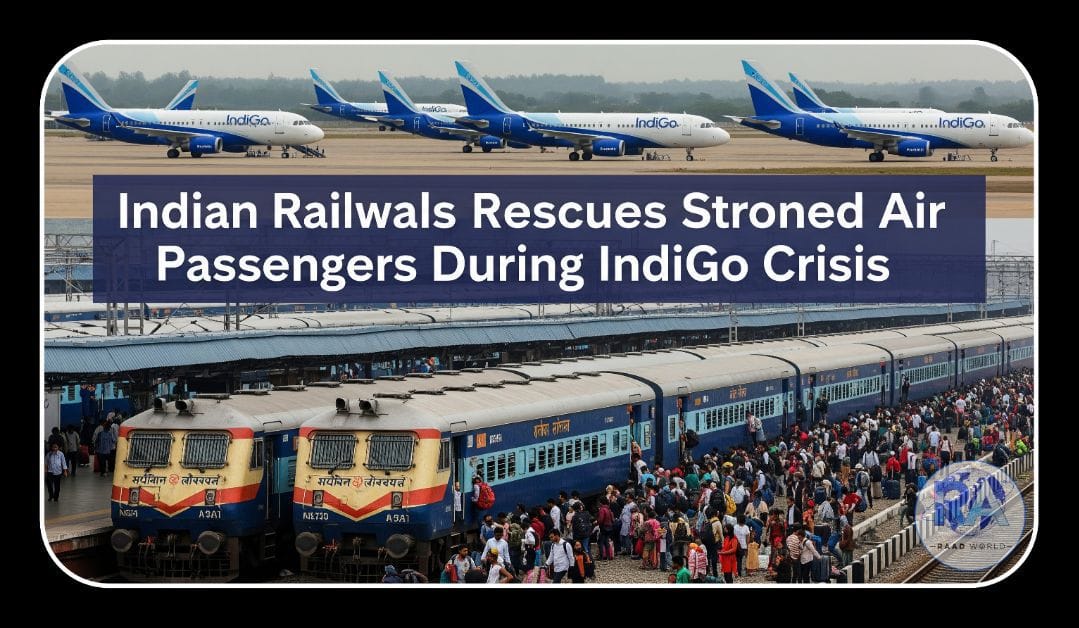
How The Crisis Started : The aviation sector in India faced a significant disruption following new Flight Duty Time Limitation (FDTL) rules that came into effect on November 1, 2025. These rules mandate increased weekly pilot rest and stricter limits on night operations. IndiGo, which operates a substantial night-heavy network and holds approximately 60% of India’s domestic market share, struggled to re-roster its pilots and aircraft under the new regulations. This led to mass flight cancellations in early December.
Civil Aviation Minister Ram Mohan Naidu characterized the situation as ‘mismanagement’ by IndiGo, distinguishing it from a systemic regulatory issue, noting that rival airlines adapted without similar chaos. By December 5, cancellations exceeded 1,000 flights, resulting in thousands of stranded passengers and soaring fares on remaining flights in key hubs like Delhi, Mumbai, and Bengaluru.
Railways’ Emergency Response
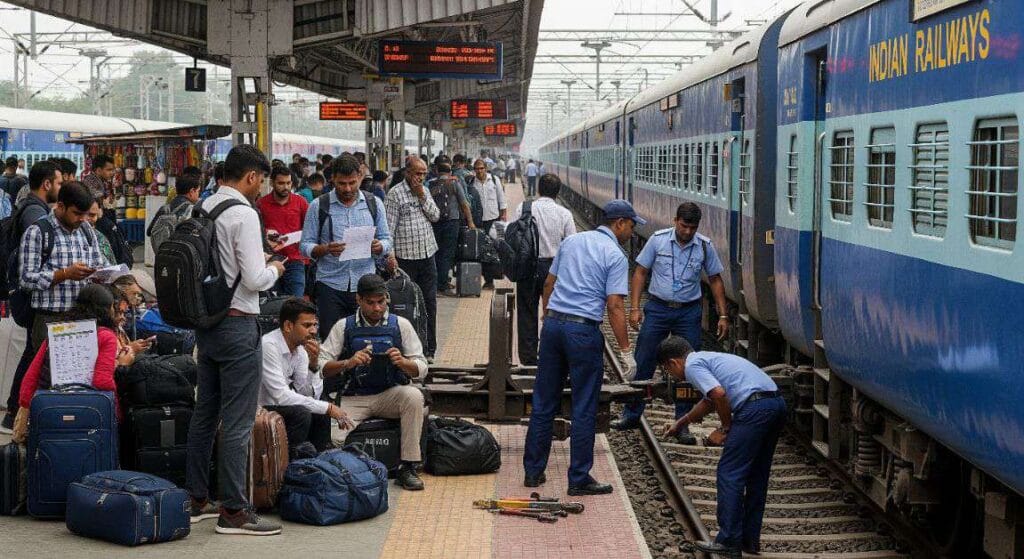
In response to the surge in demand from displaced air passengers, Indian Railways enhanced its services by strengthening 37 trains with 116 additional coaches, including AC and Sleeper variants, based on route-wise demand. Officials estimate these augmentations can accommodate roughly 35,000 additional travelers per day and approximately 26 lakh passengers over the duration of the intervention.
Key Augmentations Included:
- Southern Railway added Chair Car and Sleeper coaches to 18 trains on high-demand southern routes.
- Northern Railway increased 3AC and Chair Car capacity on premium services, particularly on corridors radiating from Delhi, which was severely impacted
Special Trains And Key Routes
Beyond additional coaches, Indian Railways introduced special trains to address critical routes where air traffic had collapsed. These included Vande Bharat and superfast special trains connecting New Delhi with Jammu, Mumbai, and other high-pressure sectors. Additional services, such as the Gorakhpur–Anand Vihar Terminal special, were also launched to clear migrant and holiday traffic.
Some zones implemented “train on demand” services, particularly on routes like Sabarmati–Delhi, to directly substitute cancelled flights and provide quicker relief. This comprehensive package aims to move more people and signal active government management of the fallout from the aviation disruption.
Regulatory Action And CEO Apology
Amidst public outcry, IndiGo CEO Pieter Elbers issued an apology acknowledging that December 5 was the airline’s most affected day, with cancellations surpassing half of its normal daily schedule. He projected that flight operations would only return to a ‘normal situation’ between December 10 and December 15, indicating continued stress on passengers and alternative transport systems.
To stabilize operations, the Directorate General of Civil Aviation (DGCA) granted IndiGo a one-time exemption from specific portions of the new FDTL rules for its A320 fleet, focusing on night duty hours and weekly rest definitions, valid until February 10, 2026. Pilot bodies have voiced criticism, warning that relaxing rest protections during a crisis could undermine recently strengthened safety principles.
Airlines Vs. Railways: Wider Implications For India’s Transport System
This episode highlights India’s significant reliance on low-cost aviation for its economy, while underscoring the enduring role of Railways as the nation’s fallback transport network. It also exposes the operational vulnerability of airlines with tight crew schedules, especially when new safety regulations on pilot fatigue are introduced.
For policymakers, the crisis may accelerate discussions on passenger rights, contingency planning, and inter-agency coordination during large-scale disruptions. For Indian Railways, successfully managing diverted air passengers presents an opportunity to showcase speed, reliability, and comfort on its premium and semi-high-speed services, potentially reshaping perceptions of long-distance train travel.
Scenes Of the Incident
Video Credits: CNN-News18
SConcluision : The sudden wave of IndiGo flight cancellations exposed how fragile India’s aviation system can become when operational challenges collide with new regulatory norms. But the quick and strategic response from Indian Railways proved once again why it remains the country’s most reliable backbone of travel. By adding coaches, launching special trains, and increasing capacity on high-pressure routes, Railways ensured that thousands of stranded passengers were not left helpless.
This incident not only highlights the importance of strong coordination between aviation and rail authorities but also reinforces the need for better crisis management across all transport sectors. Going forward, India can use this moment as a learning opportunity to build a more resilient, passenger-centric travel ecosystem.
Read This Article Also: Modi Gifts Bhagavad Gita to Putin: A Symbol of India’s Timeless Wisdom and Friendship
About The Author

 Creator Adarsh