RBI Foundation Day 2026: Complete History, Facts, Ambedkar Role & Official Truth Explained

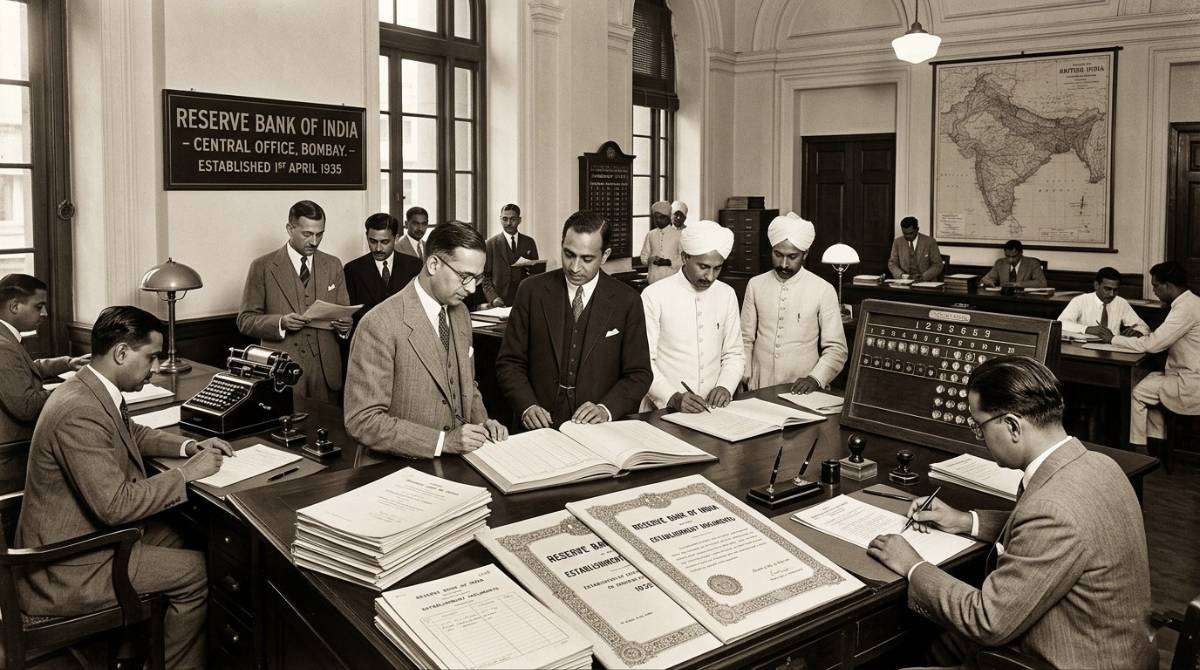
The Reserve Bank of India (RBI) is the central banking institution of India and plays a crucial role in maintaining the country’s financial stability. Every year, April 1 is observed as RBI Foundation Day, marking its establishment in 1935.
RBI Foundation Day – Key Facts
- Established on: April 1, 1935
- Legal Basis: Reserve Bank of India Act, 1934
- Initial Headquarters: Kolkata
- Shifted to Mumbai: 1937
- Nationalization: 1949
Why Was RBI Created?
Before the establishment of RBI, India did not have a central authority to regulate currency and banking systems. To address this issue, the British government formed the Hilton Young Commission in 1926.
The commission recommended the creation of a central bank to ensure financial stability and proper regulation of currency and banking operations. Based on these recommendations, the Reserve Bank of India was established in 1935.
READ THIS: ravindra kaushik
Dr. B.R. Ambedkar & RBI Truth Explained
What is True
- Dr. B.R. Ambedkar was a well-known economist and scholar.
- He wrote the book “The Problem of the Rupee” (1923).
- The book analyzed currency issues and suggested monetary reforms.
- His ideas influenced economic discussions during that period.
What is Misleading
- RBI was NOT founded by Dr. B.R. Ambedkar.
- RBI was NOT directly created based on his book.
- There is no official RBI record stating he is the founder.
While Dr. Ambedkar contributed to economic thought, RBI was officially established based on the recommendations of the Hilton Young Commission under the RBI Act, 1934.
Nationalization of RBI
Initially, the RBI was privately owned. After India’s independence, it was nationalized in 1949 and brought under full government control.

READ THIS: prime ministers of india
Functions of RBI
Monetary Authority
RBI controls inflation and manages interest rates such as repo and reverse repo rates.
Banker to Banks
RBI supervises and regulates commercial banks in India.
Currency Issuer
RBI has the authority to issue Indian currency (₹).
Foreign Exchange Manager
It manages India’s foreign exchange reserves and ensures stability in exchange rates.
Government Banker
RBI acts as a banker to the Government of India and manages public debt.
Importance of RBI in India
The Reserve Bank of India plays a vital role in maintaining financial stability, controlling inflation, supporting economic growth, and regulating the banking system.
Conclusion:
The Reserve Bank of India was established on April 1, 1935, under the RBI Act of 1934, based on the recommendations of the Hilton Young Commission.
Although Dr. B.R. Ambedkar made significant contributions to economic thought, he was not the founder of RBI. Claims suggesting otherwise are not supported by official records.
FAQs
1.What is RBI Foundation Day?
RBI Foundation Day is celebrated on April 1 every year to mark the establishment of the Reserve Bank of India in 1935.
2.Who established RBI?
RBI was established under the Reserve Bank of India Act, 1934, based on the recommendations of the Hilton Young Commission.
3.Is Dr. B.R. Ambedkar the founder of RBI?
No, Dr. B.R. Ambedkar is not the founder of RBI. He contributed to economic thought, but RBI was not created by him.
4.When was RBI nationalized?
RBI was nationalized in 1949 after India gained independence.
About The Author