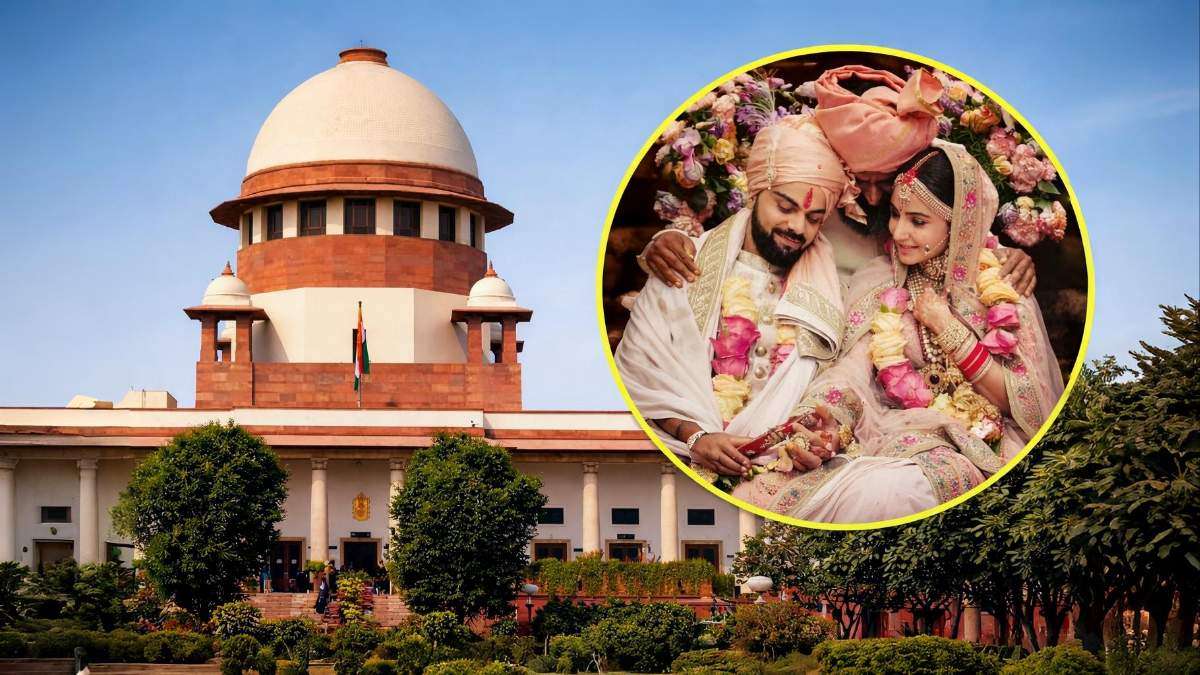
What Exactly Did the Supreme Court Say?: The Supreme Court of India has clearly stated that a marriage certificate by itself does not automatically make a man and woman legally husband and wife under Hindu law.
According to the Court, a Hindu marriage becomes legally valid only when it is solemnised through essential Hindu religious rites and ceremonies, as laid down in Section 7 of the Hindu Marriage Act, 1955. Registration or issuance of a marriage certificate can support proof of marriage, but it cannot replace the actual performance of marriage rituals.
Why Did the Court Make This Observation?
The Supreme Court made this clarification while dealing with a dispute where one party relied solely on a marriage certificate to claim the status of a legally wedded spouse. The Court examined whether documentation alone is sufficient when no clear evidence of traditional Hindu marriage ceremonies was presented.
The judges held that law cannot presume a valid Hindu marriage unless its essential ceremonies are proved. Paperwork may record a marriage, but it does not create a marriage under Hindu personal law.
What Are “Essential Hindu Marriage Ceremonies”?
Under Hindu law, a marriage is considered complete only when customary rituals are performed. These may vary across communities, but commonly include:
- Performance of traditional marriage rites
- Presence of sacred fire (homa)
- Saptapadi (seven steps taken jointly by the bride and groom)
If such ceremonies are not performed, the marriage cannot be treated as a valid Hindu marriage, even if a certificate exists.
Simple Example to Understand This Clearly
Imagine a couple registers their marriage at a local office and receives a certificate. However, they never performed any Hindu marriage rituals.
In such a situation:
- The certificate alone does not automatically give them the legal status of husband and wife under Hindu law
- Courts will ask for proof that the marriage was actually solemnised according to Hindu customs
This is exactly what the Supreme Court has clarified.
Does This Apply to All Marriages in India?
No. This ruling applies specifically to Hindu marriages governed by the Hindu Marriage Act.
For marriages conducted under other laws:
- Special Marriage Act – Registration itself creates a valid marriage
- Muslim and Christian marriages follow their respective personal laws
So, the Supreme Court is not saying marriage certificates are useless, but only that Hindu marriages must first meet religious legal requirements.
Why This Ruling Is Important
This clarification is crucial in cases involving:
- Maintenance claims
- Inheritance disputes
- Divorce proceedings
- Property rights
- Bigamy allegations
It prevents misuse of marriage certificates and ensures that personal laws are respected as intended by legislation.
READ THIS: Ram Mandir completion 500 years
Conclusion:
The Supreme Court has drawn a clear legal line: In Hindu law, marriage is a sacred ceremony first and a legal record second.
A marriage certificate is strong supporting evidence, but it cannot stand alone without proof of solemnisation through Hindu rites. This ruling brings clarity, protects legal certainty, and prevents false claims based solely on documentation.
About The Author