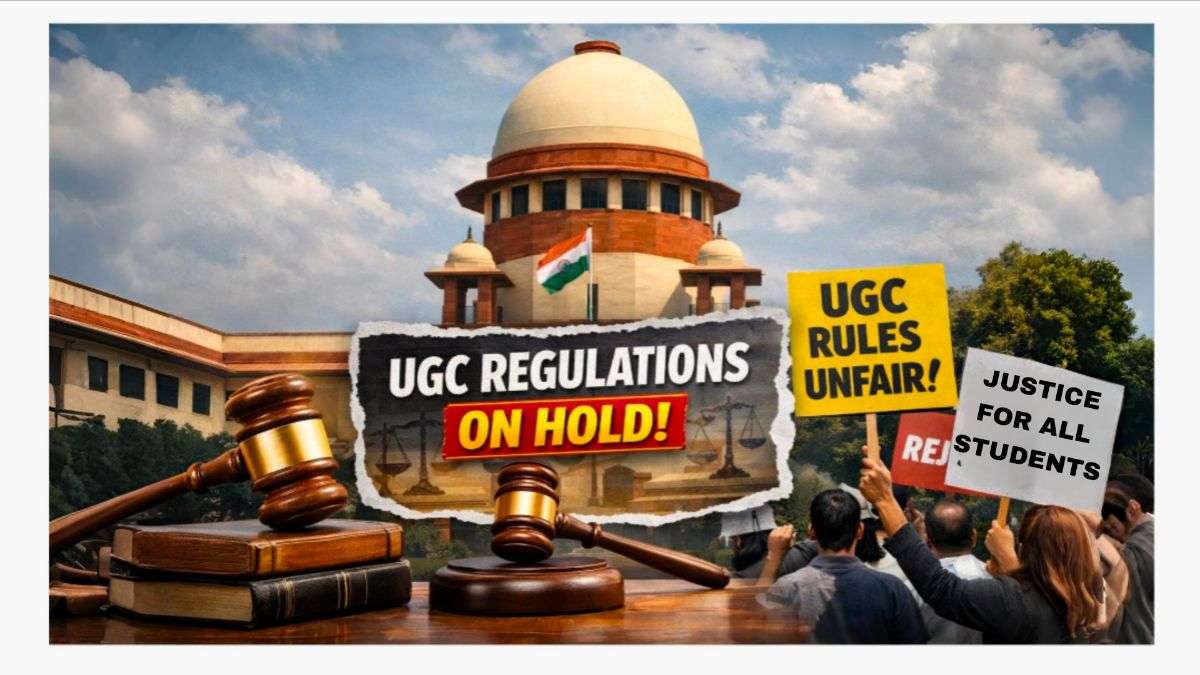
The recent decision by the Supreme Court of India to temporarily stay the new UGC regulations has triggered widespread discussion among students, universities, and policymakers. Many are confused about what exactly happened, why the Court intervened, and what it means for higher education in India. This article explains the issue in a clear and factual manner.
What Was the UGC Decision About?
The University Grants Commission (UGC) introduced new regulations aimed at restructuring the framework related to equity, grievance redressal, and discrimination-related mechanisms in universities and colleges.
These new rules were meant to replace or override the earlier UGC Regulations of 2012. However, soon after the notification, multiple petitions were filed before the Supreme Court challenging the validity of these new regulations.
Why Did the Supreme Court Intervene?
The Supreme Court did not cancel the UGC decision. Instead, it issued an interim stay, which means the implementation has been paused temporarily until the Court completes a detailed examination.
The key reasons behind the Court’s intervention are as follows:
1. Lack of Clarity in the New Regulations
One of the primary concerns raised before the Court was that several provisions in the new UGC rules were vague and open to interpretation. Legal clarity is essential in regulatory frameworks, especially when they deal with sensitive issues like discrimination and institutional accountability. The Court observed that unclear wording could lead to confusion and inconsistent implementation across universities.
2. Possible Violation of Constitutional Principles
Petitioners argued that certain provisions might conflict with the constitutional guarantee of equality under Article 14. The Supreme Court felt that these claims required serious judicial scrutiny. Until the constitutional validity is examined, allowing the rules to operate could create irreversible consequences.
3. Risk of Misuse and Unequal Application
Another major concern was the possibility of misuse of the new framework. Critics claimed that the regulations did not provide balanced safeguards for all stakeholders and could result in selective or unfair application. The Court considered this risk significant enough to justify a temporary halt.
4. Need for Wider Consultation and Review
The Supreme Court also noted that such important regulations affecting the entire higher education system should ideally emerge from broader consultation with universities, students, and experts. The sudden rollout raised questions about procedural fairness and preparedness.
What Is the Current Status Now?
As of now:
- The UGC’s new regulations are on hold
- The older UGC Regulations, 2012 continue to apply
- The Supreme Court will hear detailed arguments from all sides in the coming hearings
- No final judgment has been delivered yet
This means universities must continue functioning under the existing framework until further orders.
Does This Mean the UGC Rules Are Wrong?
No. A temporary stay does not mean rejection. It only means the Court wants to ensure that the regulations are legally sound, constitutionally valid, and practically workable before they are enforced nationwide.
The final outcome could include:
- Approval of the regulations
- Partial modification
- Direction to redraft certain sections
- Or complete withdrawal, depending on findings
READ THIS: UGC Equity Regulations 2026 Explained: Rights of All Students Under Indian Law
Conclusion:
The Supreme Court’s decision to temporarily stop the UGC regulations is a precautionary step, not a verdict. It reflects the judiciary’s role in protecting constitutional values and ensuring clarity in governance.
For students and institutions, there is no immediate change stability is maintained while the legal process continues. The final judgment will play a crucial role in shaping the future of higher education regulation in India.
About The Author