
Introduction: The Hidden Cost of Mental Noise
Modern psychology has begun to validate what ancient yogic traditions understood millennia ago “the mind is not merely an observer of reality but an active consumer of energy”.
Every thought generated, every moment of internal dialogue, every worry about the future or regret about the past”these are not trivial mental events. They represent measurable expenditures of biological and psychological resources. In a world saturated with information, notifications, and endless stimuli, the human mind finds itself perpetually activated, depleted, and scattered.
This is where Brahmacharya ”traditionally understood as celibacy or sense restraint” reveals its deeper psychological significance” it is a systematic practice for conserving and redirecting mental energy toward higher states of consciousness and cognitive mastery”
Brahmacharya is not merely about physical discipline or sexual abstinence. At its psychological core, it is about “controlling all channels through which mental energy dissipates “including the most fundamental channel” the generation and perpetuation of unnecessary thoughts.
This article explores the profound relationship between thought generation, mental exhaustion, concentration, and how Brahmacharya serves as a bridge toward sustainable meditation practice and sustained psychological focus.
Part I: How Thoughts Drain Energy “The Neuroscience of Mental Expenditure”
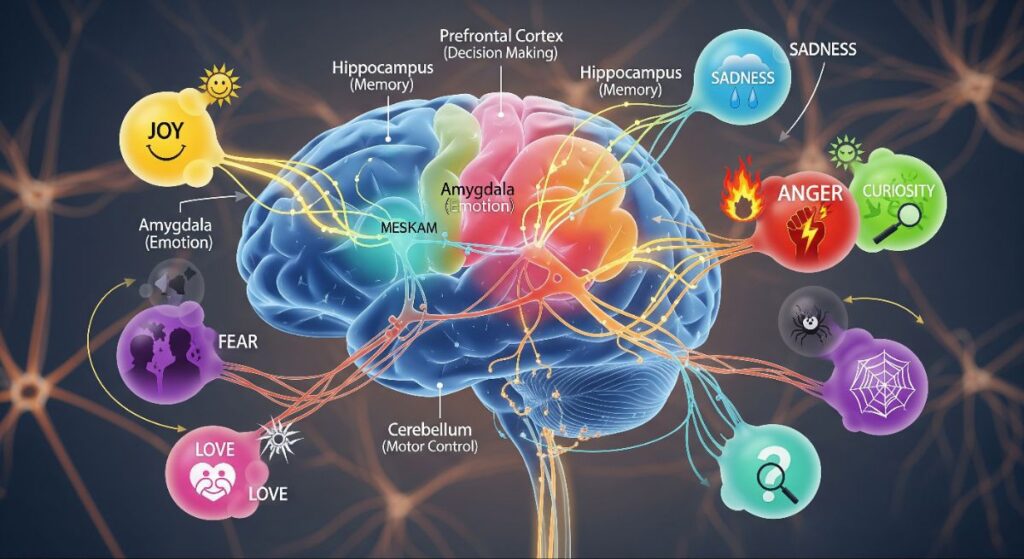
The Hidden Tax of Thinking : One of the most counterintuitive discoveries in modern neuroscience is that the brain, despite representing only 2% of body weight, consumes approximately 20% of the body’s total energy.
More striking still “much of this energy consumption is not devoted to solving problems or processing external tasks, but to internal mental dialogue”rumination, worry, self-referential thinking, and what neuroscientists call “mind-wandering”.
When the brain is not engaged in a specific external task, it activates what researchers call the “Default Mode Network (DMN)” a constellation of interconnected brain regions including the medial prefrontal cortex and posterior cingulate cortex.
Far from being a state of rest, the DMN is a highly active system characterized by self-focused thinking, temporal navigation (thinking about past and future), and what appears to be the brain’s “autopilot” mode. This network is responsible for the continuous stream of thoughts, inner monologues, and self-related processing that constitutes much of human consciousness.
The problem emerges when we recognize that “constant activation of the DMN is not neutral”. Research demonstrates that elevated default mode activity is strongly associated with mind-wandering, rumination, anxiety, depression, and unhappiness.
The DMN, when hyperactive, creates a psychological state of perpetual self-interrogation and narrative generation. The mind becomes stuck in loops of “why” and “what if” analyzing problems without resolution, rehearsing social interactions, and constructing narratives about personal identity and future outcomes.
Rumination: When Thinking Becomes a Drain
Rumination”the tendency to repetitively think about one’s problems, their causes, and their consequences”is one of the most energy-depleting mental processes. Unlike productive problem-solving, rumination is characterized by circular, repetitive, and ultimately unproductive thought patterns. The brain exerts tremendous effort while moving nowhere, like a runner on a treadmill expending energy without forward progress.
Recent neuroscientific research reveals that rumination is associated with “aberrant neural activity in brain regions responsible for cognitive control”. Specifically, individuals prone to rumination show heightened activity in the frontoparietal network”regions that normally govern goal-directed behavior and executive function.
The paradox is striking the brain regions designed to “manage” thought are themselves overactive and inefficient, suggesting that rumination represents a breakdown in the normal mechanisms of cognitive control.
When someone is caught in rumination, the prefrontal cortex and anterior cingulate cortex (regions involved in attention and cognitive control) show excessive recruitment. This excessive neural firing consumes disproportionate amounts of metabolic resource.
It is as if the mind’s executive control systems are struggling against a tide of negative thoughts, constantly attempting to regulate and suppress unwanted mental content, yet the more they struggle, the more entrenched the rumination becomes.
This has profound implications for daily energy and capacity. “Decision fatigue”the demonstrated decline in cognitive function after prolonged mental effort”is exacerbated by background rumination. Studies show that professionals facing decision fatigue (judges, medical professionals, air traffic controllers) show measurably reduced cognitive acuity and judgment.
But the fatigue is not merely from the major decisions; it accumulates from the constant micro-decisions, mental evaluations, and background self-referential processing that constitute the hidden tax of unmanaged thought.
The Neurobiological Foundation: Prana, Energy, and Thoughts
Ancient yogic texts describe “Prana”the vital life force or subtle energy animating all existence” as the fundamental substratum of both physical vitality and mental phenomena.
Modern interpretations often dismiss this as metaphorical, yet contemporary neuroscience suggests something more literal may be occurring the subtle vibrations and oscillations of neuronal firing that generate thoughts are indeed energetic processes. The production of a thought” the neurochemical cascades, the synchronized firing of neural networks, the sustained metabolic activity”is an energetic event.
From this perspective, “uncontrolled thought generation is literally an uncontrolled expenditure of this life energy”. The yogic understanding that sexual energy (a particular manifestation of Prana) feeds thought production and that control of sexual energy necessarily involves control of thought becomes more comprehensible.
When the brain’s reward systems are stimulated (whether through sexual stimulation, pornographic imagery, or other sensory excitations), the default mode network becomes hyperactivated, and thought generation accelerates.
Conversely, when sensory input is controlled and the mind is directed inward through disciplined practice, the rate of unnecessary thought production naturally decreases, and metabolic resources become available for other functions.
Part II: Mental Noise and the Erosion of Concentration
What is Mental Noise?
Mental noise refers to the density of information and competing stimuli within the mind”the constant chatter of internal commentary, the flood of worries, the intrusive memories, the phantom conversations with people who are not present.
Unlike external noise, mental noise is self-generated and therefore seems to require no external source. Yet its effects on cognition are measurable and severe.
Psychological research identifies several consequences of chronic mental noise:
“Difficulty Concentrating” Mental noise fundamentally impairs attention. When the mind is crowded with competing thoughts, it lacks the available attentional resources to focus deeply on any single task or object. The prefrontal cortex, which governs sustained attention, must constantly redirect focus back to the primary task, consuming metabolic energy with each redirection.
“Decision Paralysis and Cognitive Overload” Excess mental stimulation leads to what researchers term “stimulus fatigue”a diminished capacity to process information effectively. The brain, overwhelmed by the sheer volume of mental activity, becomes less capable of making nuanced decisions or engaging in deep thinking.
“Constant Worry and Anxiety” Mental noise typically manifests as a stream of worry” rumination about past failures, anxiety about future uncertainties, and self-critical commentary about present performance.
This worry state represents a chronic activation of the threat-detection systems of the brain, maintaining elevated levels of cortisol and adrenaline, even in the absence of actual danger.
“Emotional Dysregulation” The constant internal chatter interferes with the natural processes of emotional processing. Instead of experiencing and releasing emotions, the mind gets caught in narratives “about” emotions, amplifying and prolonging emotional disturbance.
The Default Mode Network Hyperactivation Cycle
Modern neuroscience has identified that mental noise is fundamentally rooted in “hyperactivation of the Default Mode Network”. When individuals are exposed to constant external stimulation (notifications, screens, social media, news feeds), the brain’s threat-detection systems remain activated.
The default mode network, already primed for self-referential thinking, becomes even more hyperactive as it attempts to process and integrate this bombardment of information.
A vicious cycle emerges:
- Constant external stimulation
- DMN hyperactivation
- Increased mind-wandering and rumination
- Diminished capacity for present-moment awareness
- Anxiety and difficulty with sustained focus
- Return to external stimulation seeking (as a form of escape).
This cycle explains why individuals with high mental noise often report a curious inability to be alone with their thoughts. Being alone with one’s thoughts, without external distraction, becomes aversive because the internal mental landscape is crowded and distressing. The person unconsciously seeks external stimulation not for pleasure but to escape the discomfort of unmanaged mental noise.
The Energy Cost of Scattered Attention
From a purely metabolic perspective, “attention switching is enormously costly”. Each time consciousness shifts from one task or thought to another, the brain must reprogram its neural networks, activate different prefrontal regions, and recalibrate its attentional focus. Contemporary research on multitasking reveals that people who frequently switch between tasks show:
- Reduced performance on individual tasks
- Diminished memory consolidation
- Greater mental fatigue at day’s end
- Impaired ability to engage in deep, creative thinking
The constant attention-switching that characterizes mental noise creates a state of chronic cognitive fragmentation. The mind never settles deeply into any single mode of processing, and consequently, never accesses the restorative and generative capacities associated with deep focus.
This is particularly important for learning, creative problem-solving, and spiritual insight” all of which require sustained, undivided attention.
Part III: Brahmacharya as Energy Conservation and Mental Discipline
Understanding Brahmacharya Beyond Celibacy:
The term “Brahmacharya” is often translated narrowly as “celibacy” or “chastity,” leading to the misconception that it is merely a sexual practice. However, the root meaning” “moving toward Brahman” or “the universal absolute” and the broader yogic understanding reveals Brahmacharya to be a comprehensive system of “energy conservation and redirection” .
Within the yogic framework, Brahmacharya involves four sequential processes:
1.“Control” : Restraint of sense impulses and desires, particularly those that create mental stimulation and fantasy.
2.“Conservation”: The systematic prevention of energy leakage through all channels”sensory indulgence, uncontrolled speech, unnecessary fantasy, and sustenance of harmful emotions.
3.“Diversion” : The channeling of conserved energy into productive and spiritually-oriented practices such as meditation, pranayama, study, self-analysis, and service.
4“Transformation”: The refinement of the redirected energy into higher expressions of consciousness and capability.
From a psychological perspective, the genius of Brahmacharya lies in its recognition that “the mind and senses operate as a unified system”. Control of sensory input naturally leads to diminishment of mental stimulation.
Reduction of fantasy and imagination decreases the rate of unnecessary thought generation. And when mental energy is no longer dissipating through multiple sensory channels, it becomes available for more refined and coherent mental operations.
The Mechanism: Energy Flow and Mental Purity
Yogic texts describe the relationship between mental state and sensory input in terms of energy flow. When the senses are actively engaged in seeking pleasure or stimulation, prana (vital energy) is drawn outward toward the objects of sensation.
This outward flow creates a state of mental agitation and externalization. The mind becomes identified with and dependent upon external stimulation. Conversely, when sensory input is deliberately reduced and the focus is directed inward, prana naturally flows inward and upward, toward the brain and higher cognitive centers.
This inward flow of energy produces what is described as “mental purity”a state of mental clarity and refinement characterized by
Reduced mental noise and internal chatter:
- Increased capacity for focused attention
- Enhanced emotional stability and equanimity
- Diminished compulsive thought patterns and fantasies
- Greater access to intuitive and subtle mental faculties
The yogic understanding that “control of Prana leads to control of mind” finds validation in modern neuroscience. When the brain’s sensory input and reward-seeking systems are quieted, the constant stimulation that feeds the default mode network diminishes.
The brain’s threat-detection and reward-seeking systems achieve a more balanced activation level. The continuous generation of reactive thoughts slows naturally as the stimuli that trigger thought production are reduced.
Conservation as the Antidote to Mental Depletion
The contemporary world is characterized by unprecedented energy dissipation. The average person is exposed to more information in a day than a person a century ago encountered in a year.
The constant connectivity enabled by digital technology creates a state of perpetual availability and stimulation. The mind never enters genuine rest it oscillates between external tasks and internal rumination, between work demands and social media, never achieving true recovery.
Brahmacharya, understood as a practice of conscious energy conservation, directly opposes this dissipative state. By:
1.“Reducing sensory input and stimulation”: The constant stream of visual, auditory, and informational input is deliberately limited. This immediately reduces the stimulus load on the nervous system and brain.
2.“Minimizing unnecessary thought generation”: By reducing fantasy, worry, and mental elaboration, the rate of unnecessary neuronal firing decreases. The brain’s metabolic consumption drops, and mental resources become available for refined cognitive operations.
3.“Establishing stable dietary and behavioral routines”: The practice includes sattvic (pure, nourishing) diet and regular sleep and exercise patterns. This stabilizes the body’s energetic state and reduces the constant decision-making and impulse management that drains mental resources.
4.“Redirecting conserved energy toward higher practices”: Through pranayama, meditation, study, and self-inquiry, the conserved energy is channeled toward development of higher mental faculties rather than being dissipated through unconscious channels.
The result is a gradual but profound increase in available mental energy and a corresponding decrease in mental noise and fatigue.

Part IV: Mental Purity and Its Relationship to Meditation Depth
The Prerequisite: A Clear Mind
Deep meditation”genuine absorption and stillness of mind”requires more than the adoption of a meditative posture or the initiation of a breathing technique. It requires a “mind that is relatively free from the constant chatter and compulsive thought patterns” that constitute mental noise.
This is why traditional yoga emphasizes the preparatory practices (yama, niyama, and other ethical and lifestyle disciplines, collectively encompassing what Brahmacharya represents) before emphasizing meditation itself.
A mind filled with mental noise cannot meditate deeply because it is perpetually engaged in self-generation. The conscious attention is supposed to rest on the object of meditation (breath, mantra, visualization, etc.), but if the mind is accustomed to constant chatter and is hyperactivated in its default mode, it will continue to generate competing thoughts even as the meditator attempts to maintain focus.
“Mental purity” in this context means establishing a baseline mental state characterized by:
1.”Reduced rate of spontaneous thought generation”: The mind generates fewer uncontrolled thoughts simply as a function of its baseline state, rather than being constantly triggered by external stimuli or internal conditioning.
2.”Reduced emotional reactivity” : Without the constant feed of sensory input and fantasy, emotional states become more stable and less reactive. The mind is not constantly triggered into emotional states that then generate thoughts.
3.”Greater metabolic availability for focused attention”: With less energy being consumed by background rumination and mental chatter, more metabolic and cognitive resources are available to maintain sustained focus during meditation.
4.”Reduced identification with mental content”: Through the practice of mental discipline inherent in Brahmacharya, the practitioner develops the capacity to observe thoughts without becoming immediately identified with them. This creates a fundamental shift in relationship to the thought process itself.
How Mental Purity Enables Deeper Meditation
The relationship between mental purity and meditation depth can be understood in several ways:
1.”Reduced Resistance and Effort” : In a mind filled with mental noise and compulsive thought patterns, meditation becomes a struggle against the constant generation of distracting thoughts. The meditator must exert tremendous willpower and effort to maintain focus against the tide of internal chatter.
In a mind refined through Brahmacharya, the natural tendency of the mind already moves toward stillness. The effort required to meditate is dramatically reduced. Rather than struggling to quiet a hyperactive mind, the meditator is gently guiding an already-quieted mind deeper into states of absorption.
2.”Acceleration of Absorption States (Samadhi)”: In yogic terminology, meditative absorption (samadhi) occurs when the distinction between the meditator, the act of meditation, and the object of meditation dissolve. The mind becomes completely unified and absorbed.
This is not achievable when the mind is fragmented and distracted. With mental purity, the unified focus of attention is more readily achievable. The mind naturally gravitates toward states of absorption because there is less competing activity fragmenting consciousness.
3.”Access to Subtle Perceptions”: As mental noise quiets, the mind becomes sensitive to increasingly subtle dimensions of experience. In ordinary consciousness, crowded with mental chatter, the subtle aspects of consciousness.
”intuitions, energy sensations, refined emotional states, spiritual experiences”are overwhelmed by the gross noise of verbal thought. With mental purity, these subtle dimensions become accessible. The meditator begins to perceive the gradations and layers of consciousness that underlie the surface-level mental chatter.
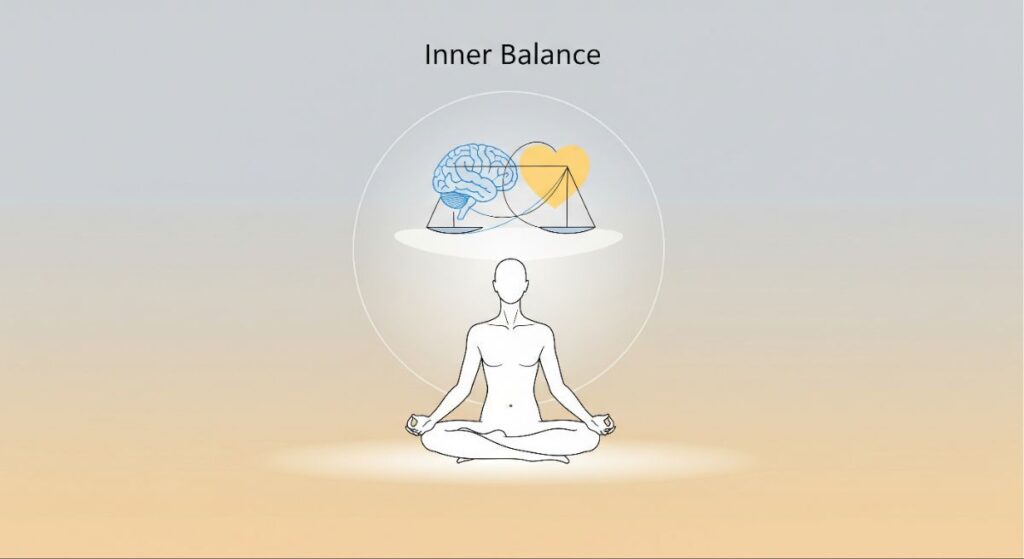
Conclusion: Human psychology plays a powerful role in shaping how people think, feel, and act in everyday life. From simple decisions to complex emotional responses, the human mind constantly processes information based on past experiences, beliefs, and environmental influences.
Understanding the psychology behind human behavior not only improves self-awareness but also helps individuals communicate better, manage emotions effectively, and make more informed choices. As awareness of mental processes grows, psychology becomes an essential tool for personal growth and social understanding.
Content Originality & Image Rights: This article is original, research-based content created for educational purposes. All images used are AI-generated or properly licensed and do not violate Indian copyright laws under the Copyright Act, 1957.
About The Author

 Creator Adarsh