Top Government Schemes in India 2026: Benefits, Eligibility and How to Apply
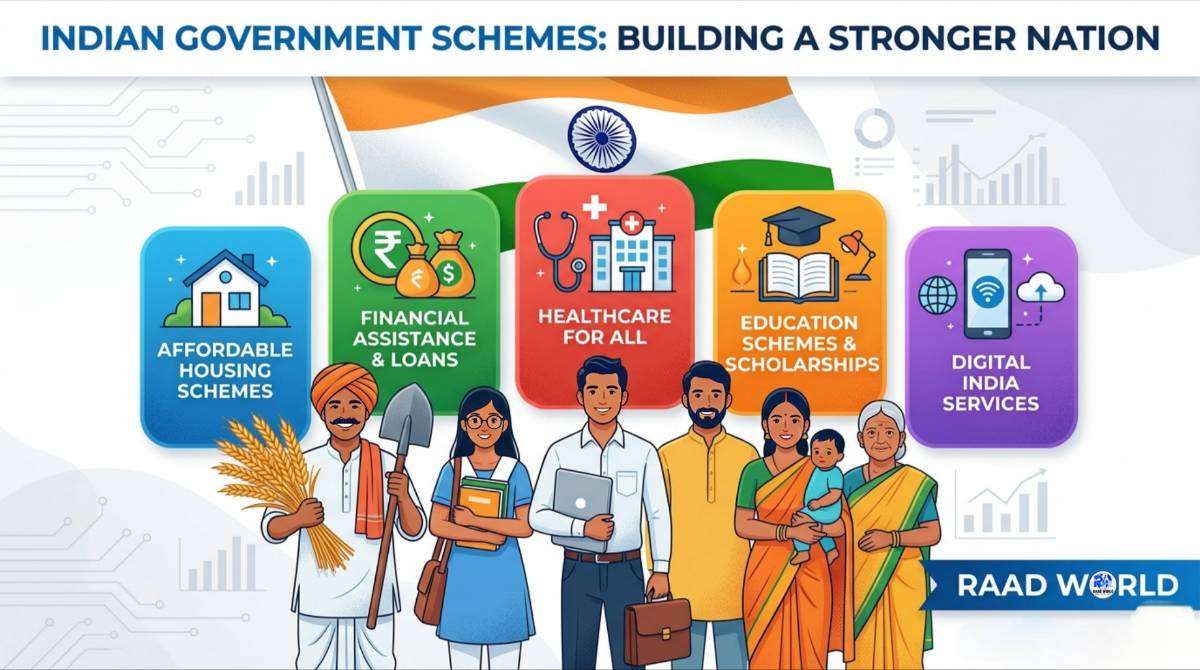
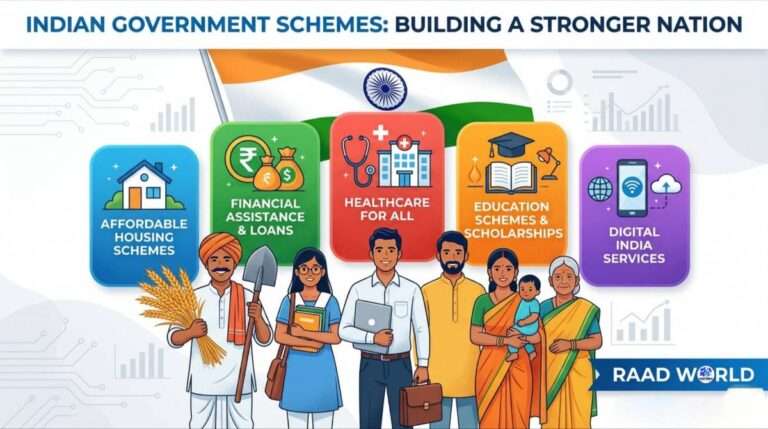
Government schemes in India play a vital role in improving the socio-economic conditions of citizens.
In 2026, several flagship initiatives continue to support healthcare, housing, agriculture, financial inclusion, and entrepreneurship. With the rise of digital platforms and Direct Benefit Transfer (DBT), applying for these schemes has become easier and more transparent.
This article provides a complete guide to the most important schemes, their benefits, and how to apply.
Ayushman Bharat Yojana (PM-JAY)
Benefits
This scheme offers health insurance coverage up to ₹5 lakh per family per year. It includes hospitalization, surgeries, and cashless treatment at empanelled hospitals across India. It is especially beneficial for economically weaker sections and senior citizens.
How to Apply
Visit the official portal or nearest Common Service Centre (CSC). Check eligibility using Aadhaar or mobile number. Generate the Ayushman card and use it at registered hospitals.
Pradhan Mantri Awas Yojana (PMAY)
Benefits
PMAY provides affordable housing through subsidies on home loans under the Credit Linked Subsidy Scheme. It supports EWS, LIG, and MIG groups in both urban and rural areas.
How to Apply
Apply through the official PMAY website by selecting urban or rural category. Fill in personal and income details, upload documents, and track your application online.
PM Kisan Samman Nidhi (PM-KISAN)
Benefits
This scheme provides ₹6,000 annually to farmers in three installments via DBT. It helps improve financial stability for small and marginal farmers.
How to Apply
Register on the PM-KISAN portal by entering Aadhaar details, bank account information, and land records. Verification is completed by local authorities.
Pradhan Mantri Mudra Yojana (PMMY)
Benefits
Provides loans up to ₹10 lakh without collateral. It supports small businesses and startups under Shishu, Kishor, and Tarun categories.
How to Apply
Apply through banks or NBFCs by submitting a business plan, identity proof, and financial details. Loan approval depends on eligibility.
Atal Pension Yojana (APY)
Benefits
Offers guaranteed monthly pension between ₹1,000 and ₹5,000 for workers in the unorganized sector, ensuring financial security after retirement.
How to Apply
Visit your bank or post office, fill out the APY form, submit Aadhaar details, and select your pension plan.
Pradhan Mantri Jan Dhan Yojana (PMJDY)
Benefits
Provides zero-balance bank accounts, RuPay debit cards, and insurance benefits. It enables direct transfer of government subsidies.
How to Apply
Open an account at any bank or Customer Service Point using Aadhaar or valid identity proof.
Pradhan Mantri Ujjwala Yojana (PMUY)
Benefits
Offers free LPG connections to women from low-income households, promoting clean cooking and reducing health risks.
How to Apply
Visit the nearest LPG distributor with Aadhaar and ration card. Submit the application form and complete verification.
Conclusion
Government schemes in 2026 are designed to empower citizens through financial support, healthcare access, and employment opportunities. With digital application systems.
transparency and accessibility have significantly improved. Citizens should stay informed and take full advantage of these initiatives to enhance their quality of life.
READ THIS: Aadhaar Becomes the World’s Largest Biometric Identity System
Frequently Asked Questions (FAQ)
1. Who is eligible for government schemes in India?
Eligibility depends on the specific scheme. Generally, schemes target categories such as economically weaker sections, farmers, women, students, senior citizens, and small business owners. Each scheme has defined income limits, occupation criteria, and documentation requirements.
2. How can I apply for government schemes online?
You can apply through official government portals such as the myScheme website or scheme-specific portals. Alternatively, you can visit a Common Service Centre (CSC) for assistance with online applications and document submission.
3. What documents are required to apply for these schemes?
Commonly required documents include Aadhaar card, bank account details, income certificate, residence proof, and category certificates if applicable. Some schemes may also require land records or business details.
4. What is Direct Benefit Transfer (DBT)?
Direct Benefit Transfer (DBT) is a system where government benefits and subsidies are directly credited to the beneficiary’s bank account. This ensures transparency, reduces corruption, and speeds up the process.
5. Can I apply for multiple government schemes?
Yes, eligible citizens can apply for multiple schemes if they meet the criteria for each. However, some schemes may have restrictions to avoid duplication of benefits.
6. How can I check my application status?
You can track your application status through the official portal of the respective scheme using your application ID, Aadhaar number, or registered mobile number.
7. Are government schemes free to apply?
Yes, most government schemes are free to apply. However, minimal service charges may apply if you use Common Service Centres (CSC) for assistance.
8. What should I do if my application is rejected?
If your application is rejected, review the reason provided, correct any errors, and reapply. You may also contact the concerned department or visit a CSC for guidance.
About The Author