The year 2025 stands out as a turning point in modern financial history. It was not shaped by a single crisis or boom, but by a series of deep structural changes that quietly altered how global money, trade, and policy work together. Governments, central banks, corporations, and ordinary investors all adjusted to a new financial reality one that is likely to influence decisions for many years to come.
A New Phase of Global Trade Realignment
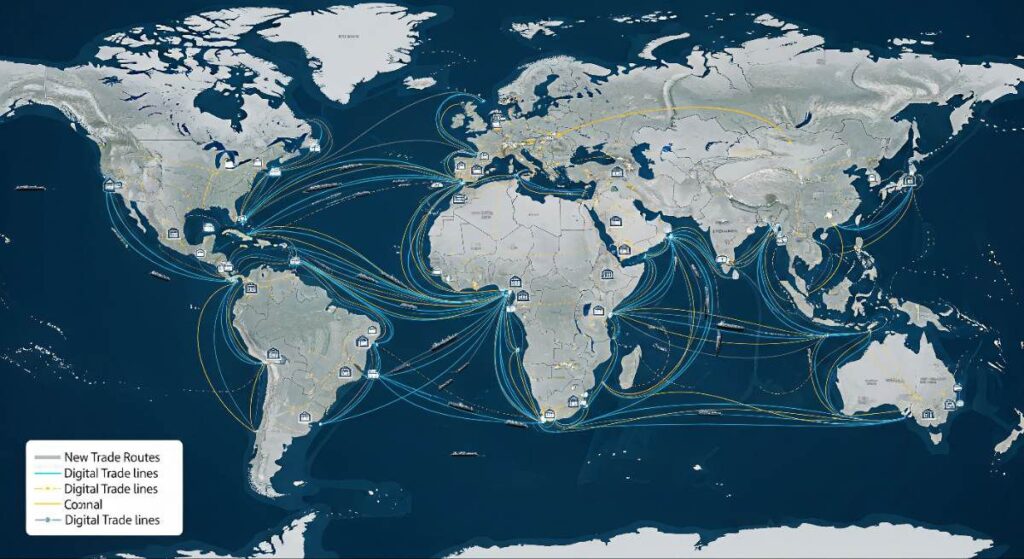
In 2025, global trade moved away from over-dependence on a few regions and entered a phase of strategic diversification. Countries focused on building resilient supply chains instead of purely cost-driven ones. Manufacturing hubs expanded across South and Southeast Asia, parts of Africa, and Latin America, reducing risks exposed during earlier global disruptions.
Institutions such as the World Trade Organization observed slower but more balanced trade growth. Rather than rapid expansion, the emphasis shifted to reliability, regional trade agreements, and long-term sustainability.
Central Banks Redefined Monetary Discipline
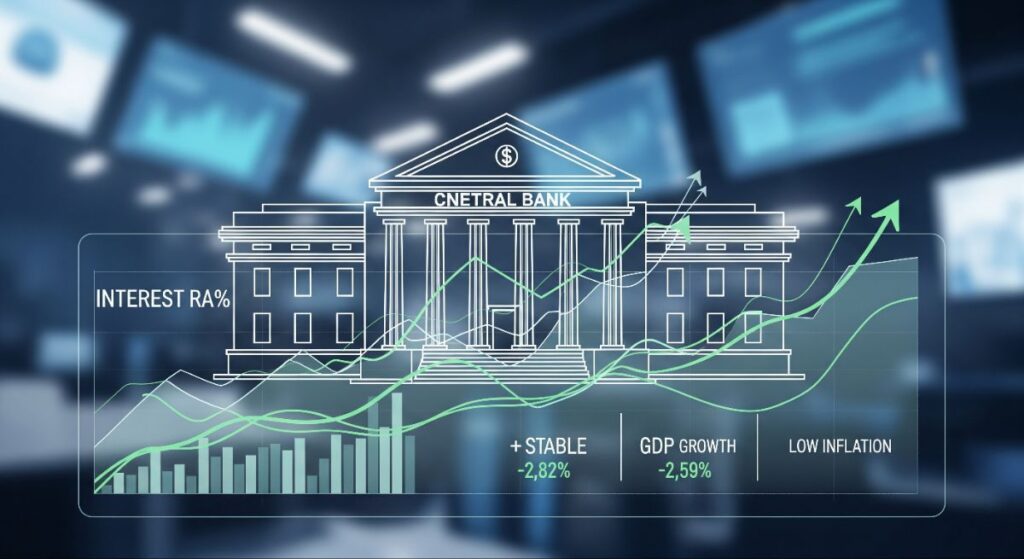
One of the most defining aspects of 2025 was how central banks handled inflation, interest rates, and liquidity. After years aggressive tightening, policymakers adopted a cautious stabilization approach. The Federal Reserve, European Central Bank, and the Reserve Bank of India focused less on shock moves and more on predictable guidance.
This shift restored confidence in financial markets. Businesses could plan investments more clearly, and investors moved from speculative trading toward fundamentals-driven decisions. Stability, rather than speed, became the priority.
Capital Markets Became More Selective
Global capital markets in 2025 rewarded quality over hype. Easy money was no longer available, forcing startups and corporations to prove profitability, governance strength, and long-term vision. Venture capital funding slowed, but stronger firms emerged more resilient.
Major stock markets showed mixed performance, but volatility reduced compared to earlier years. Investors increasingly preferred sectors tied to infrastructure, clean energy, artificial intelligence, and essential services areas backed by real economic demand.
The Quiet Rise of Digital Finance
Digital finance made steady progress in 2025 without dramatic headlines. Central bank digital currency (CBDC) pilots expanded, cross-border payment systems improved, and financial inclusion grew through regulated fintech platforms. Unlike earlier years, regulation and innovation moved together rather than in conflict
Global bodies like the International Monetary Fund emphasized digital financial stability, ensuring technology strengthened economies instead of destabilizing them.
Shifting Investor Psychology
Perhaps the most important transformation of 2025 was psychological. Investors became more disciplined. Short-term speculation declined, while long-term asset allocation gained importance. Risk assessment became more realistic, and blind optimism faded.
Gold, government bonds, and diversified portfolios regained relevance, reflecting a mature investment mindset shaped by lessons from earlier volatility.

Why 2025 Truly Matters
2025 will be remembered not for dramatic crashes or explosive rallies, but for resetting global financial expectations. It marked the transition from reactive policymaking to structured economic planning. Trade became smarter, money became disciplined, and markets became more grounded in reality.
This year quietly laid the foundation for a more stable, diversified, and accountable global financial system one where resilience matters as much as growth.
Read This Article Also: Revisiting Economic Narratives: India’s ‘Hindu Rate of Growth’ Debate and the Modern Growth Imperative
Conclusion: The legacy of 2025 lies in its balance. It reshaped global finance by aligning policy, trade, and capital with long-term sustainability rather than short-term gains. For governments, investors, and businesses alike, 2025 was the year the global financial system grew up.
“Content Originality & Image Rights”
This article is original, research-based content created for informational purposes. Images used are owned by the publisher or AI-generated and comply with the Indian Copyright Act, 1957 and IT Act, 2000.
About The Author