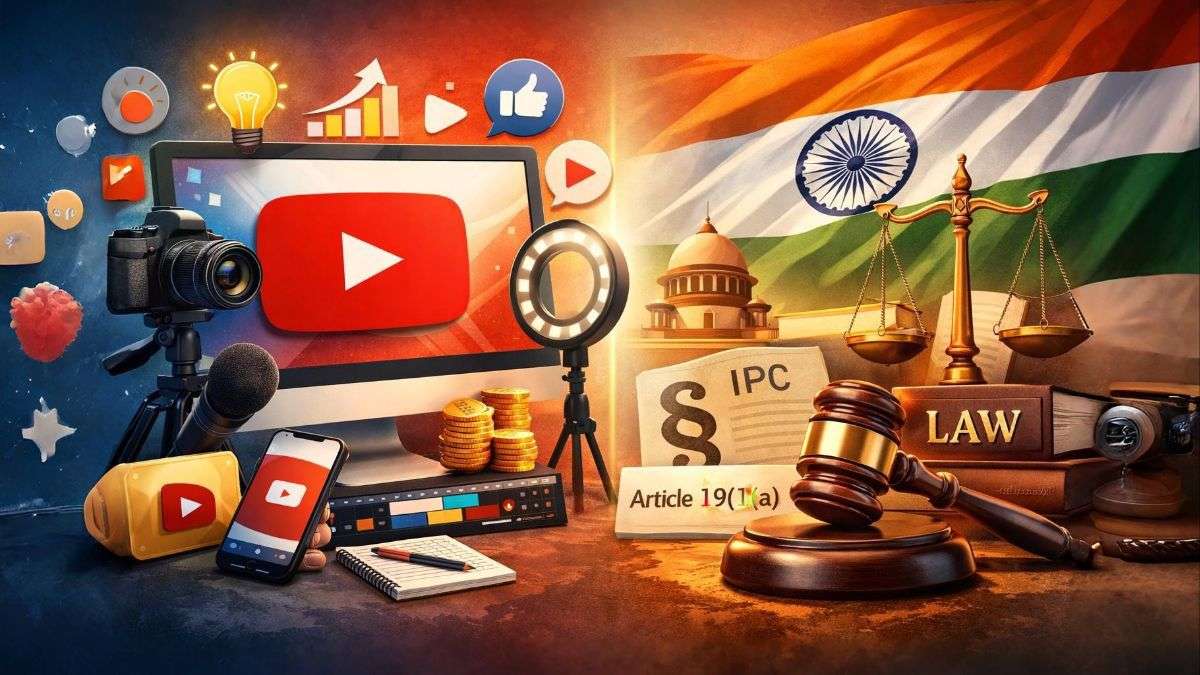
Introduction: Why New Creators Struggle More Than Old Creators
Content creation looks easy from the outside. A phone, an idea, and an upload button. But in reality, Indian content creation operates inside a legal, social, and ethical framework that many new creators are unaware of.
Old creators usually survive longer because they already understand the invisible rules what to say, what not to say, how far freedom of speech goes, and how to avoid legal trouble. New creators, on the other hand, often learn these rules only after facing copyright strikes, police complaints, monetization rejection, or public backlash.
This knowledge gap is the real problem not talent, not effort.
This article explains:
- Indian laws affecting content creation
- What “freedom of speech” actually means in India
- Copyright, image usage, and monetization risks
- How viral shortcuts damage mental health and careers
- A safe, legal, ethical roadmap for sustainable content creation
Understanding Freedom of Speech in India (Reality vs Myth)
Article 19(1)(a): Freedom of Speech & Expression
The Indian Constitution gives citizens the right to freedom of speech and expression under Article 19(1)(a).
But this right is not absolute.
Article 19(2): Reasonable Restrictions
The government can restrict speech in the interest of:
- Sovereignty and integrity of India
- Security of the State
- Friendly relations with foreign states
- Public order
- Decency or morality
- Contempt of court
- Defamation
- Incitement to an offence
What this means for creators:
You can express opinions, but not in a way that harms public order, spreads hatred, or damages someone’s reputation without proof.
Example:
- Saying “I disagree with this political decision” → Allowed
- Saying “This community is dangerous and should be punished” → Criminal offence
Content That Can Create Legal Trouble in India
1. Religion & Caste-Based Content
Relevant Law:
- IPC Section 153A – Promoting enmity between groups
- IPC Section 295A – Deliberate insult to religious beliefs
Risk:
Even unintentional jokes, memes, or exaggerated thumbnails can be interpreted as intentional insult.
Safe Approach:
- Discuss facts, history, or academic viewpoints
- Avoid mocking, abusive language, or stereotyping
- Use neutral language and verified sources
2. Defamation: Speaking Without Proof
Relevant Law:
- IPC Section 499 & 500 – Criminal defamation
Common Creator Mistake:
Making allegations against individuals or businesses without verified proof.
Example:
- Unsafe: “This company is a fraud”
- Safe: “Consumers have raised complaints against this company, according to official records”
Always separate opinion from fact.
3. Copyright & Image Usage (Biggest Monetization Killer)
Relevant Law:
Reality:
Google images, Instagram photos, movie scenes, and news photos are not free to use.
What Happens When You Use Copyrighted Images:
- Copyright strike
- Video takedown
- Monetization rejection
- Channel termination (repeat violations)
Safe Alternatives:
- Your own photos/videos
- Royalty-free platforms (Unsplash, Pexels, Pixabay)
- Creative Commons content with attribution
- AI-generated visuals with platform-safe usage
Important:
Even one copyrighted thumbnail can block monetization approval.
4. Animals, Violence & Shocking Content
Relevant Law:
- Prevention of Cruelty to Animals Act, 1960
- IT Rules, 2021
Content showing:
- Animal harm
- Fake rescues
- Extreme violence
- Blood-heavy thumbnails
can result in:
- Channel strikes
- Police complaints
- Platform bans
Viral Shortcuts: Why They Destroy Creators
Many new creators choose short-term virality:
- Extreme statements
- Sensational thumbnails
- Hate-driven narratives
Hidden Cost of Viral Shortcuts:
- Troll attacks
- Mental pressure
- Police notices
- Permanent digital reputation damage
Once a creator is labeled “controversial,” brands, platforms, and advertisers avoid them.
Old creators know this. That’s why they speak carefully even when criticizing.
Mental Health Reality of New Creators
When monetization fails after months of effort:
- Self-doubt increases
- Depression sets in
- Many quit or choose unethical paths
Truth:
YouTube income is delayed gratification, not instant reward.
Safe creators build long-term authority, not overnight fame
IT Rules 2021: Platform-Level Compliance
Under the Information Technology (Intermediary Guidelines and Digital Media Ethics Code) Rules, 2021:
- Platforms must remove unlawful content
- Creators are responsible for uploads
- Complaints can lead to takedown without warning
Ignorance is not a legal defense.
The Ethical & Legal Route Map for New Creators (RAAD WORLD Model)
Step 1: Choose Education-First Content
- Explain, analyze, inform
- Avoid provoking emotions intentionally
Step 2: Verify Before Publishing
- Cross-check facts
- Use government or credible sources
Step 3: Neutral Language Policy
- Replace anger with explanation
- Replace accusation with evidence
Step 4: Copyright Discipline
- Treat every image/video as protected
- Maintain a content source log
Step 5: Add Context & Disclaimers
- “This video is for educational purposes”
- “Views are based on available public information”
Step 6: Build Social Responsibility
- Ask: Does this help society or harm it?
- Long-term respect beats short-term views
Why Safe Content Wins in the Long Run
- Higher monetization approval chances
- Brand trust
- Audience loyalty
- Mental peace
- Legal safety
Creators who educate society outlive trends.
Conclusion:
Freedom With Responsibility Is Real Power
India gives creators freedom but with responsibility Old creators survive because they understand one truth Your content lives longer than your emotions. New creators must learn the law early, respect ethical limits, and build value-based content. Fame earned by harming others never lasts. Authority built by informing society always does. If your goal is sustainable income, respect, and mental peace, the safe route is not slow it is permanent.
Frequently Asked Questions (FAQ)
1.Is it legal to create opinion-based content on YouTube in India?
Yes, opinion-based content is legal in India under Article 19(1)(a) of the Constitution. However, creators must ensure their opinions do not promote hatred, defame individuals, disturb public order, or violate reasonable restrictions mentioned under Article 19(2).
2.Can new YouTubers face legal action for their content?
Yes. New creators can face legal notices or complaints if their content violates copyright laws, spreads misinformation, insults religious or caste groups, or defames individuals. Ignorance of the law is not considered a valid legal defense.
3.Is using Google images safe for YouTube thumbnails?
No. Most images available on Google are copyrighted. Using them without permission can lead to copyright strikes, monetization rejection, or channel termination. Creators should use self-created visuals, royalty-free images, or licensed content.
4.Does YouTube monetization get rejected due to copyright mistakes?
Yes. Repeated copyright violations, even unintentional ones such as using copyrighted thumbnails or background clips, can result in monetization rejection during AdSense review.
5.How can creators avoid controversy and negative trolling?
Creators should focus on educational, fact-based content, avoid sensational language, verify information before publishing, and maintain a neutral tone. Responsible content builds long-term trust and reduces backlash.
6.Are disclaimers enough to protect creators legally?
Disclaimers help provide context but do not offer full legal protection. Creators must still ensure their content complies with Indian laws, YouTube community guidelines, and platform policies.
7.Is slow growth better than viral growth for YouTubers?
Yes. Slow and consistent growth based on quality and trust leads to sustainable income, better mental health, brand opportunities, and long-term channel stability compared to short-term viral fame.
About The Author