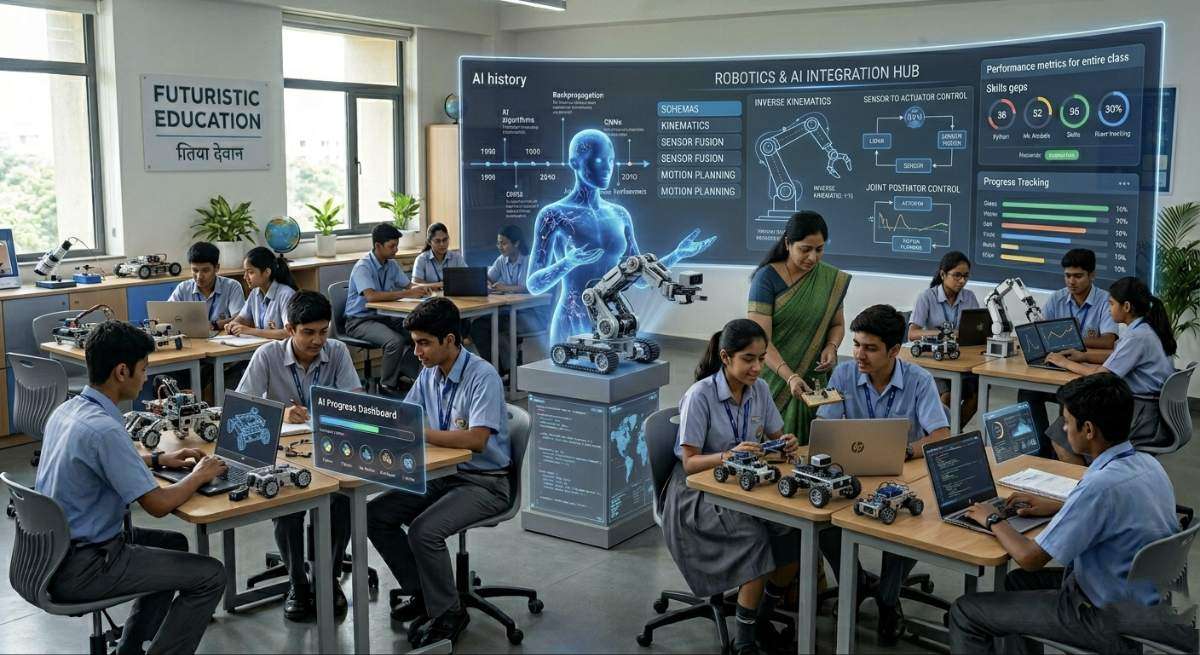
Artificial Intelligence (AI) is transforming every sector globally, and education is no exception. In India, the integration of AI into school education marks a significant step toward preparing students for the future.
Backed by the National Education Policy (NEP) 2020 and supported by the Ministry of Education, AI is now being introduced as a core learning component in schools. This initiative aims to make students digitally skilled, innovative, and ready for emerging technologies.
READ THIS: How Artificial Intelligence (AI) Is Changing Human Life
Government Initiative and Official Confirmation
The Government of India, through the Ministry of Education, has officially confirmed the introduction of AI and Computational Thinking in school education.
According to official announcements and policy frameworks, AI education will be introduced from Class 3 onwards starting the academic year 2026–27. This move aligns with the vision of NEP 2020, which emphasizes skill-based and future-oriented learning.
The National Curriculum Framework for School Education (NCF-SE) 2023 also supports early exposure to technology, ensuring that students understand digital tools from a young age. The government aims to make AI as fundamental as subjects like mathematics and science.
CBSE’s Role in AI Education
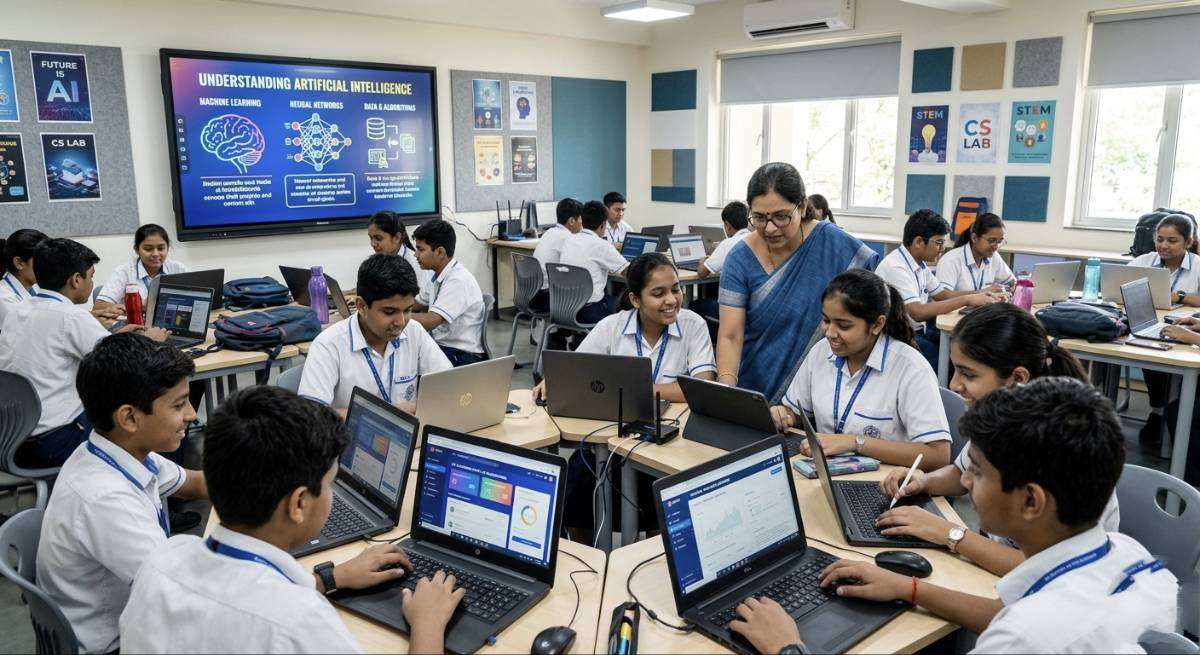
The Central Board of Secondary Education (CBSE) has already taken major steps in implementing AI in schools. AI has been introduced as a skill subject (Code 417) for Classes 9 and 10. Additionally, many CBSE-affiliated schools have started offering AI modules and coding education from Class 6 onwards.
The curriculum includes basic concepts of artificial intelligence, machine learning, and real-world applications. Students are also exposed to hands-on learning through projects, helping them understand how AI works in everyday life.
Key Features of AI in School Curriculum
1. Early Introduction of AI Concepts
Students from primary classes will be introduced to basic computational thinking and logical reasoning. This builds a strong foundation for advanced AI learning in higher classes.
2. Practical and Skill-Based Learning
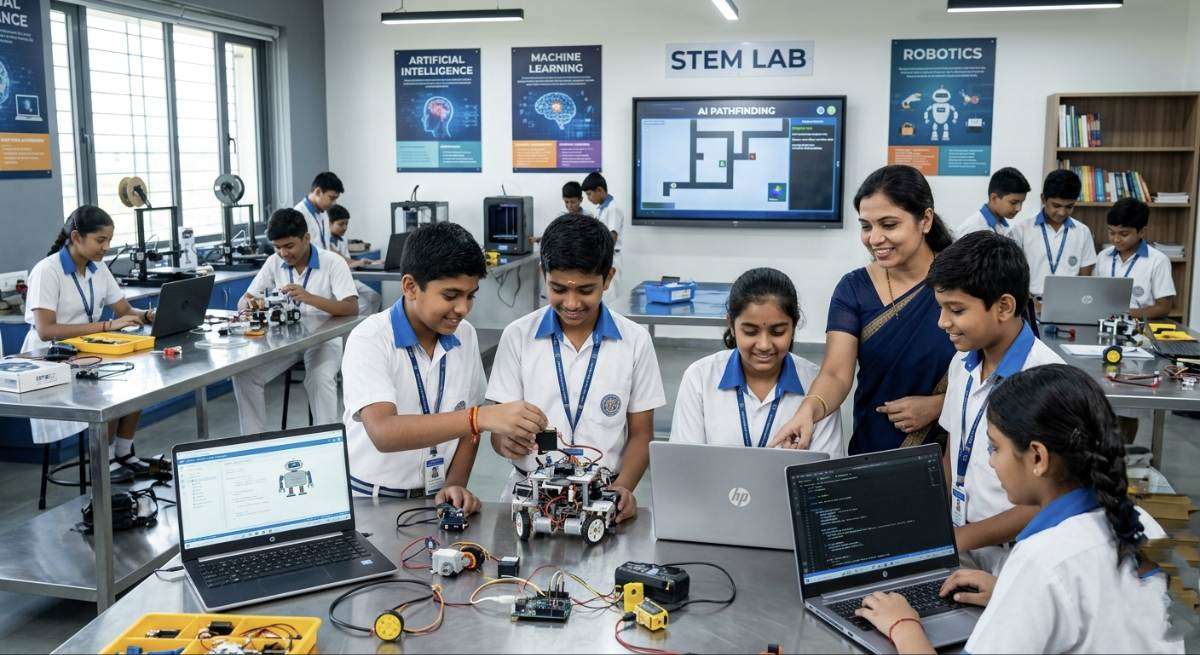
The AI curriculum focuses on practical knowledge rather than theoretical memorization. Students will work on real-life projects, encouraging creativity and innovation.
3. Integration with Digital Education
AI will be integrated with digital platforms, smart classrooms, and e-learning tools. This will enhance interactive learning and make education more engaging.
4. Teacher Training Programs
The government and CBSE are conducting training programs to equip teachers with the necessary skills to teach AI effectively in classrooms.
Benefits of AI in School Education
The introduction of AI in schools offers multiple advantages. It promotes personalized learning by adapting to each student’s pace and ability. AI tools can analyze student performance and provide customized feedback, helping improve academic outcomes.
It also reduces the workload of teachers by automating tasks such as grading and assessment. More importantly, it prepares students for future careers in technology, data science, robotics, and other advanced fields.
READ THIS: CBSE 3-Language Policy 2026 Explained
Challenges in Implementation
Despite its benefits, the implementation of AI in school education comes with challenges. Many schools, especially in rural areas, may face issues such as lack of infrastructure, internet connectivity, and trained teachers. Additionally, concerns related to data privacy and over-dependence on technology need to be addressed carefully.
Future of AI in Indian Education
The future of AI in Indian education looks promising. With continuous government support and technological advancements, schools are expected to become more digitally advanced.
AI-powered tools, virtual learning environments, and intelligent tutoring systems will redefine the traditional classroom experience. As India moves toward a digital economy, early exposure to AI will play a crucial role in building a skilled and innovative workforce.
Conclusion
The introduction of AI in school education is a revolutionary step in India’s education system. It reflects a shift from traditional learning methods to a more modern, technology-driven approach.
With proper implementation and support, AI has the potential to transform how students learn and prepare them for the challenges of the future.
FAQ Section
What is AI in school education?
AI in school education refers to the use of artificial intelligence technologies to enhance teaching, learning, and student assessment.
From which class is AI introduced in India?
AI is planned to be introduced from Class 3 onwards starting the 2026–27 academic year, as per government initiatives.
Is AI already available in CBSE schools?
Yes, CBSE has introduced AI as a skill subject for Classes 9 and 10, and some schools offer AI learning from Class 6.
What are the benefits of AI in education?
AI helps in personalized learning, faster assessments, improved student performance, and future career readiness.
What challenges does AI face in schools?
Challenges include lack of infrastructure, need for teacher training, and concerns about data privacy.
About The Author