A new development concerning UPI payments has attracted attention after the Supreme Court considered a challenge to the proposed Merchant Discount Rate (MDR) framework for certain UPI merchant transactions above ₹2,000.
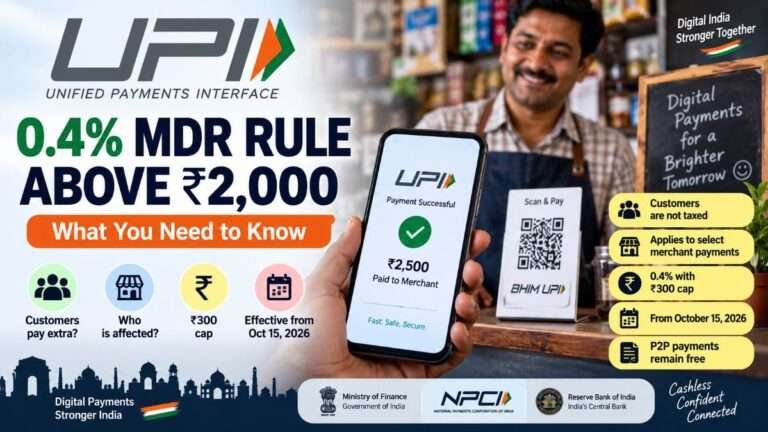
The issue is important for both customers and merchants because the new framework is scheduled to come into effect from October 15, 2026. However, the proposed MDR does not mean that every UPI payment above ₹2,000 will automatically result in an additional charge for the customer.
What Is the New UPI MDR Framework?
Merchant Discount Rate, commonly known as MDR, is a charge associated with processing certain merchant payments. Under the new framework, MDR will apply to specified Person-to-Merchant (P2M) UPI transactions above ₹2,000.
According to the Ministry of Finance, the framework has been introduced under the Payment and Settlement Systems Act, 2007, with the stated objective of supporting the long-term sustainability of the UPI payment ecosystem.
READ THIS: Smartphone Screen Protectors: BIS Rules From April 2027
Will UPI Payments Above ₹2,000 Be Charged?
This is one of the most important points to understand.
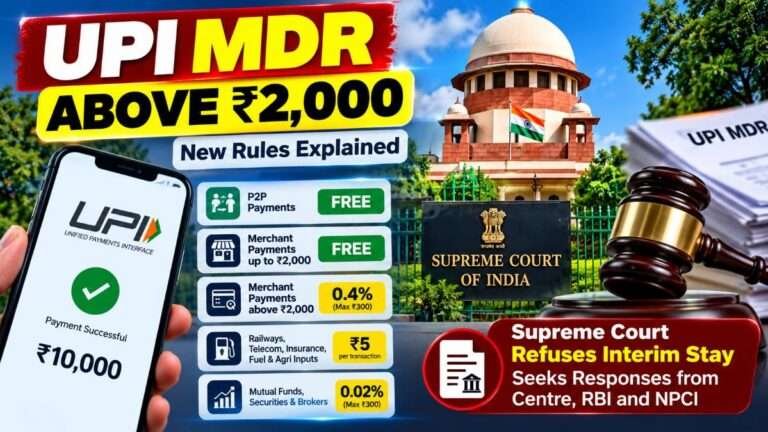
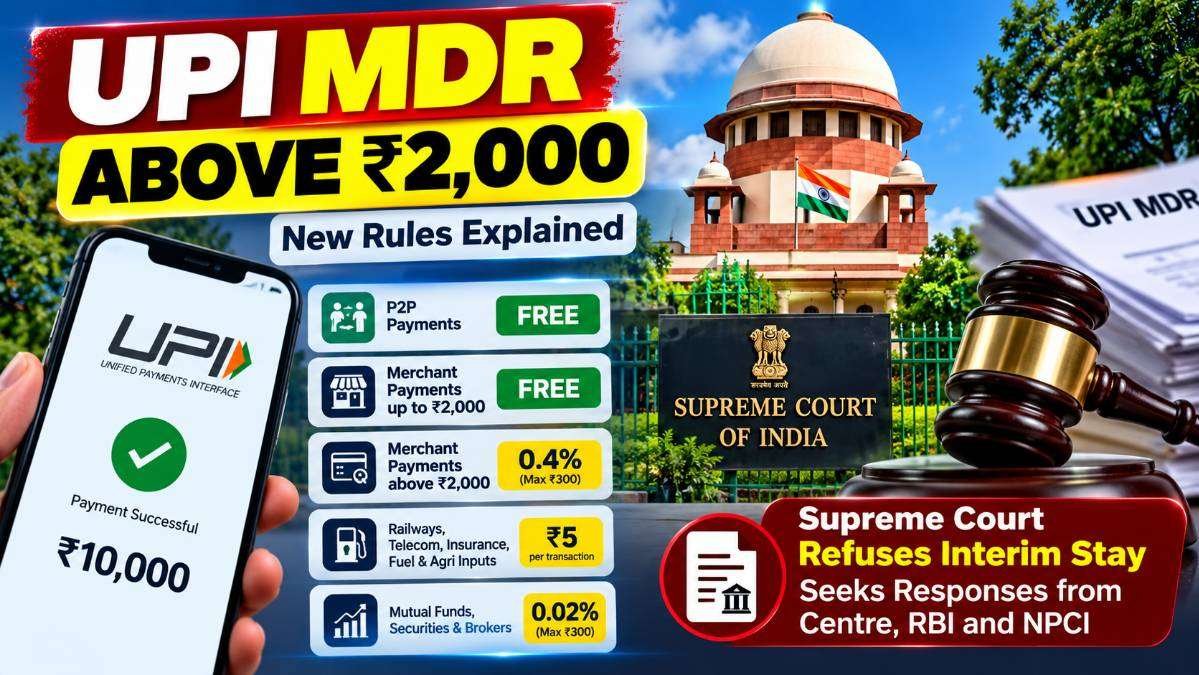
The new framework does not introduce a blanket charge on all UPI transactions above ₹2,000. The MDR applies to specified merchant transactions, while Person-to-Person (P2P) UPI payments continue to remain free regardless of the amount transferred.
Merchant payments of up to ₹2,000 will also remain free under the framework. The Government has stated that approximately 96 percent of P2M transactions will remain unaffected.
Person-to-Person UPI Payments Remain Free
If one individual sends money to another individual through UPI, the transaction remains outside the MDR framework. This applies regardless of whether the amount is ₹2,000, ₹10,000 or more.
Therefore, users should not interpret the new MDR framework as a new charge on normal UPI money transfers between individuals.
What Is the MDR Rate for Merchant Payments?
For specified Person-to-Merchant transactions above ₹2,000, the proposed MDR is 0.4 percent.
For transactions of ₹75,000 or more, the MDR is capped at ₹300 per transaction.
For example, if an eligible merchant transaction is ₹10,000, an MDR of 0.4 percent would correspond to ₹40 within the payment ecosystem. This does not mean that the customer should automatically pay an additional ₹40 to the merchant.
Will Customers Have to Pay MDR?
The Government has clarified that MDR is a charge within the merchant payment ecosystem and is not a tax or a fee collected by the Government or NPCI.
The Government has also stated that customers will not be required to pay MDR when making eligible UPI merchant payments. The charge is distributed among participants in the payment ecosystem, including banks, payment service providers and UPI application providers.
Therefore, customers should distinguish between the value of their UPI payment and the MDR applicable within the payment ecosystem.
What About Small Merchants?
The framework also contains provisions intended to protect small merchants from additional payment costs.
Small merchants, including street vendors and neighbourhood shops, receiving up to ₹1 lakh per month through UPI QR codes under the specified Person-to-Person-Merchant category will continue to receive zero-MDR treatment.
This means the new framework is not designed to impose MDR uniformly on every small business accepting UPI payments.
Special MDR Rules for Certain Sectors
The framework provides different treatment for certain essential and thin-margin sectors.
Eligible transactions above ₹2,000 in sectors such as railways, telecommunications, insurance, fuel and agricultural inputs will attract a flat MDR of ₹5 per transaction.
This category has been created separately from the standard 0.4 percent MDR applicable to specified merchant transactions.
READ THIS: QR Code Payment Explained What Information Is Stored in UPI QR?
What About Mutual Funds and Securities Payments?
Payments relating to mutual funds, securities, stockbrokers and dealers have a separate MDR rate under the framework.
For these specified capital-market transactions, the MDR is 0.02 percent, with a maximum cap of ₹300 per transaction.
What Happened in the Supreme Court?
The new MDR framework has also become the subject of a legal challenge before the Supreme Court of India.
On September 28, 2026, the Supreme Court considered the matter and did not grant an interim stay on the implementation of the framework at this stage.
The Court has sought responses from the concerned authorities, including the Centre, the Reserve Bank of India and the National Payments Corporation of India.
Has the Supreme Court Approved the New UPI Charges?
No. It is important not to describe the latest Supreme Court development as a final approval of the MDR framework.
The Court’s decision at this stage concerns interim relief. The legal challenge itself has not been finally decided. The concerned authorities have been asked to respond, after which the matter can proceed further according to the Court’s directions.
Therefore, headlines suggesting that the Supreme Court has permanently approved UPI charges would give an incomplete picture of the proceedings.
When Will the New MDR Framework Start?
The new framework is scheduled to come into effect from October 15, 2026.
However, because the framework is currently the subject of legal proceedings, future orders of the Supreme Court could affect its implementation. Users and merchants should therefore rely on official notifications and subsequent court orders for further changes.
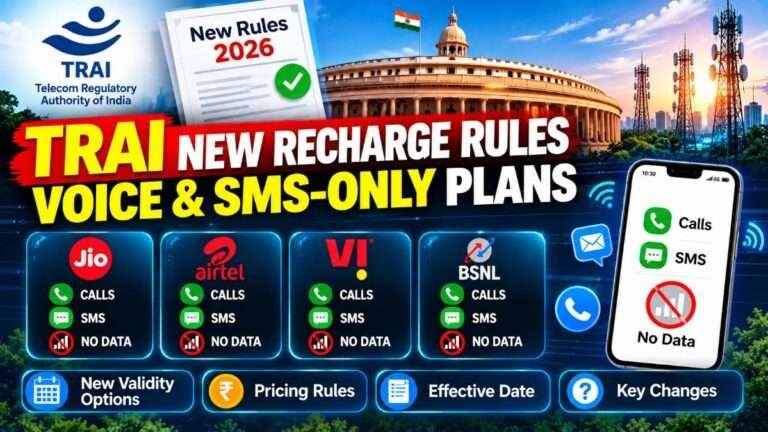
READ THIS: TRAI New Recharge Rules 2026: Voice & SMS-Only Plans
What UPI Users Need to Know
- Person-to-Person UPI payments remain free.
- Merchant UPI payments up to ₹2,000 remain free.
- MDR applies only to specified merchant transactions above ₹2,000.
- The standard MDR for eligible transactions above ₹2,000 is 0.4 percent.
- The MDR is capped at ₹300 for eligible transactions of ₹75,000 and above.
- Certain essential sectors have a flat ₹5 MDR for eligible transactions above ₹2,000.
- Small merchants covered by the specified zero-MDR provision continue to receive protection.
- The Government says customers will not be required to pay the MDR directly.
- The Supreme Court has not finally decided the legality of the framework.
Why This Matters for UPI Users and Merchants
UPI has become an important part of India’s digital payment system, and any change in the payment ecosystem can affect millions of transactions.
For customers, the most important point is that the new MDR framework does not turn every UPI payment above ₹2,000 into a charged transaction. The distinction between P2P and P2M transactions is essential.
For merchants, the impact depends on the type and value of transactions they receive, their category and whether they qualify for the zero-MDR provisions.
The Supreme Court proceedings are also significant because the legal basis of the framework is being examined. The final position will depend on the Court’s subsequent proceedings and orders.
Conclusion
The new UPI MDR framework has created considerable discussion because it introduces MDR for specified merchant transactions above ₹2,000 from October 15, 2026. However, it is not a universal charge on UPI payments.
Person-to-Person UPI transactions remain free, merchant payments up to ₹2,000 remain free, and the Government has stated that customers will not be required to pay MDR directly. Certain small merchants and specified sectors also have separate provisions.
The Supreme Court’s September 28 proceedings should also be understood carefully. The Court has not given a final judgment approving the framework. It has declined interim relief at this stage and sought responses from the concerned authorities. The legal challenge therefore remains an ongoing matter.
Users and merchants should avoid relying on social media claims suggesting that every UPI payment above ₹2,000 will attract an additional charge. The applicable rules depend on the type of transaction and merchant category, and any further changes should be checked against official Government, NPCI, RBI and Supreme Court updates.
About The Author