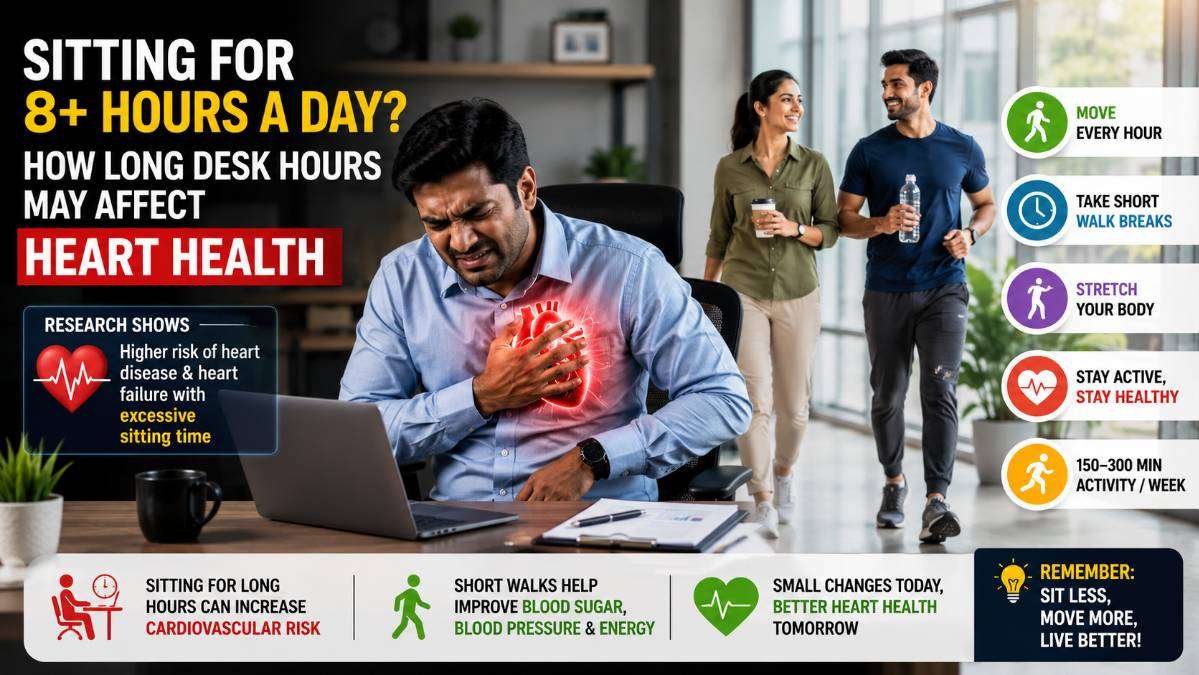
For millions of office employees, students, freelancers and technology professionals, sitting in front of a computer for several hours has become a normal part of daily life. Many people begin their work in the morning, remain at their desk for long periods and only get up for lunch, tea or at the end of the working day.
Although sitting itself is a normal human activity, health researchers have increasingly raised concerns about spending too much time in a sedentary position. Several studies have found an association between prolonged sedentary behaviour and an increased risk of cardiovascular problems, diabetes and premature death.
However, some social media posts have claimed that sitting at a desk for more than eight hours every day increases the risk of heart disease by 40 percent.
The scientific evidence is more complex than this single statement suggests. Research does show that excessive sitting may negatively affect heart health, but the level of risk can vary depending on total sedentary time, physical activity and other health factors.
What Does Research Say About Sitting for More Than Eight Hours?
A large international study published in JAMA Cardiology examined data from more than 100,000 people across 21 countries. Researchers studied the relationship between daily sitting time and major cardiovascular events, including heart attack, stroke and cardiovascular death.

READ THIS: Microplastics in Bottled Water: Shocking Facts You Must Know in 2026
The study found that people who reported sitting for six to eight hours a day had a higher combined risk of death and major cardiovascular disease compared with people who spent less time sitting. Those who reported sitting for more than eight hours a day had an approximately 20 percent higher combined risk in the study.
This is important because it shows that prolonged sitting is associated with health risks. However, it does not mean that every person who sits for eight hours will develop heart disease.
The study was observational, which means researchers identified an association between sitting time and health outcomes rather than proving that sitting alone directly caused every cardiovascular problem.
Where Does the 40 Percent Heart Risk Claim Come From?
The widely shared 40 percent figure may be connected to findings from separate research involving sedentary behaviour and heart failure.
Research highlighted by the American College of Cardiology examined sedentary time using activity-tracking data. The findings suggested that cardiovascular risks increased significantly when sedentary time exceeded approximately 10.6 hours per day.
According to the reported findings, people with very high sedentary time had an approximately 40 percent higher risk of heart failure compared with people who spent less time being sedentary. The risk of cardiovascular death was also higher among people with excessive sedentary time.
Therefore, saying that exactly eight hours of sitting increases heart disease risk by 40 percent is not an accurate summary of the available research. The 40 percent figure was associated with heart failure risk at a much higher level of daily sedentary time in a separate study.
Health information should always be presented with the correct context because different studies may examine different groups of people, health conditions and amounts of sedentary time.
Why Can Prolonged Sitting Affect the Body?
When a person remains seated for a long time, large muscles in the legs and lower body are used less frequently. Reduced muscle activity may affect the way the body processes blood sugar and fats.
Long periods of inactivity can also reduce overall energy expenditure. Over time, a sedentary lifestyle combined with poor diet and insufficient physical activity may contribute to weight gain, insulin resistance and other metabolic problems.

READ THIS: 10 Surprising Sleep Facts You Probably Didn’t Know
These factors are closely connected with cardiovascular health. High blood pressure, abnormal cholesterol levels, obesity and type 2 diabetes are among the conditions that can increase the risk of heart disease.
This does not mean that sitting for a few hours immediately damages the heart. The concern is mainly about a repeated lifestyle pattern in which a person spends a large part of every day sitting and does not get enough physical activity.
“Sitting Is the New Smoking” Scientifically Correct?
The phrase “sitting is the new smoking” has become popular in health discussions. It is often used to encourage people to move more during the day.
However, sitting and smoking should not be considered identical health risks. Smoking is a major preventable cause of serious diseases, including cancer, cardiovascular disease and respiratory illness. Prolonged sitting has its own health risks, but comparing it directly with smoking can oversimplify scientific evidence.
A more accurate message is that excessive sedentary behaviour is a health concern and people should reduce long periods of uninterrupted sitting whenever possible.
Can Exercise Completely Cancel the Effects of Sitting?
Regular physical activity is extremely important and can reduce many health risks associated with an inactive lifestyle. However, some research suggests that very high levels of sedentary time may still be associated with cardiovascular risks even among people who exercise.
This is why health experts increasingly focus on two different goals: getting enough physical activity and reducing excessive sedentary time.
A person may complete a workout in the morning but still spend the next ten or eleven hours sitting at a desk, in a car and on a sofa. Exercise remains beneficial, but adding movement throughout the day may provide additional health benefits.
Can Short Walking Breaks Help?
Research has also examined whether short movement breaks can reduce some of the negative effects associated with prolonged sitting.
A small study connected with Columbia University tested different combinations of sitting and walking. Researchers found that taking a five-minute light walk every 30 minutes produced meaningful improvements in blood sugar and blood pressure measurements during the study.

READ THIS: Copper Water Benefits and Facts: Scientific Evidence and Safety Guidelines
This does not mean that everyone must strictly walk for five minutes every half hour. However, the findings support a simple idea: regularly interrupting long periods of sitting with light movement may be beneficial.
Office workers can consider standing up, walking around the room, going to refill a water bottle or taking a short walk during breaks. Even small movement habits may help reduce uninterrupted sedentary time.
How Much Physical Activity Do Adults Need?
The World Health Organization recommends that adults should generally complete at least 150 to 300 minutes of moderate-intensity aerobic physical activity each week. Alternatively, adults can perform 75 to 150 minutes of vigorous-intensity aerobic physical activity.
Muscle-strengthening activities involving major muscle groups are also recommended on two or more days per week.
The World Health Organization also advises people to limit the amount of time spent being sedentary. Replacing sedentary time with physical activity of any intensity can provide health benefits.
Simple Ways to Reduce Sitting Time During the Day
People who work at a desk do not necessarily need to completely change their job or daily routine. Small practical changes can help increase movement during the day.
- Stand up and move regularly during long working sessions.
- Take a short walk during tea or lunch breaks.
- Walk while attending a phone call when possible.
- Use stairs instead of elevators when physically suitable.
- Keep a water bottle away from the desk so that you need to get up for refills.
- Perform light stretching after prolonged periods of sitting.
- Include regular walking, cycling or other physical activities in the weekly routine.
- Avoid spending the entire evening sitting after a full day of desk work.
People with heart disease, mobility problems or other medical conditions should seek advice from a qualified healthcare professional before making major changes to their exercise routine.

READ THIS: The Complete History of Mother’s Day: Why It Is Celebrated in May
Should Desk Workers Be Worried?
People should not panic simply because their job requires them to sit at a computer. The research does not say that sitting for eight hours automatically causes a heart attack or heart disease.
The main concern is prolonged and excessive sedentary behaviour, particularly when it becomes a regular daily habit and is combined with insufficient physical activity.
Age, family history, smoking, blood pressure, cholesterol, diabetes, diet, body weight and physical activity can all influence cardiovascular risk. Sitting time is only one part of a person’s overall health profile.
Instead of becoming frightened by dramatic statistics shared online, people can focus on practical changes. Regular movement, sufficient physical activity, a balanced diet and routine health checks are more useful than relying on a single viral health claim.
Conclusion
Scientific research supports the concern that spending very long periods sitting may be associated with an increased risk of cardiovascular disease and other health problems.
A large international study found a higher combined risk of death and major cardiovascular disease among people with longer daily sitting times, while separate research found approximately 40 percent higher heart failure risk among people with very high sedentary time of around 10.6 hours or more per day.
Therefore, the claim that sitting for exactly eight hours increases heart disease risk by 40 percent should not be presented as a confirmed scientific fact. The actual research findings require more context.
The practical message is simple. People who spend long hours at a desk should try to break up prolonged sitting with regular movement and maintain recommended levels of physical activity.
A short walk, standing up periodically and adding more movement to the daily routine may appear to be small changes, but they can be useful steps towards a healthier and more active lifestyle.
Disclaimer: This article is for general informational and educational purposes only. It is not a substitute for professional medical advice, diagnosis or treatment. Anyone with concerns about heart health or physical activity should consult a qualified healthcare professional.
About The Author