Election Commission Extends SIR Schedule for Karnataka Revised Electoral Roll Dates, BLO Verification & Draft Voter List 2026
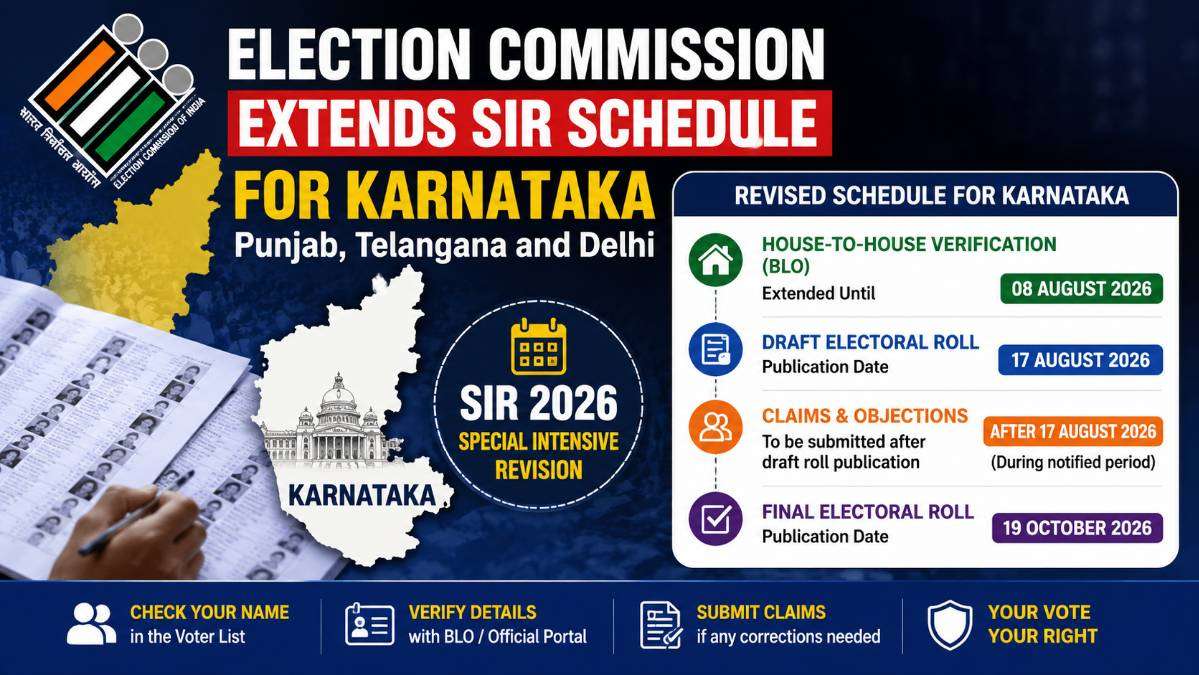
The Election Commission of India (ECI) has officially revised the schedule for the ongoing Special Intensive Revision (SIR) of electoral rolls in Karnataka, Punjab, Telangana and Delhi.
The decision has been taken to provide additional time for Booth Level Officers (BLOs) to complete house-to-house verification and ensure that every eligible voter is included in the electoral roll.
The revised schedule is expected to improve the accuracy of voter lists before the publication of the final electoral rolls. The Special Intensive Revision is one of the Election Commission’s most important exercises.
It helps update electoral rolls by adding the names of newly eligible voters, removing duplicate or ineligible entries, correcting mistakes and ensuring that every eligible citizen gets an opportunity to participate in the democratic process. Since electoral rolls are the foundation of free and fair elections, their accuracy is extremely important.
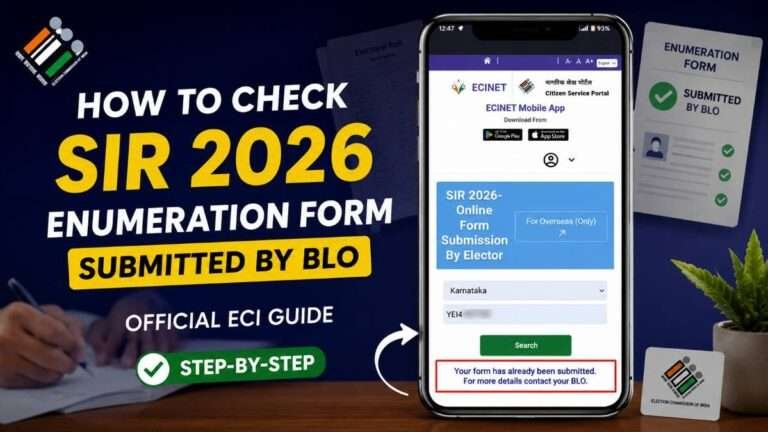
READ THIS: How to Find Part Number and Serial Number Using ECINET App for SIR Form 2026
Why Has the Schedule Been Extended?
According to the Election Commission, the extension has been granted to allow Booth Level Officers more time to complete door-to-door verification.
During this exercise, BLOs visit households to verify voter details, identify newly eligible voters, record changes in addresses and collect information regarding deceased or shifted voters.
The additional time will help officials complete this work more effectively and reduce the chances of genuine voters being left out of the electoral rolls.
The Commission has stated that this extension is intended to improve the quality of the electoral database rather than delay the overall election process. Accurate voter lists are essential to maintain transparency and public confidence in elections.
Revised Schedule for Karnataka
The Election Commission has announced the following revised timeline for Karnataka under the Special Intensive Revision programme:
- House-to-house verification by Booth Level Officers: Extended until 8 August 2026.
- Publication of Draft Electoral Roll: 17 August 2026.
- Claims and objections: Citizens can submit requests for corrections, additions or deletions after the draft roll is published during the officially notified period.
- Final Electoral Roll: Scheduled to be published on 19 October 2026.
These revised dates provide additional time for both election officials and citizens to verify voter information before the final list is released.
What Is the Special Intensive Revision (SIR)?
The Special Intensive Revision is a comprehensive voter list verification programme conducted by the Election Commission of India. Unlike routine updates, this exercise involves large-scale verification to improve the accuracy of electoral rolls.
During the revision process, election officials verify existing voter records, include the names of newly eligible voters who have attained the age of 18 years, update changes in residential addresses, correct personal details.
wherever necessary and remove duplicate or ineligible entries according to election rules. The objective is to prepare an electoral roll that accurately reflects the eligible voting population before elections are conducted.
Role of Booth Level Officers (BLOs)
Booth Level Officers play a crucial role in maintaining accurate electoral rolls. They are responsible for visiting households within their assigned polling areas to verify voter information and assist citizens with voter registration.
During house visits, BLOs may verify the identity and address of voters, collect updated information, help newly eligible citizens register as voters and inform residents about the procedures for correcting mistakes in voter records. If a BLO visits your residence, it is advisable to cooperate and provide the necessary information so that your voter details remain accurate.
READ THIS: Indian Railways WhatsApp Ticket Screenshots Not Valid Proof
Why Should Citizens Verify Their Names?
Every eligible voter should verify whether their name appears correctly in the electoral roll. Even small mistakes in spelling, address or other personal details may create inconvenience during elections. Citizens should also check whether their polling station information is correct.
If any error is found after the publication of the draft electoral roll, voters can submit claims or objections within the period specified by the Election Commission. This process allows corrections before the final electoral roll is published.
Who Can Apply During This Period?
Several categories of citizens can benefit from this revision process. Young citizens who have recently become eligible to vote can apply for inclusion. People who have shifted their residence can request address updates.
Existing voters can correct errors in their personal details, while objections can also be submitted regarding duplicate or incorrect entries according to Election Commission guidelines.
How Can Voters Check Their Details?
Citizens can verify their voter information through the official Election Commission website, the Voter Helpline mobile application or by contacting their local Electoral Registration Officer or Booth Level Officer.
These official platforms allow voters to check whether their names appear in the electoral roll and apply for necessary corrections. It is recommended that voters rely only on official Election Commission announcements for schedule updates instead of depending solely on social media posts or unofficial messages.
Importance of Accurate Electoral Rolls
An updated electoral roll ensures that every eligible citizen gets an equal opportunity to exercise the constitutional right to vote. Accurate voter lists also help election authorities conduct smooth and transparent elections by reducing errors, preventing duplication and improving the overall credibility of the electoral process.
The extension of the Special Intensive Revision schedule demonstrates the Election Commission’s effort to complete voter verification carefully rather than rushing the process. This additional time can help improve the quality of electoral rolls across Karnataka and the other states included in the revised schedule.
Conclusion
The Election Commission of India’s decision to extend the Special Intensive Revision schedule for Karnataka, Punjab, Telangana and Delhi is aimed at ensuring that electoral rolls are accurate, complete and transparent.
In Karnataka, house-to-house verification will continue until 8 August 2026, the draft electoral roll will be published on 17 August 2026 and the final electoral roll is scheduled for publication on 19 October 2026.
Citizens should use this opportunity to verify their voter details, cooperate with Booth Level Officers during verification and submit corrections if required. Relying on official Election Commission sources for updates will help voters receive accurate information and remain prepared for future elections.
About The Author