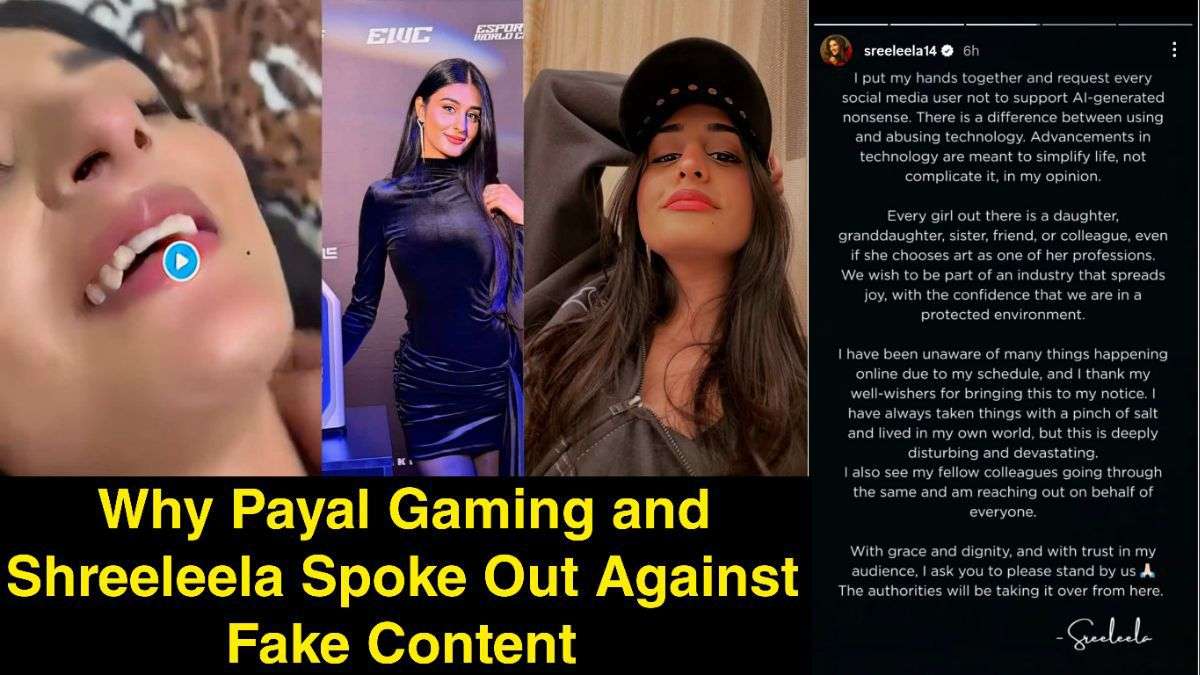
AI Misuse Controversy: Why Payal Gaming and Shreeleela Spoke Out Against Fake Content
In recent days, a disturbing trend involving the misuse of artificialintelligence has triggered widespread concern across India’s digital and entertainment spaces.
The controversy gained attention after popular streamer Payal Gaming and actress Shreeleela publicly reacted to the growing circulation of AI-generated fake and morphed content targeting women. This issue is no longer limited to celebrities alone but highlights a larger digital safety crisis affecting creators, professionals, and ordinary users online.
The problem began when AI tools started being misused to create fake images and videos that falsely represent real women in inappropriate or misleading ways. These creations are often shared rapidly on social media platforms without verification or consent.
In many cases, the intention behind such content is harassment, humiliation, or exploitation. What makes this issue especially alarming is the ease with which such content can be generated and the lack of awareness among users who unknowingly contribute to its spread by resharing it.
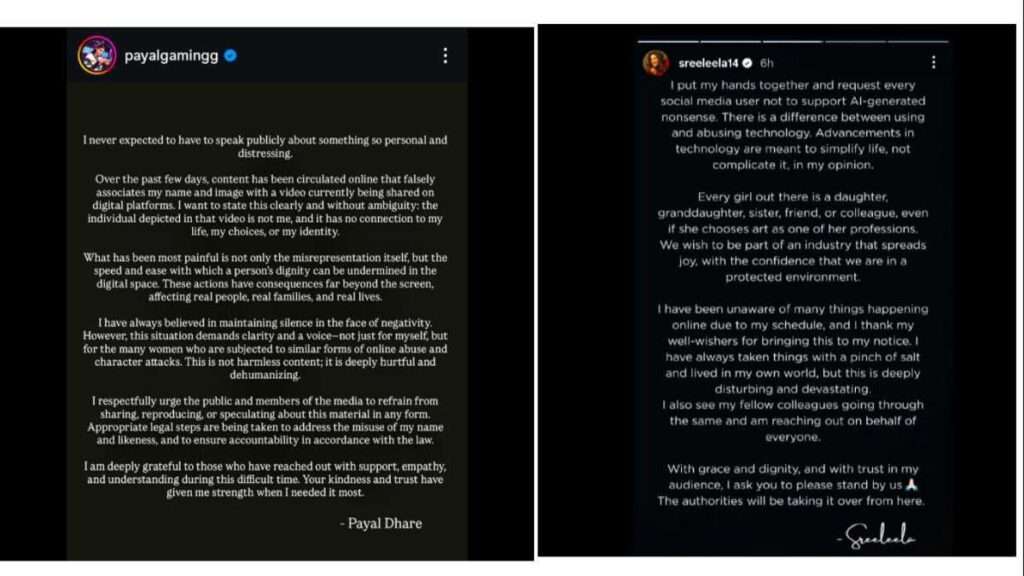
Payal Gaming, one of India’s most recognized female gaming creators, was among the first to openly address the emotional and psychological impact of this trend. She spoke about how AI-generated fake content using her identity affected her mental peace and personal dignity.
Her response was not just personal but also a warning to the larger online community about how dangerous unchecked technology can become when ethical boundaries are ignored. By speaking up, she encouraged other women to raise their voices and made it clear that silence only empowers abusers.
Soon after, actress Shreeleela shared a powerful Instagram story that brought further attention to the issue. In her statement, she appealed directly to social media users, requesting them not to support or promote AI-generated nonsense.
The deeper meaning of her message lies in the distinction she made between the use and abuse of technology. She acknowledged that technological advancement is meant to simplify life, but when misused, it can cause serious harm. Her words reflected disappointment, concern, and a call for responsibility from both creators and consumers of online content.
Shreeleela’s Instagram story also emphasized the human aspect behind public figures. She reminded audiences that every woman, regardless of her profession, is someone’s daughter, sister, granddaughter, friend, or colleague. By highlighting this, she reinforced the idea that actresses and public personalities do not lose their right to dignity simply because they live in the public eye.
Her statement expressed a desire to work in an industry that spreads joy while also ensuring a sense of safety and protection for those within it.
Another important part of her message was her admission that she had been unaware of many online activities due to her busy schedule. This reflects a reality many celebrities face, where harmful content circulates long before it comes to their notice.
Once she became aware, she described the situation as deeply disturbing and devastating. This reaction underscores how emotionally damaging such incidents can be, even for those who appear confident and strong in public.
Crucially, Shreeleela also mentioned that the matter is being handed over to authorities. This line signals that AI-generated harassment is not just a moral issue but a legal one. Under Indian cyber laws, creating or sharing morphed or obscene content without consent is a punishable offense.
Her statement sends a clear message that accountability is necessary and that legal systems must be involved to curb such misuse.The broader significance of this controversy lies in the conversation it has sparked about digital ethics. Artificial intelligence is a powerful tool, but without responsibility, it can easily become a weapon of harm.
The statements from both Payal Gaming and Shreeleela are not against technology itself but against its unethical application. They advocate for awareness, empathy, and stricter action against those who exploit technological advancements for malicious purposes.
Read This Article Also: IPL 2026 Auction: Biggest Surprises, Record Buys And Key Takeaways
Conclusion: This issue serves as a wake-up call for social media users, content creators, and policymakers alike. Supporting or sharing AI-generated fake content, even casually, contributes to a culture of harassment.
The voices of Payal Gaming and Shreeleela remind us that progress should never come at the cost of human dignity. Responsible technology use, combined with legal action and public awareness, is the only way forward to ensure a safer and more respectful digital environment.
About The Author