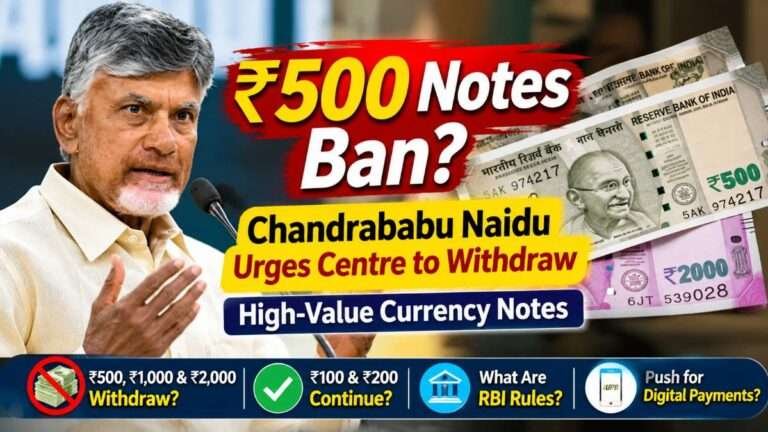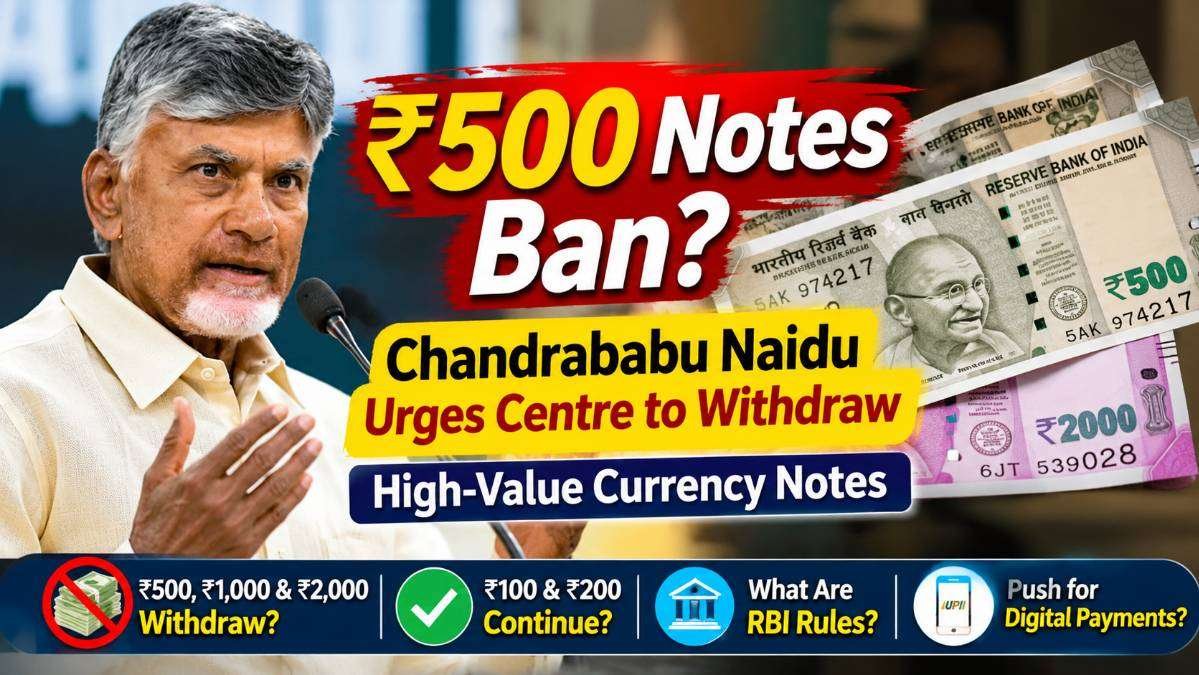
There has been fresh discussion about India’s currency system after Andhra Pradesh Chief Minister N. Chandrababu Naidu renewed his demand to withdraw high-denomination currency notes.
He believes that reducing the circulation of high-value cash could help control corruption, black money and the use of money during elections.
Naidu has suggested that the government should withdraw ₹500, ₹1,000 and ₹2,000 currency notes and retain ₹100 and ₹200 notes. His proposal has attracted attention across India, particularly because of the country’s previous demonetisation decision in 2016.
However, there is an important clarification for the public. The proposal does not mean that the government has announced a new ban on ₹500 notes. Here is everything you need to know about the latest development, its background and the current RBI rules.
What Did Chandrababu Naidu Say About ₹500 Notes?
On November 9, 2026, Andhra Pradesh Chief Minister N. Chandrababu Naidu renewed his demand to withdraw high-value currency notes. According to news reports, he said that only ₹100 and ₹200 denominations should remain in circulation.
He argued that reducing the availability of high-denomination cash could make it more difficult to distribute large amounts of money during elections and help control corruption.
Naidu also referred to his earlier proposal on digital currency, which he had discussed with Prime Minister Narendra Modi. He indicated that he would continue raising this issue with the Central Government.
It is important to understand that Chandrababu Naidu has expressed a policy proposal. The final decision on currency withdrawal is not made by an individual Chief Minister.
Why Does Chandrababu Naidu Want to Withdraw ₹500 Notes?
Naidu believes that reducing the use of high-denomination currency could help improve financial transparency. His proposal is mainly connected to the following issues.
1. Controlling Black Money
Black money refers to income or wealth that is not properly reported to the authorities or is connected to illegal financial activities. Large amounts of cash can be stored and transferred using high-denomination notes.
Naidu believes that reducing the circulation of these notes could make certain cash-based financial activities more difficult. However, withdrawing large currency notes alone cannot completely eliminate black money.
2. Reducing Money Distribution During Elections
Another important reason behind his proposal is election-related corruption. During elections, some candidates or political groups may attempt to influence voters by distributing money.
Naidu argues that withdrawing high-value notes could make the transportation and distribution of large amounts of cash less convenient. He believes this could support cleaner elections and reduce the influence of money in politics.
3. Encouraging Digital Payments
India has experienced significant growth in digital payments over recent years. Services such as Unified Payments Interface (UPI), mobile banking and online bank transfers have made everyday payments easier.
Naidu wants to encourage more people and businesses to use digital payment methods. Digital transactions can create electronic records and make certain financial activities easier to monitor.
4. Improving Financial Transparency
Technology can help improve financial transparency when it is supported by effective monitoring, strong banking systems and proper enforcement. Naidu believes that wider digital adoption could help reduce opportunities for corruption.
This the First Time Chandrababu Naidu Has Made This Demand?
No. Chandrababu Naidu has raised concerns about high-denomination currency notes in the past as well.
He supported the demonetisation announcement made by the Central Government in November 2016, when the old ₹500 and ₹1,000 notes were withdrawn from legal tender. However, he also expressed concerns about the introduction and circulation of high-value currency notes later.
Over the years, he has continued to support reducing the use of large-denomination cash and encouraging digital financial transactions.
His latest statement in November 2026 has brought the discussion back into the national spotlight.
What Happened During the 2016 Demonetisation?
On November 8, 2016, Prime Minister Narendra Modi announced a major demonetisation decision. Under this decision, the existing ₹500 and ₹1,000 banknotes of the Mahatma Gandhi series ceased to be legal tender from midnight.
The government announced this measure with the stated objectives of fighting black money, counterfeit currency, corruption and the financing of illegal activities.
After the announcement, new ₹500 notes were introduced, and ₹2,000 notes were also brought into circulation.
The 2016 decision was an official government action. This is different from Chandrababu Naidu’s current proposal, which requires a separate decision and official notification before any new currency withdrawal can take place.
READ THIS: YouTube New Payment Rules 2026: $20 Payout Test and 2027 Changes
What Is the Current RBI Rule for ₹500 Notes?
One of the biggest questions among people is whether existing ₹500 notes are still valid. According to the Reserve Bank of India’s published currency information, current ₹500 banknotes remain legal tender in India.
Here is the current position of the major denominations:
- ₹500 notes: Current ₹500 banknotes remain legal tender.
- ₹200 notes: These notes remain legal tender and are valid for payments.
- ₹100 notes: These notes continue to be valid currency.
- ₹2,000 notes: These notes were withdrawn from circulation in May 2023 but continue to be legal tender.
The RBI has clarified that the withdrawal of ₹2,000 notes from circulation did not mean that they immediately lost their legal-tender status. The facility to exchange or deposit these notes is available through designated RBI Issue Offices.
Will the Central Government Ban ₹500 Notes?
At present, Chandrababu Naidu’s demand should be understood as a proposal, not an official demonetisation announcement.
For a new currency withdrawal to happen, the appropriate authorities would need to take the necessary decisions and issue official instructions. The Reserve Bank of India and the Central Government play important roles in India’s currency management.
Until an official announcement changes the rules, people can continue using current ₹500 notes for normal transactions.
People should not believe social media messages claiming that ₹500 notes have already become invalid. Always check official RBI announcements and Government of India notifications before accepting such claims.
READ THIS: QR Code Payment Explained What Information Is Stored in UPI QR?
What Could Happen If the Government Accepts This Proposal?
If the Central Government decides to consider this proposal, several important issues would need to be addressed.
- The government would need to announce a clear currency policy.
- The RBI would need to provide official instructions regarding the affected denominations.
- Banks would need clear guidance about deposits and exchanges.
- Citizens and businesses would need sufficient information and time to understand the changes.
- Alternative payment arrangements would need to be accessible to people who depend heavily on cash.
These are possible steps in a future policy decision. They are not evidence that a new ban has been announced.
Could Removing ₹500 Notes Completely Stop Black Money?
Removing high-denomination notes may make certain cash transactions less convenient, but it cannot completely solve the problem of black money and corruption.
Illegal financial activities can also involve property, gold, benami assets, shell companies and other methods of transferring wealth.
Strong laws, effective investigations, transparent financial systems and responsible enforcement are also necessary to tackle these problems.
Therefore, any currency policy needs to be considered carefully, taking into account its economic effects and the needs of ordinary citizens.
READ THIS: Google Loses $500 Billion in Market Value After 25% Profit Decline
What Should People Do Now?
People do not need to panic because of this news. Existing ₹500 notes have not been declared invalid by this political proposal.
- Continue using valid ₹500 notes for everyday payments.
- Do not rush to exchange your money because of unverified social media messages.
- Check the RBI website for official currency-related announcements.
- Follow reliable news sources for further developments.
- Never share personal banking details or OTPs with anyone claiming to offer currency exchange services.
Conclusion
Andhra Pradesh Chief Minister Chandrababu Naidu’s renewed demand to withdraw ₹500 and other high-denomination currency notes has started an important discussion about corruption, black money, election spending and digital payments in India.
His proposal is based on the belief that reducing high-value cash transactions could encourage greater financial transparency. However, withdrawing high-denomination currency alone cannot completely eliminate corruption or black money.
The most important point is that the Central Government has not announced a new ban on current ₹500 notes in response to this proposal. According to the RBI’s published currency rules, existing ₹500 notes remain legal tender.
Citizens should rely on official government notifications and RBI updates instead of believing misleading headlines or unverified social media messages. Any future change in India’s currency system will need to be communicated through the appropriate official channels.
About The Author