Bhima Koregaon History: Why January 1 Is a Symbol of Dalit Pride and Indian Constitutional Values
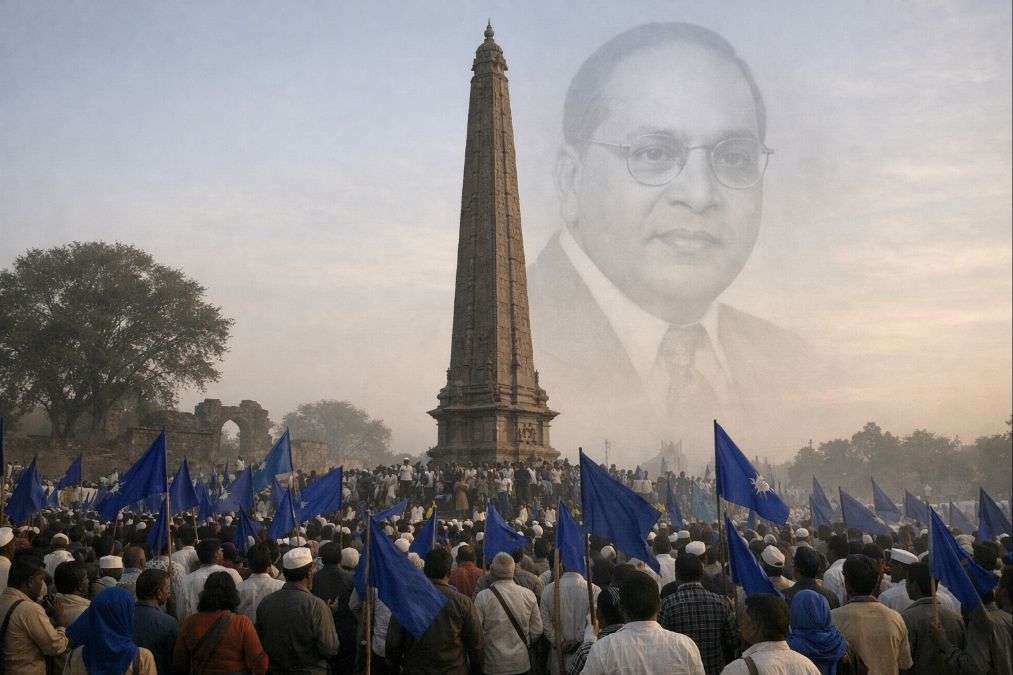
Every year on January 1, while the world welcomes a New Year, a quiet village near Pune becomes the center of memory, emotion, and identity for lakhs of Indians. Bhima Koregaon is not just a historical location; it is a living symbol.
It represents forgotten soldiers, suppressed voices, contested histories, and the ongoing struggle to define dignity and equality in modern India. This is not merely about a battle fought more than two centuries ago it is about how history continues to shape the present.
The Place and the Time
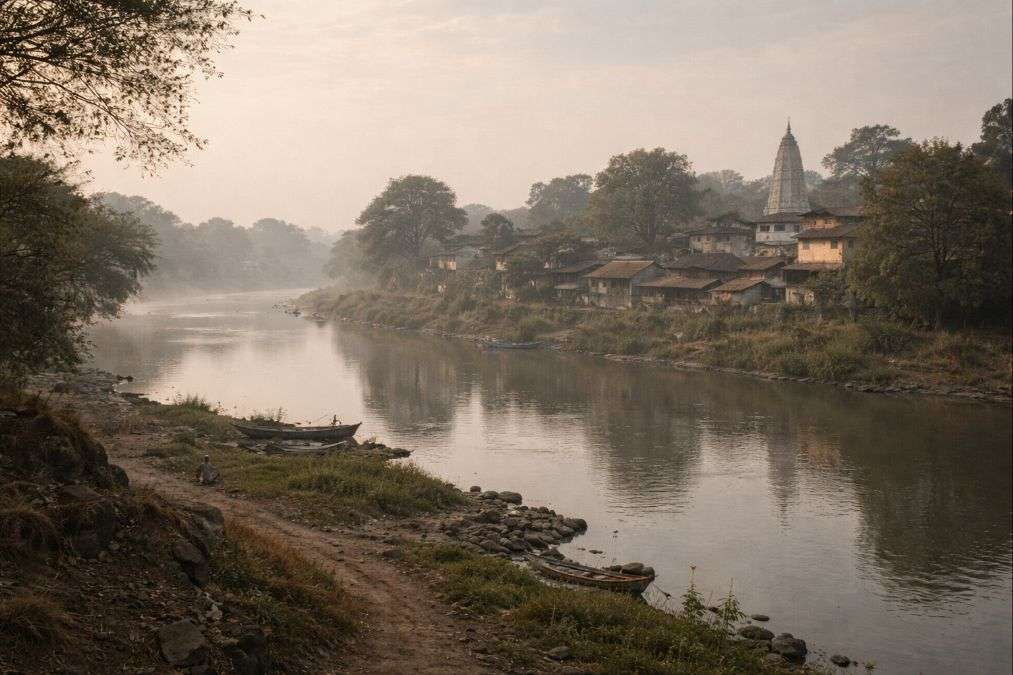
Bhima Koregaon is situated on the banks of the Bhima River in present-day Maharashtra. In the early 19th century, this region was part of the Maratha Empire, then under the authority of Peshwa Bajirao II. By 1817–1818, the Maratha power was weakening, and the British East India Company was expanding its military and political control across the subcontinent.
On 1 January 1818, a military encounter took place here small in scale, but massive in long-term impact.
What Actually Happened in 1818
A contingent of around 800 soldiers from the Bombay Native Infantry of the East India Company, many of whom belonged to the Mahar community, faced a much larger force of the Peshwa. Despite being outnumbered, the Company troops managed to hold their position for several hours. Eventually, the Peshwa’s forces withdrew.
From a purely military perspective, this was a minor engagement during the Third Anglo-Maratha War. It did not decide the war by itself. However, its symbolic value would grow far beyond its immediate outcome.
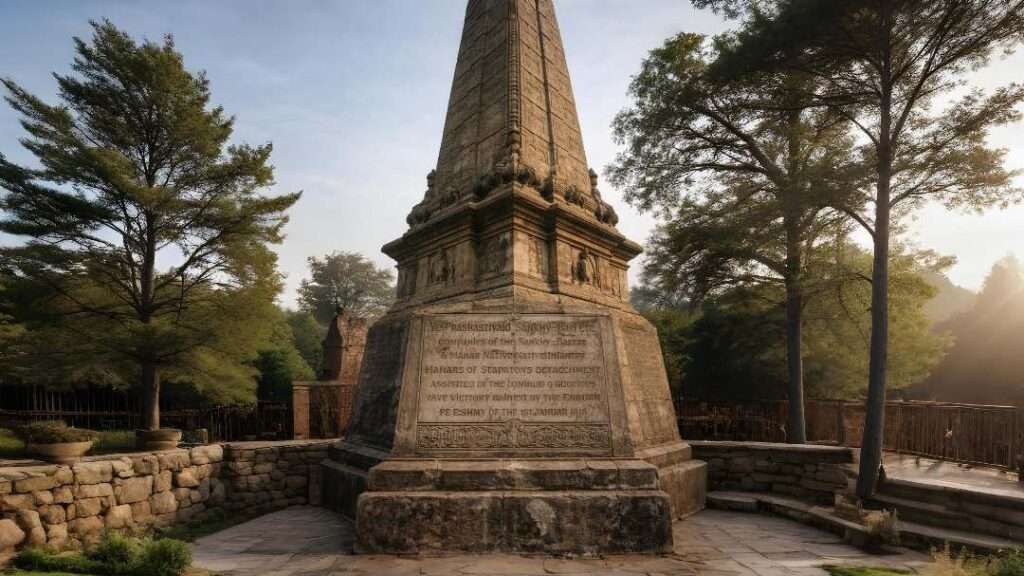
Years later, the British erected a stone obelisk now known as the Victory Pillar (Jaystambh) inscribed with the names of soldiers who died in the battle. Several of those names belonged to Mahar soldiers, something extremely rare in official historical memorials of that era.
Why Bhima Koregaon Became Symbolic for Dalits
To understand Bhima Koregaon, one must understand the social structure of the time. Under the Peshwa administration, caste-based discrimination was deeply entrenched. Mahars and other so-called “untouchable” communities were excluded from social life, education, and positions of power.
For Dalit communities, the 1818 battle came to represent something larger than a military encounter:
- It symbolized resistance against caste oppression.
- It marked a moment when marginalized people were visible in recorded history.
- It challenged the idea that dignity and bravery belonged only to upper castes.
Over time, Bhima Koregaon transformed into a site of collective memory and assertion. It became a reminder that history is not owned only by kings and empires, but also by ordinary people who fought, suffered, and stood their ground.
Dr. B. R. Ambedkar and the Revival of Memory
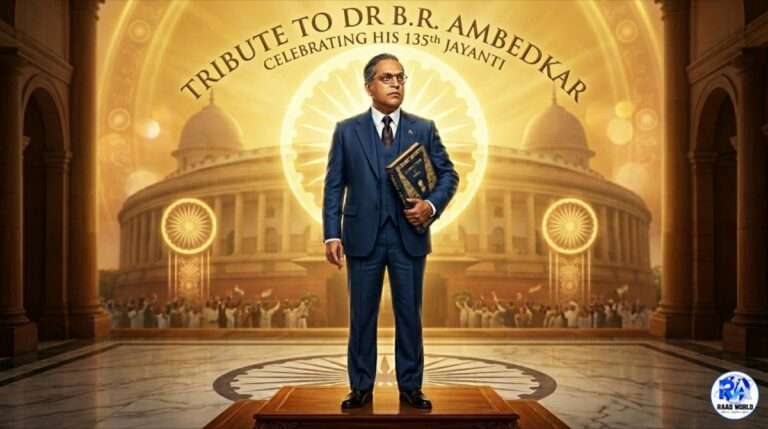
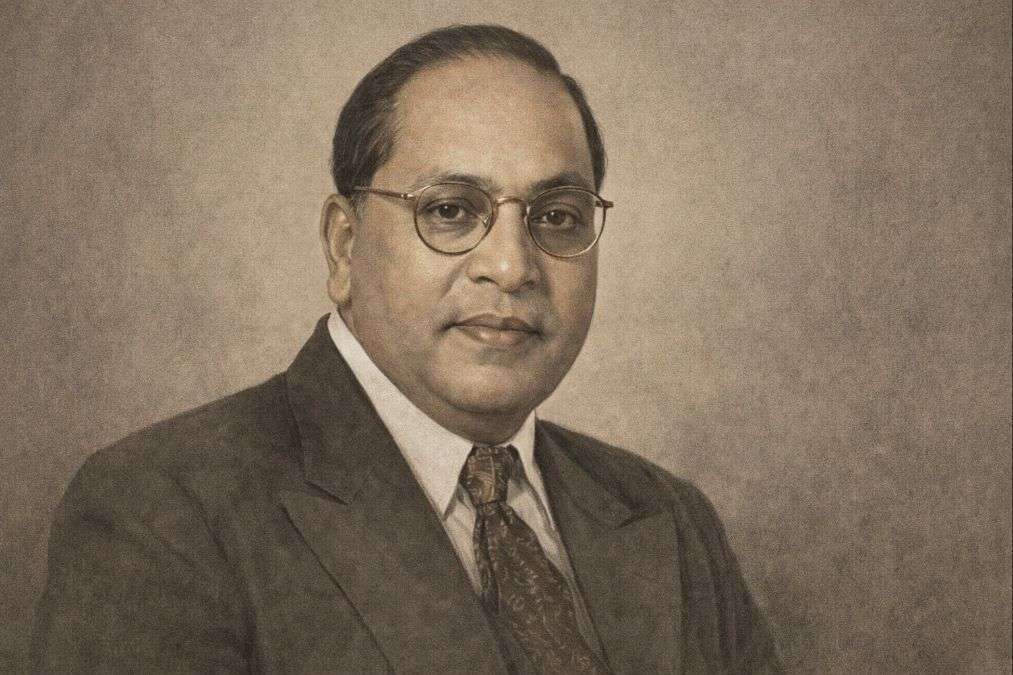
The modern significance of Bhima Koregaon is inseparable from B. R. Ambedkar. In 1927, Dr. Ambedkar visited the victory pillar and paid homage to the Mahar soldiers. His visit reintroduced Bhima Koregaon into public consciousness as a symbol of Dalit pride and historical self-respect.
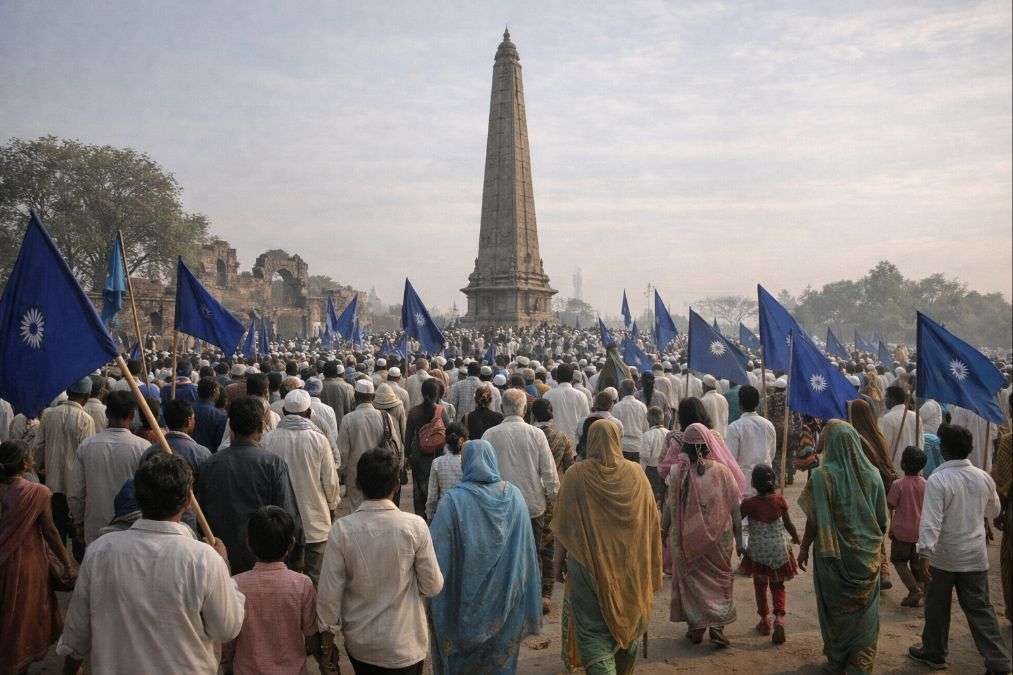
After that, January 1 gradually became an annual occasion for Dalits from across Maharashtra and beyond to gather at the site. What began as remembrance evolved into assertion peaceful, collective, and deeply emotional.
Read This Article Also: dr b.r ambedkar mahaparinirvan diwas
January 1: Why the Date Matters
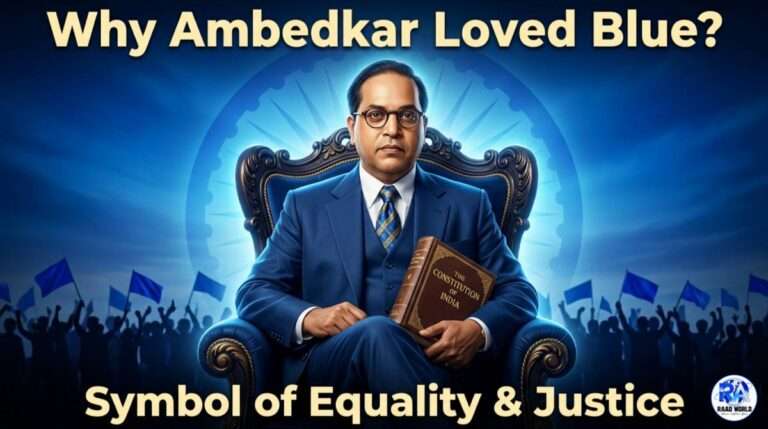
January 1 at Bhima Koregaon is not celebrated like a festival. It is observed with seriousness, reflection, and solidarity. People walk long distances, carry blue flags, sing songs of equality, and remember those who came before them.
For many, this day represents:
- Assertion of constitutional values
- Rejection of caste hierarchy
- A peaceful claim to public space and history
It is New Year’s Day with meaning not just hope for the future, but recognition of the past.
The 2018 Turning Point
The bicentenary year of the battle in 2018 marked a dramatic shift. Large gatherings, heightened political rhetoric, and unresolved historical tensions culminated in violent clashes near Bhima Koregaon. The incident led to deaths, injuries, widespread unrest, and one of the most debated legal and political episodes in recent Indian history.
What followed were investigations, arrests, long legal battles, and national-level debates about dissent, civil liberties, digital evidence, and state power. Bhima Koregaon became not only a historical symbol but also a contemporary one linked to questions of democracy, protest, and justice in India.
Bhima Koregaon in Today’s India
Today, Bhima Koregaon stands at multiple intersections:
- History and Memory: Who gets remembered, and how
- Caste and Equality: Ongoing struggles against social discrimination
- Law and Democracy: The balance between security and civil rights
- Politics and Identity: Competing narratives shaping public discourse
For supporters, it is a site of pride and constitutional faith. For critics, it is often misunderstood through narrow or politicized lenses. But ignoring Bhima Koregaon is no longer possible it has become part of India’s national conversation.
Why This History Cannot Be Simplified
Bhima Koregaon is often reduced to slogans or controversies. That reduction does injustice to its complexity. It is neither a simple tale of colonial victory nor a single-community story. It is about how oppressed groups find meaning in history when official narratives leave them out.
Understanding Bhima Koregaon requires maturity accepting that Indian history contains multiple truths, lived experiences, and interpretations.
Read This Article Also: Indian Constitution Day : History Facts Untold Stories
Conclusion: What Bhima Koregaon Truly Represents
Bhima Koregaon reminds India that history is not frozen in textbooks. It lives in memory, in struggle, and in public spaces. Every January 1, the gathering at the Jaystambh quietly asks a powerful question:
Who decides whose history matters?
As India moves forward, Bhima Koregaon stands as a symbol of remembrance, resistance, and the unfinished journey toward equality. It is not about celebrating conflict it is about recognizing dignity.
Content Originality & Image Rights:
This article is original, research-based content created for educational purposes. All images used are AI-generated or properly licensed and do not violate Indian copyright laws under the Copyright Act, 1957.
About The Author