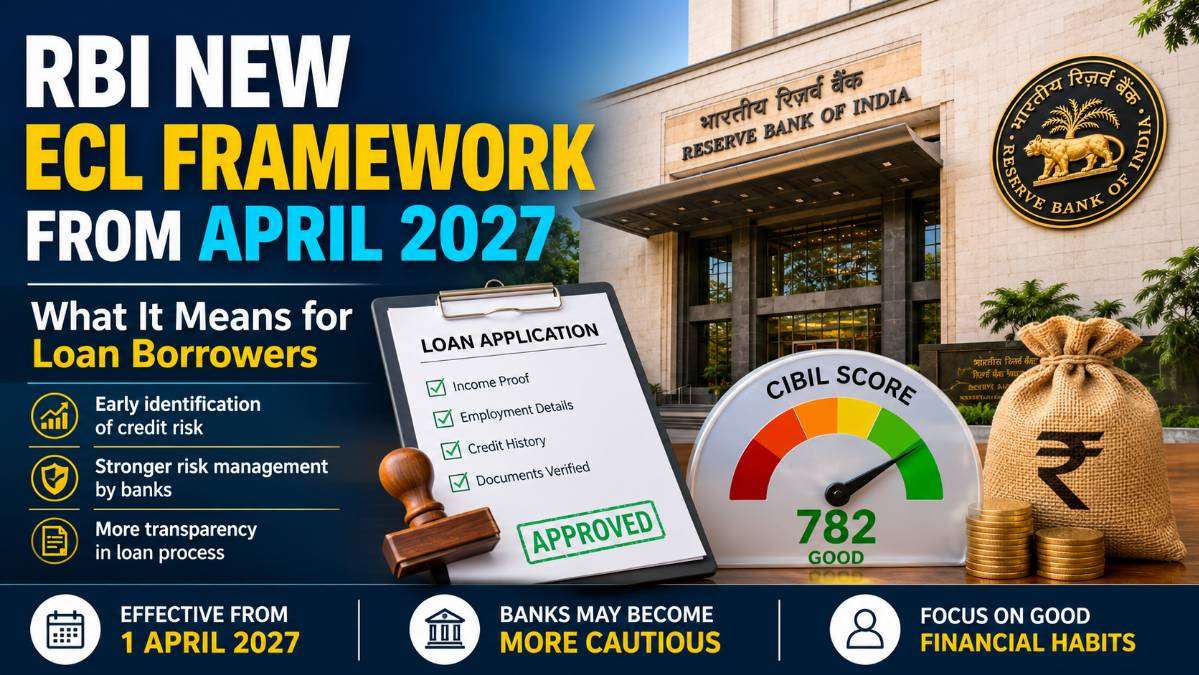
In recent weeks, social media posts and viral images have claimed that people with a CIBIL score below 730 will not be able to get home loans, car loans, or education loans after 2027.
Many of these posts used the name of the Reserve Bank of India (RBI) and referred to a “new RBI rule.” However, after checking official and trusted financial sources, it is important to understand the real facts behind this topic.
The Reserve Bank of India has officially introduced a new banking framework called the Expected Credit Loss (ECL) framework. According to reports and industry analyses, this new system will come into effect from April 1, 2027.
The main purpose of this framework is to help banks identify risky loans earlier and strengthen the financial stability of the banking system. Under the current system, banks usually recognize loan stress after borrowers start missing payments or when loans become non-performing assets (NPAs).
The new ECL model changes this approach. Instead of waiting for defaults to happen, banks will estimate possible future losses in advance and maintain provisions accordingly.
This makes the system more forward-looking and risk-based. Banking experts believe this change will improve transparency, increase accountability, and align India’s banking system with global financial standards.
READ THIS: WhatsApp Status Archive Feature 2026 Explained Android Users Can Now Save Expired Status Updates
What Will Change After 2027?
The new RBI framework is mainly focused on how banks manage credit risk and loan provisioning. Banks may become more careful while approving loans because they will now have to estimate future risks more accurately.
As a result, borrowers with weaker credit profiles may face:
- Stricter loan eligibility checks
- Higher interest rates
- Lower approved loan amounts
- Additional documentation requirements
- Requests for guarantors or co-applicants
However, this does not mean loans will automatically be rejected for people with lower credit scores.
Has RBI Fixed 730 as a Mandatory CIBIL Score?
No. There is currently no official RBI rule that says a borrower must have a CIBIL score of 730 or above to get a loan.
The viral claim that “loans will not be available below 730” is not supported by official RBI notifications. RBI has not announced any fixed minimum CIBIL score for home loans, education loans, or vehicle loans.
Banks in India use multiple factors while approving loans, including:
- Income level
- Employment stability
- Existing loan burden
- Repayment history
- Type of loan
- Collateral or security
- Overall financial profile
Credit score is important, but it is only one part of the overall evaluation process.
Why Are People Talking About 730?
Many banks already prefer borrowers with higher credit scores because they are considered less risky. In India, a credit score above 750 is generally considered very good, while scores between 700 and 750 are often treated as acceptable.
Because the ECL framework increases the importance of risk assessment, financial experts believe banks could become more selective in the future. This is why social media users started connecting the number 730 with loan approvals.
But this is an assumption or prediction by some financial commentators — not an official RBI instruction.
Benefits of the New ECL Framework
The RBI’s new framework is designed to strengthen India’s banking system in the long term. Some expected benefits include:
- Earlier identification of financial stress
- Better risk management by banks
- Improved financial stability
- Greater transparency in loan accounting
- Reduced chances of sudden banking shocks
Experts from rating agencies and financial institutions have stated that the framework will improve the resilience of Indian banks and help them prepare for future economic challenges more effectively.
READ THIS: How to Watch Two Channels on One TV Screen Split Screen Technology Explained
What Borrowers Should Do
Even though there is no official “730 rule,” maintaining a healthy credit score is still very important for getting loans easily and at better interest rates.
Borrowers should focus on:
- Paying EMIs on time
- Avoiding unnecessary loan applications
- Keeping credit card usage under control
- Checking credit reports regularly
- Maintaining stable financial records
Good financial discipline will continue to improve loan approval chances in the future banking environment.
Conclusion
The RBI has officially introduced the Expected Credit Loss (ECL) framework, which will start from April 1, 2027. The new system may encourage banks to become more cautious while approving loans and managing financial risks.
However, there is no official RBI announcement stating that borrowers with a CIBIL score below 730 will be permanently denied home loans, car loans, or education loans.
The viral social media claim is an exaggerated interpretation of a genuine banking reform. Loan approvals will continue to depend on multiple financial factors, not only on one fixed credit score number.
About The Author