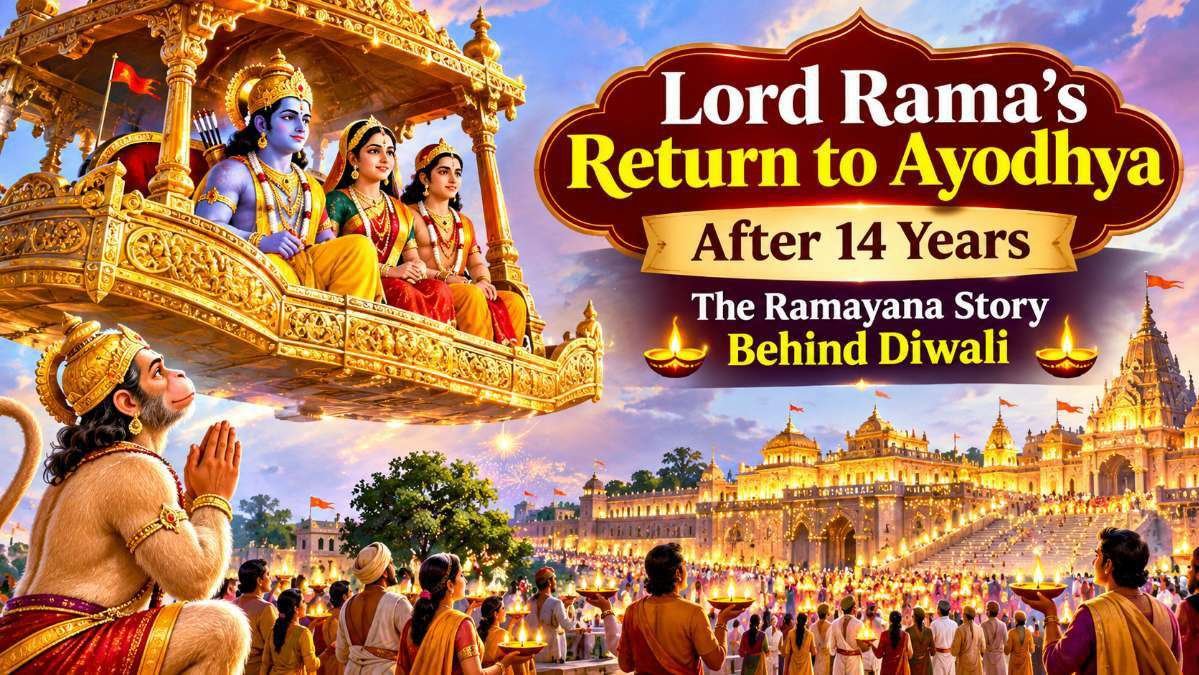
Diwali is one of the most celebrated festivals in India. Millions of people celebrate this festival by lighting traditional oil lamps, decorating their homes, offering prayers and spending time with their families. For many Hindus, Diwali holds a special connection with the return of Lord Rama to Ayodhya after completing 14 years of exile.
The story of Lord Rama’s return is an important part of the Valmiki Ramayana. It describes the events following the defeat of Ravana, the reunion of Rama and Sita, the journey from Lanka towards Ayodhya and the emotional reunion with Bharata.
Why Did Lord Rama Leave Ayodhya?
According to the Ramayana, Lord Rama was the eldest son of King Dasharatha, the ruler of Ayodhya. He was expected to become the next king. However, Queen Kaikeyi requested King Dasharatha to fulfil two promises he had previously made to her.
She asked for her son Bharata to be crowned king and for Rama to spend 14 years in the forest. To honour his father’s promise, Rama accepted the decision without opposition.
His wife Sita and younger brother Lakshmana decided to accompany him during the period of exile. The three left Ayodhya and spent many years in the forest.
The Abduction of Sita and the Battle Against Ravana
During their exile, Ravana, the king of Lanka, abducted Sita and took her to his kingdom. Rama and Lakshmana began searching for her.
During this journey, they met Hanuman and formed an alliance with Sugriva, the king of the Vanaras. Hanuman played an important role in finding Sita in Lanka and delivering Rama’s message to her.
With the help of the Vanara army, Rama and Lakshmana reached Lanka. A great battle followed between Rama’s forces and Ravana’s army.
After a fierce battle, Lord Rama defeated Ravana and rescued Sita. This victory represents the triumph of righteousness over evil in the traditional Ramayana narrative.
How Did Lord Rama Return from Lanka to Ayodhya?
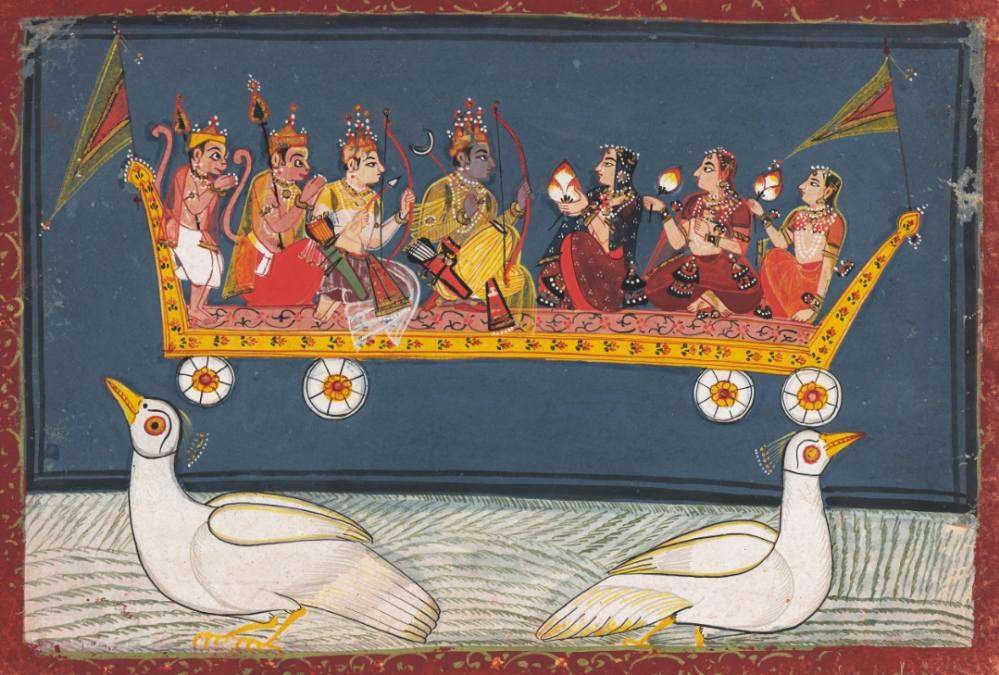
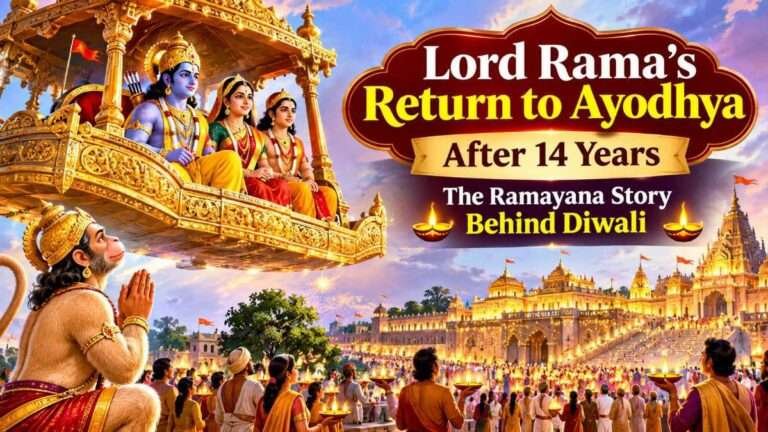
After Ravana’s defeat, Vibhishana became the ruler of Lanka. He offered Lord Rama the Pushpaka Vimana for his return journey to Ayodhya.
The Pushpaka Vimana is described in the Valmiki Ramayana as a magnificent aerial vehicle. According to Yuddha Kanda, Sarga 124, Vibhishana told Rama that he could reach Ayodhya within a single day using this vehicle.
In verses 6.124.8 to 6.124.11, the epic describes Vibhishana’s offer and the Pushpaka Vimana. The vehicle is associated with Kubera and had previously been taken by Ravana.
Rama accepted the offer, and the return journey began. Sita and Lakshmana accompanied him. Vibhishana and other companions also joined the journey.
Important Places Seen During the Return Journey
The return journey in the Valmiki Ramayana describes several important locations connected with Rama’s life and the events of the epic.
Kishkindha
Kishkindha was the kingdom associated with Sugriva and the Vanara heroes. It was an important place in Rama’s journey to Lanka.
Rameswaram and the Southern Region
The Ramayana narrative recalls the southern route and the places associated with the journey towards Lanka. These locations hold an important place in India’s religious and cultural traditions.
Chitrakuta
Chitrakuta is associated with the early period of Rama’s exile. It also holds a special place in the story of Bharata’s meeting with Rama during the forest years.
These locations help connect the different events of the Ramayana and explain the importance of the return journey.
Hanuman Was Sent to Inform Bharata
Before reaching Ayodhya, Lord Rama wanted Bharata to receive the news of his return.
According to the Valmiki Ramayana, Rama sent Hanuman ahead to meet Bharata and inform him about the successful completion of the exile and the return to Ayodhya.
Bharata had been ruling Ayodhya as a caretaker while preserving Rama’s sandals as a symbol of his rightful authority. He had been waiting for his elder brother to return.
When Hanuman delivered the news, Bharata was filled with happiness. Preparations were made to welcome Rama, Sita and Lakshmana back to the kingdom.
Lord Rama’s Grand Return to Ayodhya
After completing the journey, Lord Rama returned to Ayodhya with Sita and Lakshmana. Bharata welcomed his elder brother with great happiness and devotion.
The return of Rama marked the end of his 14-year exile. The reunion of the brothers became an important moment in the Ramayana story.
Rama was subsequently crowned king of Ayodhya. His rule is traditionally remembered as Ram Rajya, a period associated with justice, peace, responsibility and good governance.
Why Is Diwali Celebrated in Memory of Lord Rama?
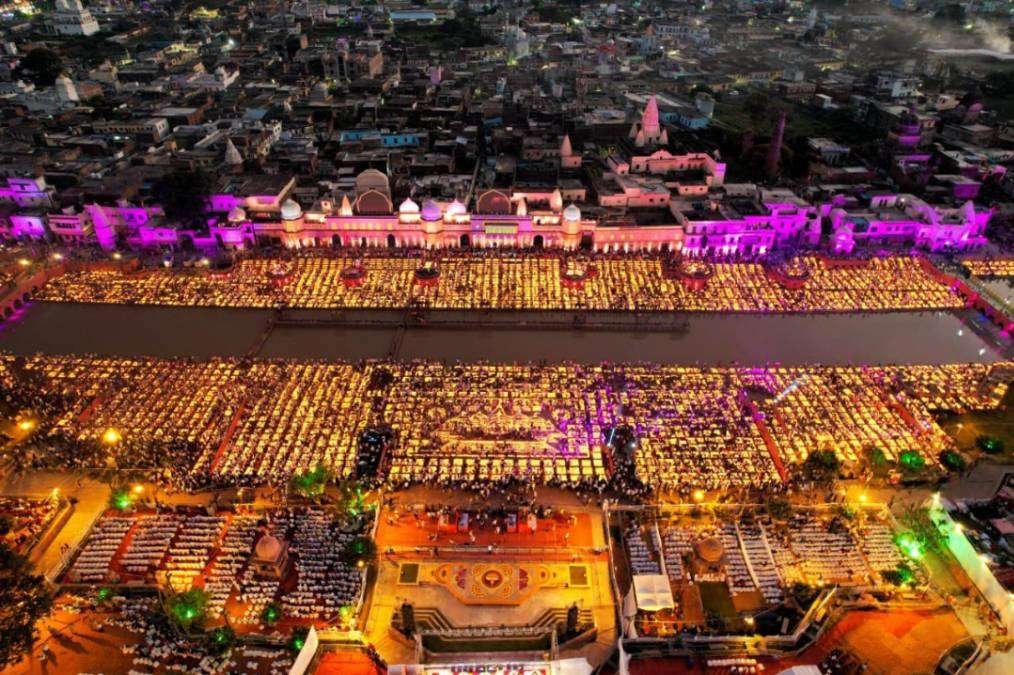
According to the popular Hindu tradition, the people of Ayodhya welcomed Lord Rama, Sita and Lakshmana by lighting oil lamps throughout the city.
The illuminated homes and streets symbolised happiness, devotion and the victory of good over evil. This traditional account is one of the most widely recognised explanations for the connection between Diwali and Lord Rama.
The Government of India’s Press Information Bureau has also described Deepavali as a festival associated with Rama’s return to Ayodhya after 14 years of exile.
Today, people continue this tradition by lighting diyas, decorating their homes, performing Lakshmi Puja and celebrating with family and friends.
READ THIS: History of OK The Real Origin of the World’s Most Famous Word
What Does the Valmiki Ramayana Say About the Return Journey?
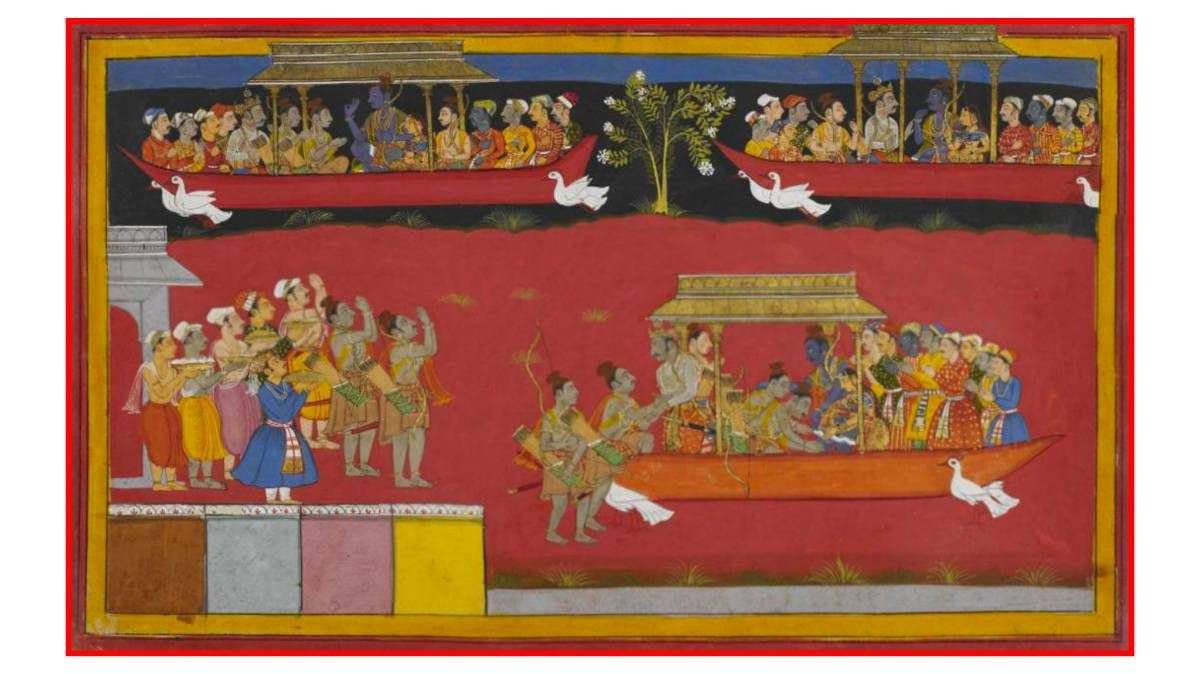
The Valmiki Ramayana provides an important description of the return journey in Yuddha Kanda, particularly Sarga 124.
Verse 6.124.8 records Vibhishana’s statement that he would arrange for Rama to reach Ayodhya within one day. The following verses describe the Pushpaka Vimana and its use for the journey.
This is an important textual reference for understanding how the return from Lanka is described in the epic. It also shows why the traditional account should be understood through the original Ramayana narrative rather than through modern travel calculations.
Conclusion
The return of Lord Rama to Ayodhya is one of the most meaningful stories in the Ramayana. After 14 years of exile, the defeat of Ravana and the rescue of Sita, Rama began his journey home with the help of the Pushpaka Vimana offered by Vibhishana.
His reunion with Bharata and return to the throne of Ayodhya became an important part of Hindu religious and cultural tradition. The story continues to inspire millions of people during Diwali celebrations.
Beyond the lighting of lamps and festive celebrations, the story of Lord Rama reminds people of the importance of truth, duty, courage, family relationships and the victory of righteousness over evil.
About The Author