Kashi Vishwanath Temple Records Remarkable Growth in Pilgrim Footfall After Dham Corridor Development
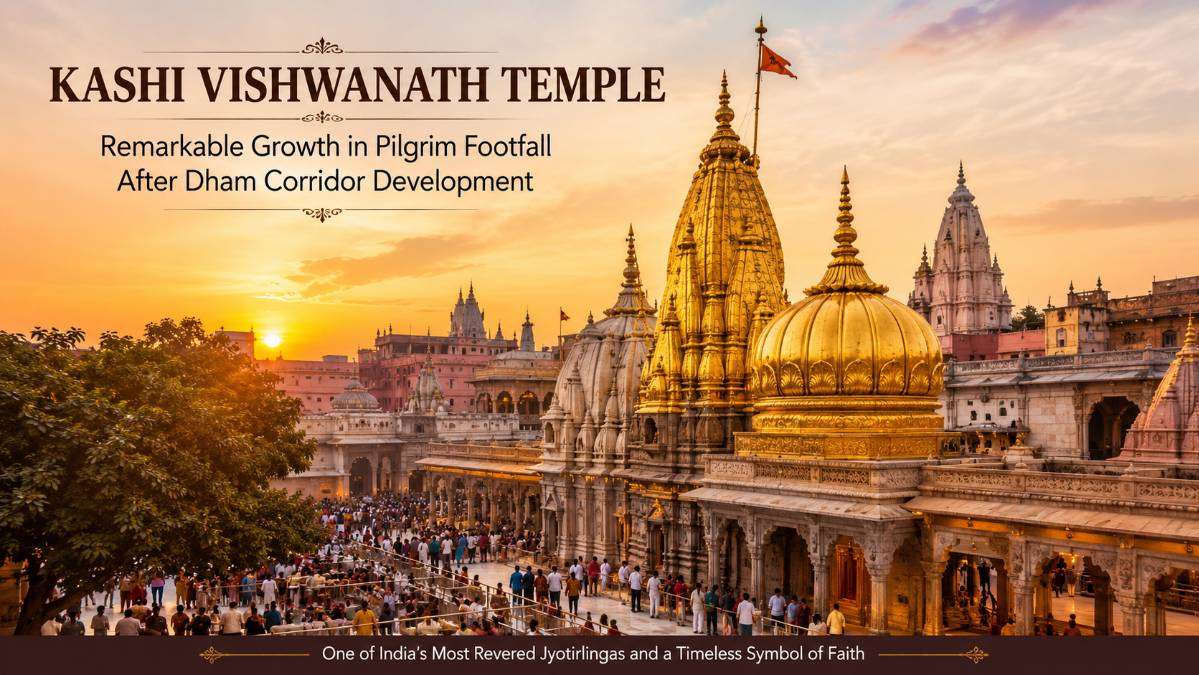
Varanasi, India: The Shri Kashi Vishwanath Temple in Varanasi has continued to witness a significant rise in pilgrim arrivals following the inauguration of the Kashi Vishwanath Dham Corridor.
Official figures released by the Shri Kashi Vishwanath Temple Trust and the Government of Uttar Pradesh show that the temple has welcomed millions of devotees in recent years, making it one of India’s busiest and most visited Hindu pilgrimage destinations.
The increase in pilgrim numbers follows major infrastructure improvements around the temple complex, including expanded public access, improved security, better crowd management, and enhanced visitor amenities.
Government officials have credited these developments with making pilgrimage more convenient while preserving the temple’s religious and cultural heritage.
Historic Importance of Kashi Vishwanath
The Kashi Vishwanath Temple, dedicated to Lord Shiva, is one of Hinduism’s twelve sacred Jyotirlingas and is regarded as one of the holiest pilgrimage sites in India.
Located on the western bank of the River Ganga in Varanasi, Uttar Pradesh, the temple has remained a center of spiritual learning and religious worship for centuries.
Millions of pilgrims from across India and abroad visit the shrine throughout the year to offer prayers and participate in important religious festivals, including Mahashivratri, Shravan month celebrations, Dev Deepawali, and Kartik Purnima.
READ THIS: World’s Tallest Shivling Shipped From Tamil Nadu to Bihar for Virat Ramayan Temple
Kashi Vishwanath Dham Corridor Transforms Pilgrim Experience
The Kashi Vishwanath Dham Corridor was inaugurated on 13 December 2021 as one of India’s largest temple redevelopment projects. The corridor established a direct and spacious connection between the temple complex and the Ganga ghats, significantly improving accessibility for devotees.
The redevelopment project also included wider pathways, modern sanitation facilities, security infrastructure, waiting areas, information centers, and preservation of several heritage structures discovered during construction.
According to official government statements, the project has substantially improved crowd management during peak pilgrimage seasons while enhancing the overall visitor experience.
Official Visitor Figures
Official data published by the Shri Kashi Vishwanath Temple Trust indicates that pilgrim footfall has increased considerably since the completion of the corridor project.
More than 16 crore devotees visited the temple between December 2021 and mid-2024, according to official reports.
Over 2.8 crore devotees visited during the first five months of 2024 alone, reflecting sustained growth in pilgrimage.
The temple continues to receive exceptionally high numbers of visitors during major Hindu festivals and auspicious occasions.
Temple authorities regularly implement additional security arrangements, crowd-control measures, medical services, and volunteer assistance during periods of heavy pilgrimage.
Varanasi Records Record Tourism Growth
The Government of Uttar Pradesh has also reported record tourist arrivals in Varanasi in recent years. Official tourism statistics indicate that domestic and international visitor numbers have increased significantly following investments in infrastructure, heritage conservation, transportation, and religious tourism.
Officials note that tourism figures for Varanasi include visitors travelling to multiple religious, cultural, and historical attractions throughout the city and should not automatically be interpreted as temple-specific footfall.
Government Initiatives Supporting Religious Tourism
Both the Government of India and the Government of Uttar Pradesh have undertaken several initiatives aimed at improving pilgrimage infrastructure across Varanasi.
These include:
- Redevelopment of the Kashi Vishwanath Dham Corridor.
- Improvement of riverfront ghats.
- Expansion of road connectivity.
- Modernization of Varanasi railway stations.
- Expansion of Lal Bahadur Shastri International Airport.
- Enhanced sanitation and public amenities.
- Digital services for pilgrims.
- Improved security and surveillance systems.
Officials state that these measures are intended to provide a safer, cleaner, and more accessible pilgrimage experience while promoting sustainable tourism.
READ THIS: Yana Caves Geoheritage Site:Real Location, Scientific Secrets & Official GSI Facts Explained
Religious and Economic Significance
The growing number of pilgrims has also contributed to the local economy. Businesses associated with hospitality, transportation, handicrafts, restaurants, religious services, and local markets have benefited from increased visitor spending.
Government authorities have emphasized that religious tourism plays an important role in employment generation and economic development throughout the region.
Preservation of Cultural Heritage
Alongside infrastructure development, authorities have continued efforts to preserve Varanasi’s cultural identity. Archaeological remains uncovered during redevelopment were documented and incorporated into the final design wherever possible.
The redevelopment project aimed to balance modern visitor facilities with the preservation of the city’s centuries-old religious and architectural heritage.
Official Position on Visitor Rankings
While official data confirms that the Shri Kashi Vishwanath Temple receives millions of devotees annually, no official government agency, temple authority, international organization, or recognized global tourism body has formally declared it to be the world’s most visited temple.
Available official statistics confirm strong and sustained growth in pilgrimage but do not establish any verified global ranking among religious sites worldwide.
Conclusion
The Shri Kashi Vishwanath Temple continues to strengthen its position as one of India’s most important Hindu pilgrimage destinations. Official figures demonstrate substantial growth in devotee arrivals following.
the inauguration of the Kashi Vishwanath Dham Corridor, supported by extensive infrastructure improvements and enhanced visitor facilities. Government initiatives have contributed to increased accessibility, improved crowd management, and stronger tourism development throughout Varanasi.
While millions of devotees continue to visit the temple every year, official sources have not issued any global ranking identifying it as the world’s most visited temple. Verified data instead highlights the temple’s remarkable growth, religious significance, and expanding contribution to India’s cultural and pilgrimage tourism sector.
About The Author