Samosa is one of the most popular snacks in India. From small roadside tea stalls to restaurants and shopping malls, this crispy and delicious snack is enjoyed by millions of people. Whether it is served with green chutney, tamarind sauce or a hot cup of tea, samosa has become an important part of Indian food culture.
However, the price of a samosa can change significantly depending on the country, restaurant, ingredients and serving size. A snack that is affordable in India can cost considerably more at an international restaurant.
This difference makes the pricing of Indian food in other countries an interesting topic for food lovers. Let’s explore samosa prices in different countries and understand how India’s street-food pricing system compares with international food markets.
Samosa Prices in Different Countries
Indian food has gained popularity across the world, and samosas are available in many international restaurants, takeaway shops and Indian food outlets. Their prices depend on local operating costs, food preparation methods and restaurant locations.
Here are some reported price comparisons and examples from restaurant menus in different countries.
READ THIS: History of OK The Real Origin of the World’s Most Famous Word
1. India
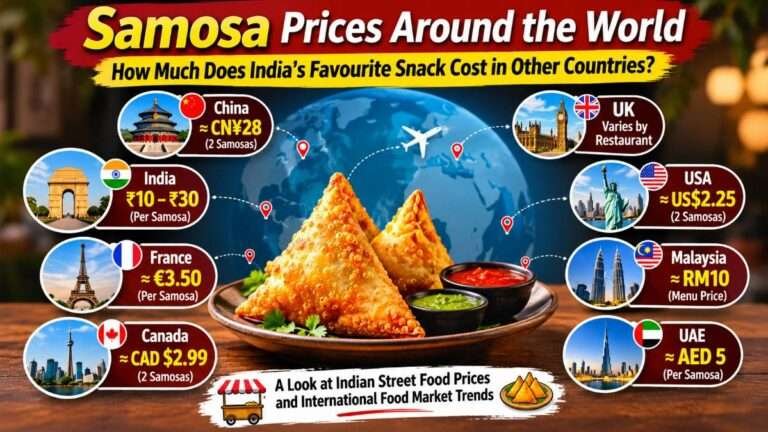
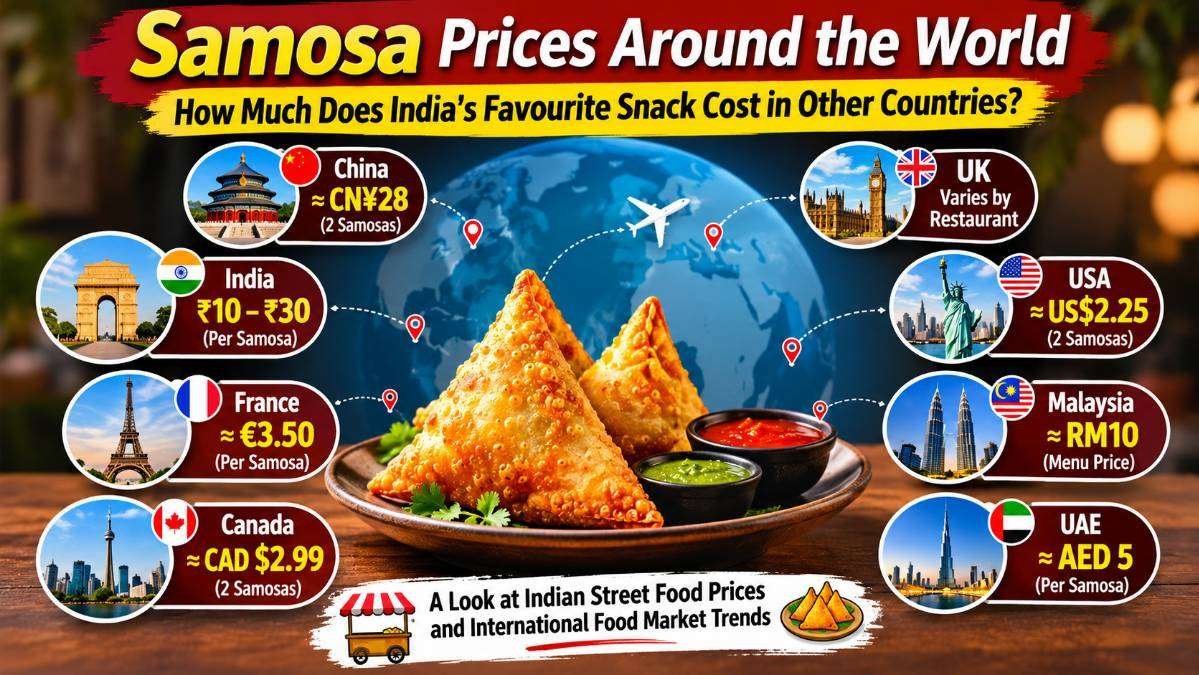
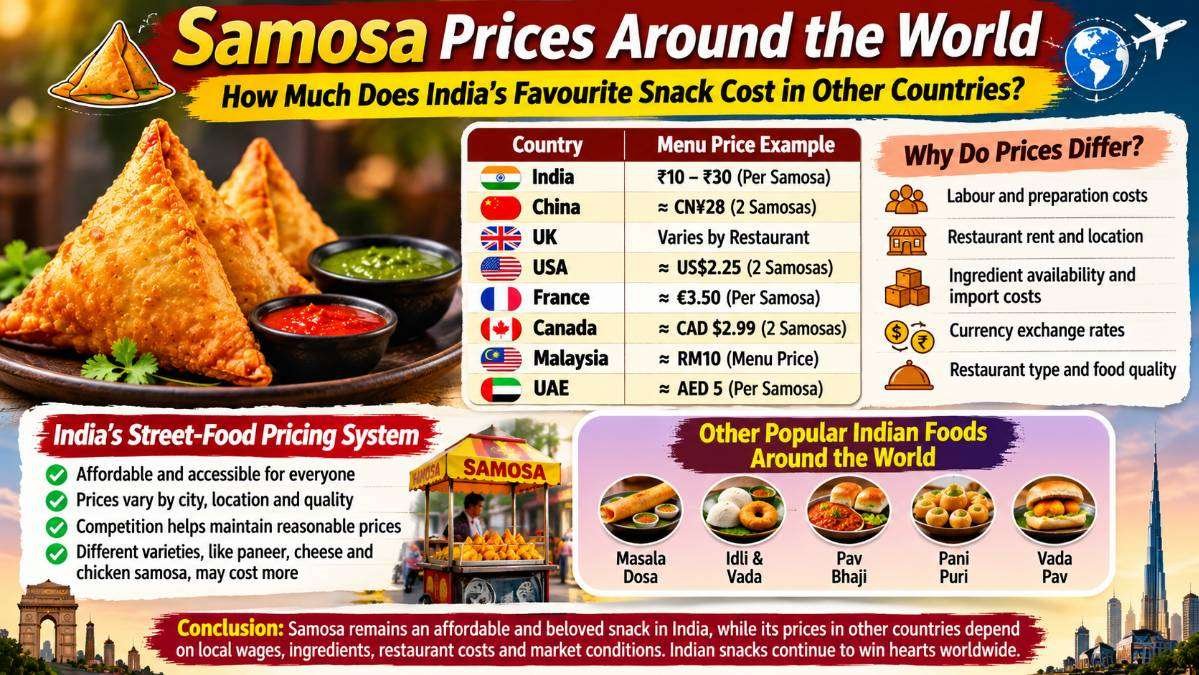
India is the home of the traditional samosa and offers some of the most affordable options. In many local markets, roadside stalls and small food shops, customers can find samosas at prices ranging from approximately ₹10 to ₹30 per piece. In some cities and premium food outlets, the price can reach ₹40 or ₹50 or even more.
The cost depends on the size, filling, quality of ingredients and location. Potato-filled samosas are generally among the most common varieties, while paneer, cheese and other speciality versions can cost more.
2. China
Indian cuisine is also available in Chinese cities through speciality restaurants and international food outlets. One restaurant menu listing from Nanjing shows two samosas priced at approximately CN¥28.
The availability of Indian snacks depends on the city and restaurant. Imported ingredients, preparation costs and the availability of speciality food outlets can influence the final price.
3. United Kingdom
The United Kingdom has a well-established Indian food culture. Samosas are commonly available in Indian restaurants, supermarkets, takeaway shops and local food markets.
The price can vary depending on whether customers purchase a freshly prepared samosa from a takeaway shop or order it as a starter in a restaurant. Restaurant location, portion size and ingredients also play an important role in determining the cost.
4. United States
Indian restaurants across the United States serve different varieties of samosas. Vegetarian samosas filled with potatoes and peas are popular, while chicken and other speciality varieties are also available.
For example, Natraj Indian Restaurant lists two vegetable samosas for approximately US$2.25. Another restaurant, Moon India, lists two vegetable samosas for approximately US$6.49.
This difference shows how restaurant pricing can change even within the same country.
5. France
France is known for its diverse food culture, and Indian cuisine has its own place in the country’s restaurant industry.
According to a published menu from Shamim Restaurant, a vegetable samosa is listed at approximately €3.50, while chicken or lamb samosas are listed at approximately €3.80 each.
Prices may vary between traditional Indian restaurants, takeaway outlets and premium dining establishments.
6. Canada
Indian food is popular in several Canadian cities, including Toronto, Vancouver and Montreal. Samosas are available in restaurants, grocery stores, food counters and takeaway shops.
For example, Krispy Samosas lists two vegetarian samosas for approximately CAD $2.99. Classic India Montreal lists three samosas for approximately CAD $4.50.
These examples demonstrate that customers can find different price options depending on the restaurant and serving size.
7. Malaysia
Malaysia has a strong connection with Indian food traditions. Samosas are available in Indian restaurants, local food outlets and markets.
A published menu from 1947 Old Malaya lists samosa at approximately RM10. The price and serving quantity can differ between restaurants and food outlets.
Indian snacks are enjoyed by people from different communities, making them a familiar part of the country’s diverse food scene.
8. United Arab Emirates
The United Arab Emirates has a large Indian food market, especially in cities such as Dubai and Abu Dhabi. Samosas are widely available in cafeterias, restaurants, supermarkets and takeaway shops.
Bawarchi JVC lists one samosa for approximately AED5. The restaurant also offers a combination of two samosas and two karak teas for approximately AED20.
Indian snacks remain a popular choice among residents and visitors looking for familiar flavours.
READ THIS: Tiger Tongue Explained Amazing Facts, Structure, Functions & Scientific Insights
Why Do Indian Food Prices Differ Between Countries?
The price of Indian food is influenced by several factors. Even when restaurants prepare the same traditional recipe, the final selling price can be different because their business expenses and local market conditions are not the same.
1. Labour and Preparation Costs
Preparing traditional Indian snacks requires time, ingredients and skilled workers. In countries where wages are higher, restaurants may need to charge more to cover their employees’ salaries and operating expenses.
2. Restaurant Rent and Location
A restaurant located in a busy shopping centre or a popular city area usually has higher rental expenses than a small food shop in a residential neighbourhood. These expenses can influence the prices of samosas and other Indian snacks.
3. Ingredient Costs
Potatoes, onions, flour, cooking oil and spices are important ingredients in traditional samosas. Their prices differ between countries. Restaurants that import speciality Indian ingredients may also have additional transportation and supply costs.
4. Currency Exchange Rates
International food prices are usually displayed in the local currency. When these prices are converted into Indian rupees, the exchange rate determines their equivalent value. Currency rates change regularly, so the converted amount can also change.
5. Restaurant Type and Food Quality
A small takeaway shop and a premium restaurant do not follow the same pricing structure. Restaurants offering larger portions, speciality fillings, premium ingredients or additional services may charge higher prices.
Understanding India’s Street-Food Pricing System
India has one of the most diverse street-food markets in the world. Food prices can change from one city to another and even between two shops on the same street.
Street-food vendors generally consider ingredient expenses, preparation costs, shop rent, electricity, transportation and expected profit before deciding the selling price.
Affordable Food for Everyday Customers
One of the biggest advantages of India’s street-food market is the availability of affordable snacks. Small food vendors often serve customers with limited budgets, making traditional snacks accessible to students, office workers and families.
Different Prices for Different Varieties
Indian food businesses offer several varieties of samosas. A regular potato samosa may have a lower price than a paneer, cheese, chicken or speciality samosa. The size and quantity also affect the final bill.
Local Competition
Street-food businesses often operate close to other vendors selling similar products. Competition encourages sellers to maintain reasonable prices while focusing on taste, freshness and customer satisfaction.
Other Popular Indian Foods Enjoyed Around the World
Samosa is only one example of India’s popular snacks. Several traditional Indian foods have gained international recognition and are available in restaurants across different countries.
1. Masala Dosa
Masala dosa is a famous South Indian dish prepared using fermented rice and lentil batter. It is usually served with potato masala, coconut chutney and sambar. Its popularity has expanded beyond India, especially in countries with Indian restaurants.
2. Idli and Vada
Idli and vada are traditional South Indian breakfast favourites. Idli is prepared using fermented batter and steamed, while vada is generally made using lentils and deep-fried. Both dishes are commonly served with chutney and sambar.
3. Pav Bhaji
Pav bhaji is a popular Mumbai street-food dish made with mashed vegetables cooked using spices and served with buttered bread rolls. It is enjoyed by people who love rich and flavourful Indian food.
4. Pani Puri
Pani puri is one of India’s most loved street-food snacks. It consists of crispy puris filled with spiced potatoes, chickpeas and flavoured water. Different regions have their own versions and names for this popular snack.
5. Vada Pav
Vada pav is another famous Mumbai street-food item. It consists of a spicy potato fritter placed inside a bread roll and served with chutneys. Its affordable price and simple preparation have made it popular among people from different backgrounds.
READ THIS: Jonathan Lee Riches The Man Behind America’s Most Bizarre Lawsuits
Why Are Indian Snacks Popular Internationally?
Indian snacks are becoming familiar to international customers because of their distinctive flavours, spices and variety. Indian restaurants have introduced traditional dishes to people who may not have experienced this cuisine before.
Another important reason is the demand for vegetarian food. Many Indian snacks, including samosas, idlis and dosas, offer vegetarian options that appeal to customers with different food preferences.
Indian communities living abroad have also contributed to the popularity of traditional food. Restaurants, food festivals and local grocery shops help maintain a connection with Indian food culture.
Conclusion
Samosa is much more than an everyday Indian snack. It represents India’s rich street-food culture and has become a familiar food item in several countries around the world.
While samosas remain affordable in many Indian street-food markets, their prices in international restaurants depend on local wages, ingredients, rent, preparation expenses and business conditions. Restaurant menu examples from France, Canada, the United States, Malaysia and the United Arab Emirates show how differently the same traditional snack can be priced.
India’s food culture continues to attract international attention through popular dishes such as samosa, masala dosa, idli, vada, pav bhaji and pani puri. These traditional foods demonstrate how Indian flavours have travelled beyond national borders and become part of the global food market.
Ultimately, whether someone enjoys a samosa at a roadside stall in India or an Indian restaurant abroad, the taste of this traditional snack continues to bring people together.
About The Author


 Rahul Bidnal