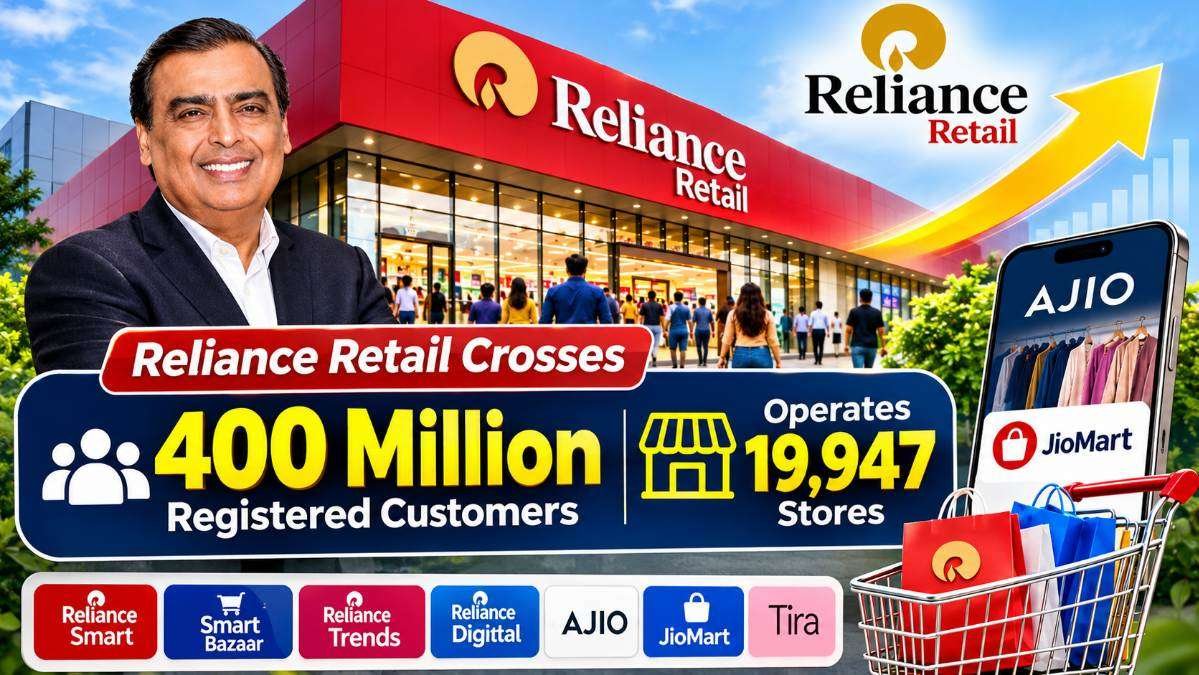
Reliance Retail has reached an important milestone in India’s retail industry by crossing 400 million registered customers and expanding its store network to 19,947 outlets.
The company is strengthening its presence in both offline and online shopping while investing in digital technology and customer services.
Under the leadership of Mukesh Ambani, Reliance Retail has developed a large retail network covering different shopping categories, including groceries, fashion, electronics, beauty products and everyday essentials.
Its latest business figures show how the company is working to strengthen its position in India’s growing retail market.
Reliance Retail Crosses 400 Million Registered Customers
One of the biggest highlights of Reliance Retail’s latest business update is its registered customer base, which has crossed 400 million. This milestone reflects the company’s large presence across India’s retail market.
According to the company’s official business information for the second quarter of FY2026-27, Reliance Retail has 400 million registered customers and operates 19,947 stores across the country.
However, registered customers should not be confused with active customers. The figure represents the company’s registered customer base and does not mean that every registered customer regularly purchases products.
Reliance Retail Operates Nearly 20,000 Stores
Reliance Retail has built a large physical store network across India. Its outlets serve customers in different locations, including major cities, smaller towns and other markets.
The company operates several retail formats to meet different shopping needs. These include supermarkets, fashion stores, electronics outlets and beauty retail businesses.
READ THIS: Jio IPO 2026: Price, Dates, GMP & Investment Details
As of the second quarter of FY2026-27, the company reported 19,947 stores covering approximately 77.5 million square feet of retail space.
Its retail businesses include:
- Reliance Smart and Smart Bazaar for groceries and daily essentials.
- Reliance Trends for fashion and clothing.
- Reliance Digital for electronics and technology products.
- AJIO for online fashion and lifestyle shopping.
- JioMart for online grocery and retail shopping.
- Tira for beauty and personal care products.
By operating different retail formats, the company can serve customers with different shopping requirements.
Why Is Reliance Focusing on Online Shopping?
Online shopping has become an important part of India’s retail industry. Customers increasingly use mobile applications and websites to purchase groceries, clothing, electronics and other products.
Reliance Retail is also expanding its digital shopping business through platforms such as JioMart and AJIO. The company is working to connect its physical stores with online shopping services so that customers can access products through different channels.
One important development is the growth of its online grocery business. According to the company’s second-quarter FY2026-27 management update, online grocery business-to-consumer revenue increased by 42 per cent year-on-year.
This growth highlights the increasing importance of digital shopping in Reliance Retail’s business strategy.
READ THIS: Karnataka Nandini Milk Price Hike 2026: New Prices
Reliance Retail’s Latest Financial Performance
Customer growth and store expansion are important, but financial performance is equally important when understanding a company’s business position.
According to the second-quarter FY2026-27 results, Reliance Retail Ventures Limited reported gross revenue of Rs. 91,716 crore, representing 6.4 per cent growth compared with the same quarter of the previous year.
However, its operating EBITDA stood at Rs. 5,886 crore, which was lower than the previous year’s corresponding quarter. Operating EBITDA before a one-time impairment charge was Rs. 6,228 crore.
These figures show that the company is expanding its business while also facing pressure on profitability.
Reliance Opened New Stores but Also Closed Some Outlets
Another interesting development in the latest quarterly update is the company’s store expansion strategy.
During the second quarter of FY2026-27, Reliance Retail opened 303 new stores. At the same time, it closed approximately 500 stores that were considered economically unviable.
This decision indicates that the company is not focusing only on increasing its total number of outlets. It is also reviewing store performance and making changes to improve the efficiency of its retail network.
Opening new stores in suitable locations while closing underperforming outlets can help a retail company manage its business more effectively.
How Reliance Retail Supports India’s Local Retail Market
Reliance Retail’s business strategy also includes working with local retailers and small businesses through its New Commerce initiative.
India has millions of small grocery shops and independent retailers. These businesses play an important role in providing everyday products to customers, particularly in smaller towns and neighbourhoods.
Through its digital commerce initiatives, Reliance aims to connect local merchants with technology, product supplies and wider business opportunities.
This approach can help traditional retailers participate in the changing retail environment while providing customers with more shopping options.
READ THIS: Samosa Prices Around the World: India vs Other Countries
What Is Reliance Retail Planning for the Future?
Reliance Retail is continuing to invest in digital commerce, technology and its physical store network. The company’s strategy is to connect online and offline shopping and improve the overall customer experience.
Its long-term priorities include expanding digital shopping services, improving product availability, strengthening delivery infrastructure and attracting more customers to its online platforms.
Company management has indicated that the benefits of its digital commerce investments could become more visible during FY2028 and FY2029. However, this is a business expectation and actual results will depend on market conditions and future performance.
Conclusion
Reliance Retail’s achievement of 400 million registered customers and a network of 19,947 stores represents an important development in India’s retail industry. The company has established a strong presence in groceries, fashion, electronics, beauty products and online shopping.
Its growing digital business, particularly online grocery shopping, is becoming an important part of its future strategy. At the same time, the latest financial results show that business expansion does not automatically guarantee higher profits.
Reliance Retail’s next challenge will be to convert its large customer base and extensive store network into sustainable business growth and better profitability.
Its progress in the coming quarters will be important in understanding how its retail strategy develops in India’s competitive shopping market.
About The Author