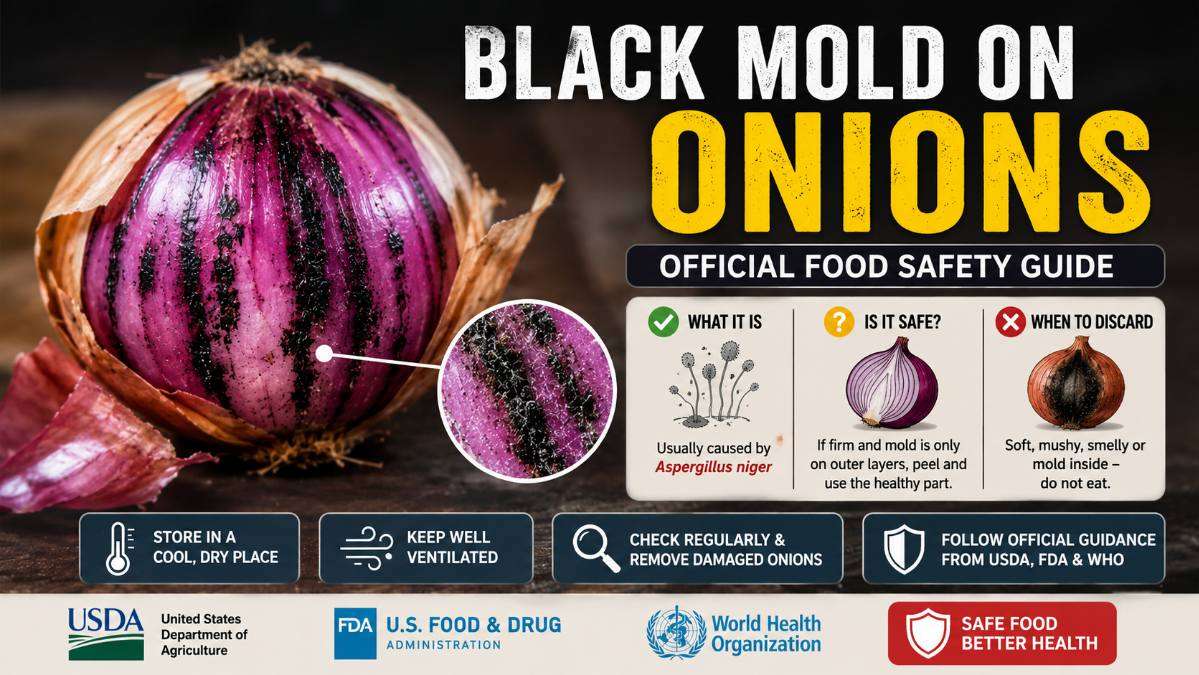
Black streaks or black powder on the surface of onions often raise concerns among consumers. Many people wonder whether these dark marks indicate that the onion has become unsafe to eat or whether they are simply a harmless storage issue.
Food safety experts and agricultural authorities have studied this condition for many years, and official guidance provides a clear explanation of what causes it, when it becomes a concern, and how consumers should handle affected onions.
According to information published by the United States Department of Agriculture (USDA), the University of California Integrated Pest Management Program (UC IPM), the U.S. Food and Drug Administration (FDA), and the World Health Organization (WHO), black discoloration on onions is most commonly associated with a fungal disease known as black mold.
The fungus responsible is usually Aspergillus niger, which primarily affects onions during storage after harvest. Understanding how this fungus develops and how it affects food quality can help consumers make informed decisions based on scientific evidence rather than assumptions.
What Is Black Mold on Onions?
Black mold is a common post-harvest fungal disease that develops on onions, especially during storage under warm and humid conditions. The fungus produces black spores that appear as powdery streaks or patches between the dry outer scales of the onion. In many cases, these spores remain limited to the outer layers and do not immediately affect the edible inner portion of the vegetable.
READ THIS: Copper Water Benefits and Facts: Scientific Evidence and Safety Guidelines
Agricultural experts explain that Aspergillus niger is naturally present in the environment. Its spores can be found in soil, dust, air, and on plant surfaces. When onions experience damage during harvesting, transportation, or storage, the fungus can enter through small wounds and begin growing under favorable environmental conditions.
Why Does Black Mold Develop?
Official agricultural sources identify several factors that encourage black mold growth:
- Warm storage temperatures.
- High humidity.
- Poor air circulation.
- Mechanical damage to the onion.
- Extended storage periods.
Because the fungus thrives under these conditions, proper storage is one of the most effective ways to reduce the likelihood of black mold development. Keeping onions in a cool, dry, and well-ventilated place helps maintain their quality for a longer period.
How Can You Identify Black Mold?
Black mold usually appears as:
- Fine black powder between the outer dry layers.
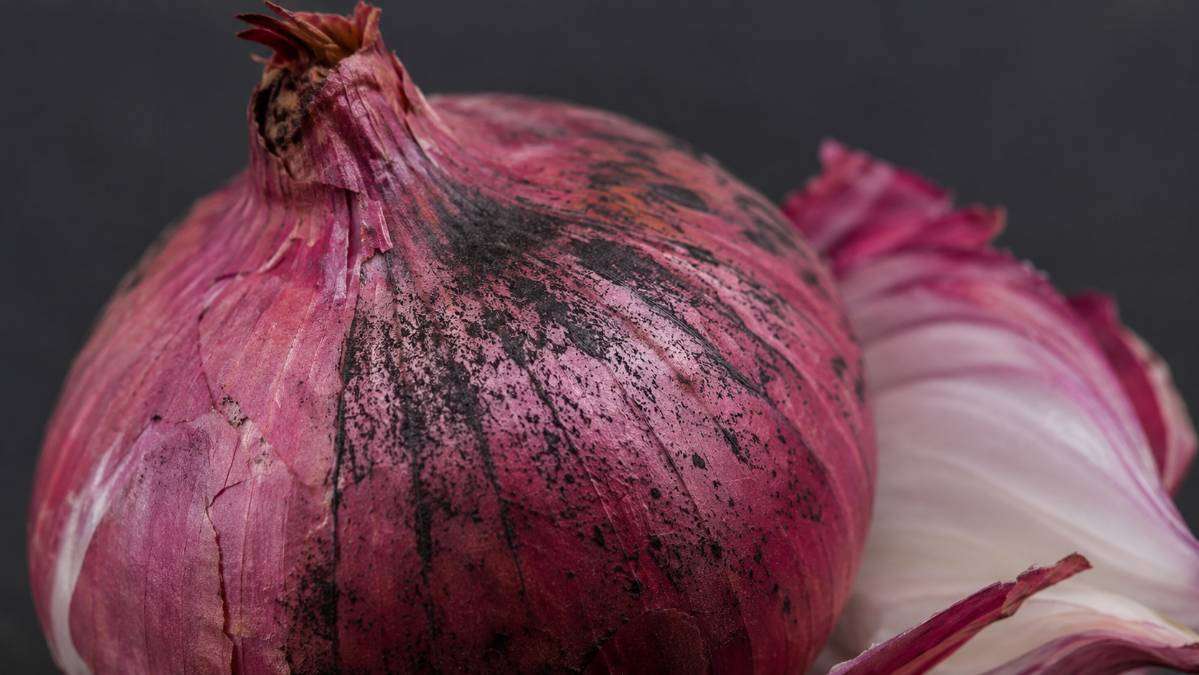
- Dark streaks following the natural veins of the onion.
- Small black patches on the dry skin.
- Powdery black spores that can easily rub off.
In the early stages, the onion often remains firm, and the inner edible layers appear healthy. As the disease progresses, however, the fungus may spread deeper into the bulb, leading to decay.
Every Onion With Black Mold Unsafe?
Official food safety guidance does not state that every onion showing black mold is automatically unsafe to eat. The condition of the onion is an important factor.
If the onion remains firm and the black mold is confined to the dry outer scales, agricultural experts indicate that removing the affected outer layers generally exposes healthy tissue underneath. However, consumers should carefully inspect the onion before using it.
If the onion has become soft, mushy, slimy, or develops an unpleasant odor, these are signs of spoilage. In such situations, the entire onion should be discarded because decay has likely spread beyond the surface.
Does Black Mold Always Produce Harmful Toxins?
The U.S. Food and Drug Administration explains that some molds are capable of producing substances known as mycotoxins under specific environmental conditions. However, not every mold produces toxins, and toxin production depends on several factors, including the fungal strain, moisture, temperature, and the food involved.
The FDA identifies foods such as corn, peanuts, tree nuts, grains, dried fruits, coffee, spices, and apples as foods that are more commonly monitored for mycotoxin contamination. Fresh onions are not listed among the major foods responsible for significant dietary exposure to mycotoxins.
For this reason, official agencies do not advise consumers to assume that every onion with superficial black mold contains dangerous toxin levels.
Should Moldy Onions Be Cooked?
Cooking can destroy many living microorganisms, including molds. However, food safety authorities note that certain mycotoxins produced by some molds may resist normal cooking temperatures. Therefore, cooking should not be relied upon to make spoiled food safe.
If an onion has become rotten or heavily affected by mold, it should not be consumed simply because it will be cooked later.
Proper Storage to Prevent Black Mold
Following good storage practices helps reduce the chances of fungal growth:
- Store onions in a cool, dry location.
- Ensure good air circulation.
- Avoid sealed plastic bags that trap moisture.
- Keep onions away from excessive humidity.
- Inspect stored onions regularly and remove damaged bulbs promptly.
- Avoid storing onions after they become wet unless they are thoroughly dried.
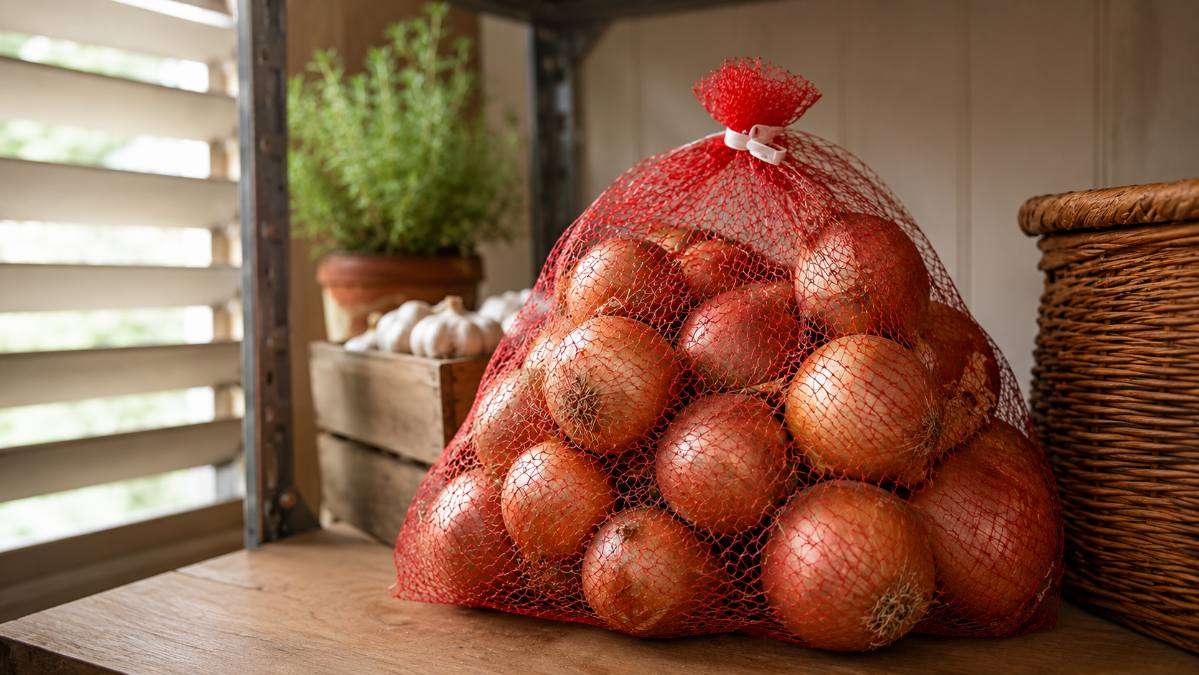
These simple measures can significantly extend the storage life of onions while reducing fungal growth.
READ THIS: Smartphone Reels Addiction: How Short Videos Affect Your Brain and Mental Health
When Should You Discard an Onion?
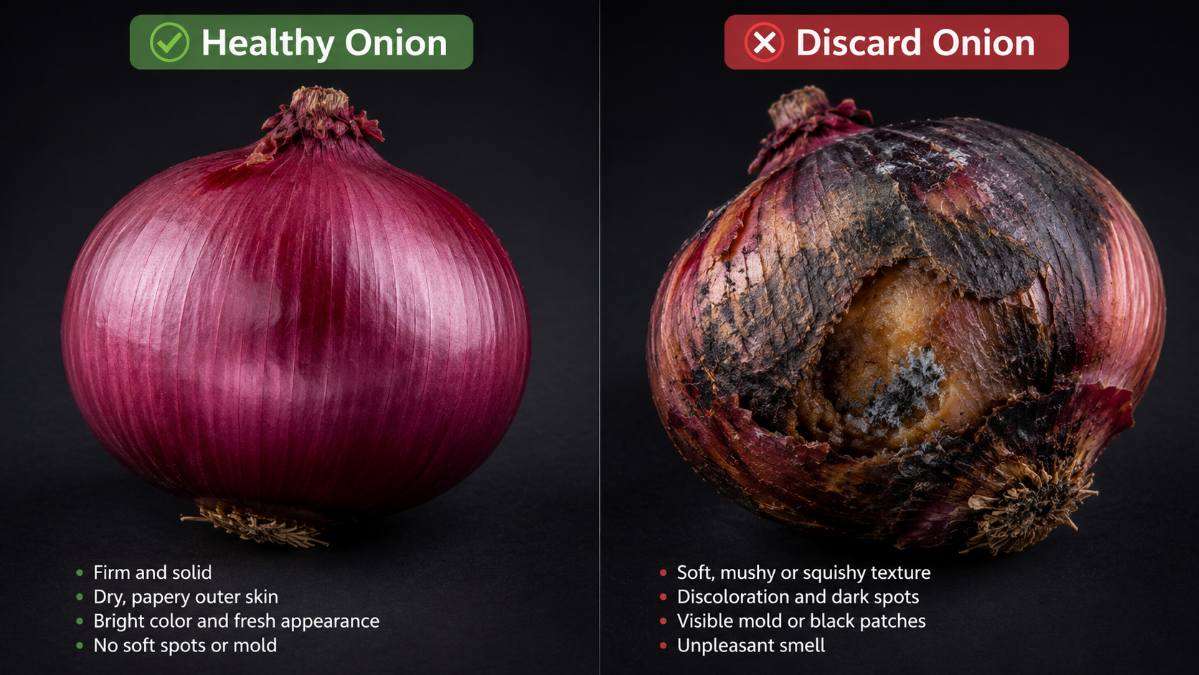
According to official food safety recommendations, an onion should be discarded if:
- It becomes soft or mushy.
- It develops a sour or unpleasant smell.
- Mold spreads into the fleshy edible layers.
- The bulb shows signs of extensive decay or slime.
- Large portions of the onion are visibly spoiled.
Discarding severely spoiled onions helps reduce the risk of consuming food that has undergone significant deterioration.
READ THIS: Sitting for 8 Hours a Day? How Long Desk Hours May Affect Heart Health
Key Points From Official Sources
- Black mold on onions is commonly caused by Aspergillus niger.
- The fungus mainly develops during storage under warm and humid conditions.
- Early black mold often remains limited to the dry outer layers.
- Firm onions with only superficial outer mold may still contain healthy inner tissue.
- Soft, rotten, slimy, or foul-smelling onions should be discarded.
- Proper storage is the most effective way to reduce black mold development.
- Official agencies do not state that every onion with superficial black mold is automatically dangerous.
Conclusion
Black mold on onions is a well-recognized post-harvest storage disease that has been extensively documented by agricultural and food safety authorities. It is most commonly caused by the fungus Aspergillus niger, which usually develops on the dry outer scales when onions are stored in warm, humid environments.
The presence of black mold does not automatically mean that the entire onion has become unsafe for consumption. The overall condition of the onion is the most important consideration.
A firm onion with mold limited to the outer dry layers may still have healthy edible tissue beneath those layers, while onions that are soft, slimy, foul-smelling, or extensively decayed should be discarded.
Proper storage in a cool, dry, and well-ventilated place remains the best method for maintaining onion quality and reducing the growth of black mold. Following guidance issued by recognized food safety authorities allows consumers to make informed decisions based on scientific evidence and established food safety practices.
About The Author