The tiger is one of the world’s most powerful predators, known for its strength, speed, and sharp hunting skills. While its powerful jaws and razor-sharp teeth often receive the most attention, another remarkable feature plays an important role in its daily life the tongue.
A tiger’s tongue is specially adapted to help it eat, groom, and survive in the wild. Covered with thousands of tiny, hard projections, the tongue is one of the most efficient natural tools found in the animal kingdom.
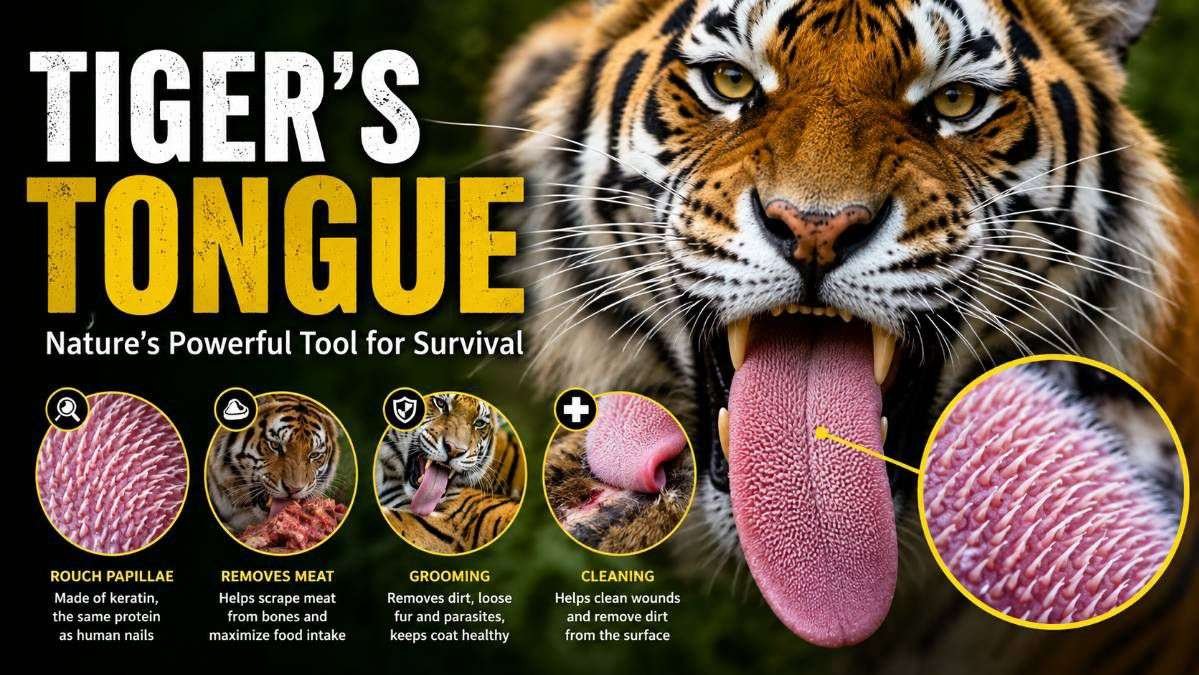
Unlike the smooth tongue of a human, a tiger’s tongue has a rough texture because it is covered with backward-facing spines called filiform papillae. These structures are made of keratin, the same strong protein found in human fingernails and hair. This unique design allows tigers to clean themselves and consume their prey more effectively.
What Makes a Tiger’s Tongue So Special?
The rough surface of a tiger’s tongue is created by thousands of tiny, hook-shaped papillae. These hard spines point backward toward the throat, making it easier for the tiger to grip and pull meat while feeding. The papillae are extremely durable because they are made of keratin, allowing them to withstand constant use throughout the tiger’s life.
Scientists have studied the tongues of big cats and found that these papillae are perfectly designed for their carnivorous lifestyle. Their structure helps maximize feeding efficiency while also serving several other important purposes.

READ THIS: Most Trending Interesting Facts People Don’t Know
How a Tiger Uses Its Tongue
1. Removing Meat from Bones
After catching its prey, a tiger relies on its powerful teeth and jaws to tear through flesh. Once large pieces of meat have been removed, the rough tongue helps scrape the remaining meat from bones. This allows the tiger to make the most of every meal, an important advantage in the wild where food may not always be available.
2. Grooming the Coat
A tiger spends time grooming itself every day. The rough papillae work like a natural comb, removing loose hair, dirt, parasites, and debris trapped in its thick fur. Regular grooming helps keep the coat clean and healthy while reducing the risk of skin problems.
3. Cleaning Wounds
Wild animals often receive small cuts and scratches while hunting or moving through forests. A tiger may lick minor wounds to remove dirt from the surface. Although saliva contains some natural compounds that may help keep a wound cleaner, excessive licking can also slow healing. Therefore, the tongue is mainly useful for basic cleaning rather than medical treatment.
The Science Behind the Rough Texture
The backward-facing filiform papillae are one of the most fascinating adaptations in big cats. Because they point toward the throat, they grip food securely and help move it into the mouth while feeding. The papillae are also flexible enough to pass through the fur during grooming, allowing them to reach deep into the coat.
Researchers have found that this natural design is so efficient that engineers have studied it while developing improved cleaning and grooming tools inspired by nature.
READ THIS: Jonathan Lee Riches The Man Behind America’s Most Bizarre Lawsuits
Do Other Cats Have Similar Tongues?
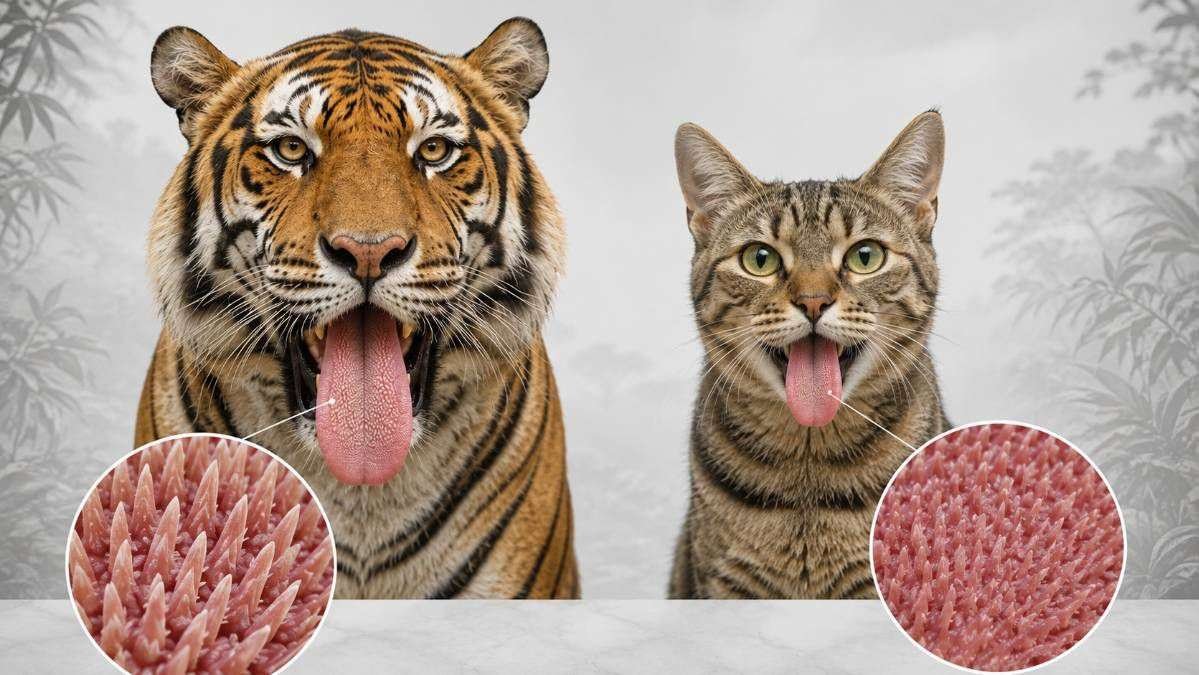
Yes. All members of the cat family have rough tongues, including lions, leopards, jaguars, cheetahs, and even domestic cats. The main difference is size. A tiger has much larger and stronger papillae because it feeds on much larger prey and has a thicker coat that requires more effective grooming.
How the Tongue Supports Survival
Every part of a tiger’s body is designed to improve its chances of survival. The tongue works together with the jaws, teeth, claws, and powerful muscles to help the animal obtain as much nutrition as possible from each hunt. In habitats where food may not be available every day, wasting very little meat is an important survival advantage.
The grooming function is equally important. A clean coat provides better insulation, reduces parasites, and helps maintain healthy skin. These benefits contribute to the tiger’s overall health and ability to hunt effectively.
READ THIS: 12 Psychology Interesting Facts About the Human Mind and Behavior
Interesting Facts About a Tiger’s Tongue
- The tongue is covered with thousands of keratinized filiform papillae.
- Keratin is the same protein found in human fingernails and hair.
- The rough surface helps scrape meat from bones after hunting.
- The tongue removes loose fur, dirt, and parasites during grooming.
- All big cats have rough tongues, but the tiger’s papillae are among the largest.
- The tongue is an important adaptation that supports both feeding and personal care.
READ THIS: Indian Constitution Day : History Facts Untold Stories
Scientific Importance
The tiger’s tongue is an excellent example of how evolution shapes animals for survival. Every feature has a specific purpose, from feeding efficiently to maintaining a healthy coat.
Scientists continue to study the tongue’s unique structure because it demonstrates how natural adaptations can inspire practical innovations in engineering and product design.
Conclusion
A tiger’s tongue is far more than a simple organ used for tasting food. It is a powerful natural tool that helps the animal scrape meat from bones, groom its thick fur, remove dirt and parasites, and maintain overall health.
The tiny keratin-covered papillae make the tongue one of the most specialized structures among mammals. This remarkable adaptation highlights the incredible ways in which wildlife has evolved to survive in challenging environments.
Understanding these natural features not only increases our appreciation for tigers but also reminds us of the importance of protecting these magnificent animals and the ecosystems they call home.
Frequently Asked Questions (FAQs) About a Tiger’s Tongue
1. Why is a tiger’s tongue so rough?
A tiger’s tongue is rough because it is covered with thousands of backward-facing, keratinized filiform papillae. These tiny spines help the tiger scrape meat from bones, groom its fur, and remove dirt and loose hair.
2. What are filiform papillae?
Filiform papillae are small, hook-shaped projections found on a tiger’s tongue. They are made of keratin, the same protein found in human fingernails and hair, making them extremely strong and durable.
3. What is the main function of a tiger’s tongue?
The tiger’s tongue helps scrape meat from bones, remove fur from prey, groom its thick coat, clean away dirt and loose hair, and support the animal’s overall hygiene.
4. Can a tiger’s tongue scrape meat from bones?
Yes. After the tiger tears flesh using its powerful jaws and teeth, the rough tongue helps remove the remaining meat from bones, allowing the animal to consume more of its prey.
5. Do all big cats have rough tongues?
Yes. Lions, leopards, jaguars, snow leopards, cougars, and domestic cats also have rough tongues with keratinized papillae. However, the papillae on a tiger’s tongue are larger and stronger.
6. How does a tiger use its tongue for grooming?
The rough papillae act like a natural comb, helping remove loose fur, dirt, parasites, and debris while keeping the tiger’s coat clean and healthy.
7. a tiger’s tongue stronger than a domestic cat’s tongue?
Yes. Both have the same basic structure, but a tiger’s tongue has much larger and more powerful papillae, making it better suited for feeding on large prey and grooming a thick coat.
8. What is a tiger’s tongue made of?
The tongue itself is made of muscle, while its rough surface is covered with keratinized filiform papillae. Keratin is a tough protein that provides strength and durability.
9. Does a tiger use its tongue only for eating?
No. Besides feeding, a tiger uses its tongue for grooming, cleaning its fur, removing dirt and parasites, and maintaining healthy skin and coat condition.
10. Why is a tiger’s tongue considered an important survival adaptation?
A tiger’s tongue improves feeding efficiency by helping remove more meat from prey and supports hygiene through regular grooming. These functions contribute to the tiger’s health and increase its chances of survival in the wild.
About The Author