Skyroot Aerospace Vikram-1 Creates History India First Private Orbital Rocket Successfully Reaches Space
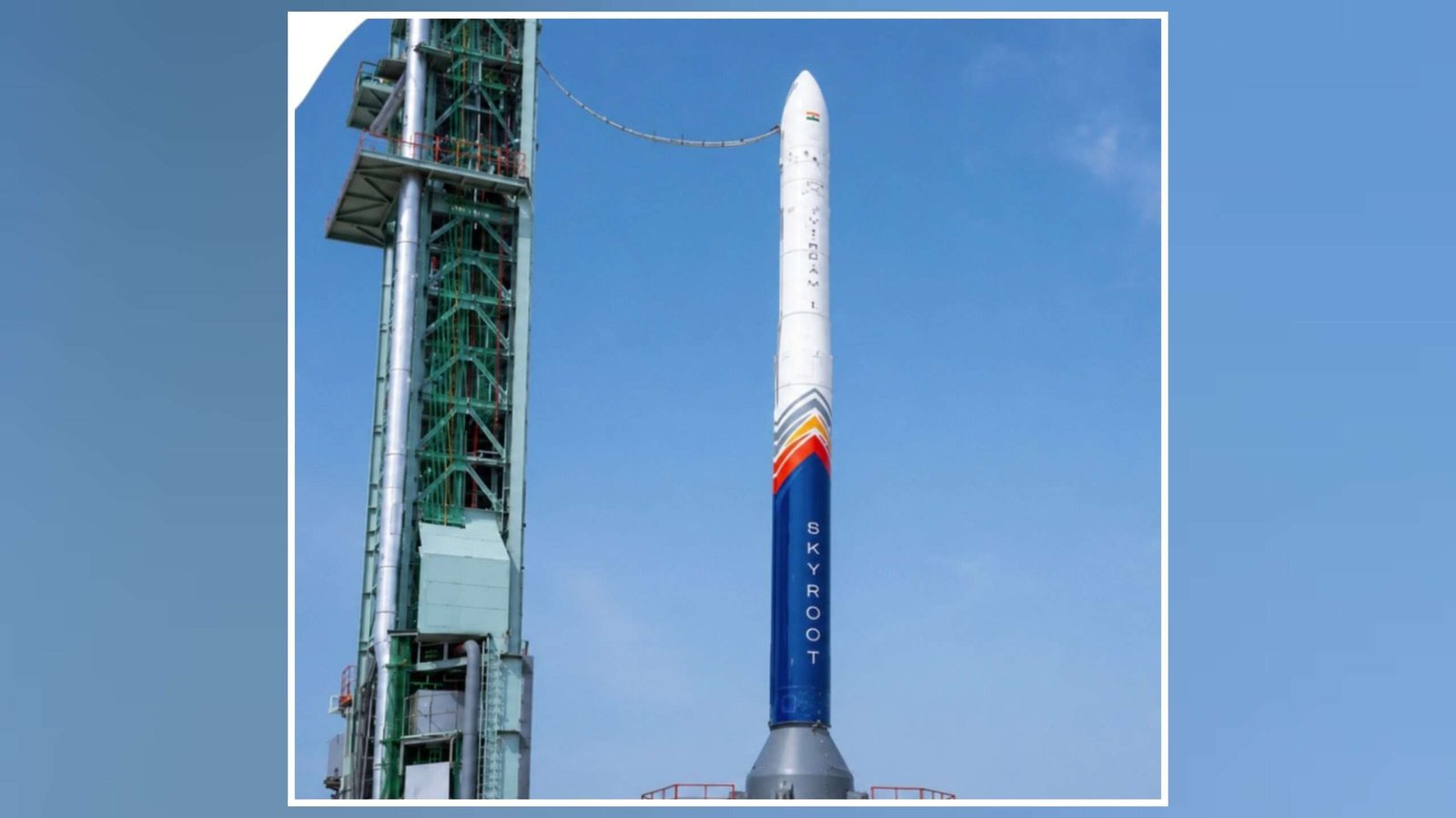
India space journey entered a historic new era on 18 July 2026 when Hyderabad-based startup Skyroot Aerospace successfully launched its Vikram-1 orbital launch vehicle from the Satish Dhawan Space Centre (SDSC-SHAR), Sriharikota.
The mission, named “Aagaman”, marks the first successful orbital launch by a privately developed Indian rocket, making it a landmark achievement for India’s rapidly growing private space sector.
A Historic Day for India’s Private Space Industry
For decades, India’s space missions have been led by the Indian Space Research Organisation (ISRO). However, after the Government of India opened the space sector to private participation in 2020, several startups began developing launch vehicles, satellites, and space technologies.
Skyroot Aerospace has now become the first Indian private company to successfully demonstrate an orbital-class launch vehicle capable of placing payloads into Low Earth Orbit (in LEO). The achievement places India among the select nations where private companies have independently developed and launched orbital rockets.
What is Vikram-1?
Vikram-1 is a small satellite launch vehicle developed entirely by Skyroot Aerospace. The rocket has been designed specifically to meet the growing global demand for launching small satellites into Low Earth Orbit.
The vehicle is named after Dr. Vikram Sarabhai, the father of India’s space programme. It stands approximately 20 metres tall and has been designed for quick manufacturing, rapid integration, and cost-effective commercial launches.
Mission Aagaman: A Successfully Maiden Orbital Flight
The maiden orbital mission of Vikram-1 was officially named Mission Aagaman, symbolising the arrival of India’s private launch capability.
The launch took place from the First Launch Pad at SDSC-SHAR in Sriharikota. Although the countdown experienced a temporary automatic hold during the final minutes, engineers completed all safety checks before clearing the vehicle for liftoff.
After launch, Vikram-1 successfully completed its flight profile and deployed multiple payloads into their intended Low Earth Orbit, proving the reliability of Skyroot’s launch system.
Payloads Successfully Placed into Orbit
Mission Aagaman carried six payloads, including technology demonstration payloads and satellites from Indian and international customers.
The successful deployment confirmed that Vikram-1 is capable of supporting commercial satellite launch missions in the future.
This milestone significantly boosts India’s competitiveness in the global small satellite launch market, where demand continues to rise due to Earth observation, communication, scientific research, and Internet of Things (IoT) satellite constellations.
From Vikram-S to Vikram-1: Skyroot’s Journey
Skyroot Aerospace was founded in 2018 by former ISRO scientists Pawan Kumar Chandana and Naga Bharath Daka.
The company’s first major achievement came in November 2022 when it successfully launched Vikram-S, India’s first privately developed suborbital rocket under Mission Prarambh.
That successful demonstration laid the foundation for the development of Vikram-1, which has now become India’s first privately built orbital rocket.
Why Vikram-1 Matters
The success of Vikram-1 is much more than a single rocket launch.
It demonstrates that Indian private companies now possess the technological capability to design, manufacture, integrate, test, and launch orbital-class launch vehicles independently.
The achievement is expected to:
- Strengthen India’s commercial launch ecosystem.
- Increase private investment in space technology.
- Create high-skilled employment opportunities.
- Encourage innovation among Indian startups.
- Reduce launch costs for domestic satellite operators.
- Expand India’s share in the global space economy.
Experts believe this mission could become a turning point similar to what private companies like SpaceX achieved for the United States.
Government Support for India’s Space Startups
The success of Skyroot Aerospace is also the result of India’s space sector reforms introduced by the Government of India.
The creation of IN-SPACe enabled private companies to access ISRO facilities, technical expertise, launch infrastructure, and testing support.
Skyroot became one of the first startups to officially collaborate with ISRO under the new policy framework, allowing the company to accelerate development of its launch vehicles.
Prime Minister Narendra Modi Congratulates Skyroot
Prime Minister Narendra Modi congratulated the Skyroot Aerospace team after the successful mission and described the launch as a historic milestone for India’s growing space ecosystem.
He praised India’s young innovators and highlighted that private companies are becoming an important part of the country’s future space ambitions.
Global Commercial Opportunities
The global small satellite industry is expanding rapidly as governments, universities, defence agencies, and private companies increasingly rely on satellites for communication, Earth observation, navigation, weather forecasting, and scientific research.
With Vikram-1 now successfully demonstrated, Skyroot Aerospace is expected to attract commercial customers from India and abroad.
The company aims to provide flexible, affordable, and dedicated launch services that reduce waiting times compared to rideshare missions. 9
What Comes Next?
Following Mission Aagaman, Skyroot Aerospace is expected to conduct additional operational missions while further expanding its Vikram family of launch vehicles.
The company also plans to increase launch frequency, improve payload capacity, and support a growing number of domestic and international satellite customers.
Industry experts believe this achievement will encourage more private Indian startups to develop advanced launch vehicles, satellites, propulsion systems, and deep-space technologies.
Conclusion
The successful launch of Vikram-1 represents one of the biggest milestones in the history of India’s private space industry. By becoming the country’s first privately developed orbital rocket to successfully place payloads into orbit, Skyroot Aerospace has demonstrated that Indian startups are ready to compete in the global commercial launch market.
This achievement is not only a victory for Skyroot Aerospace but also for India’s growing innovation ecosystem, government reforms, and the vision of creating a globally competitive private space sector.
As commercial space activities continue to expand worldwide, Mission Aagaman is likely to be remembered as the beginning of a new chapter in India’s journey into space.
About The Author