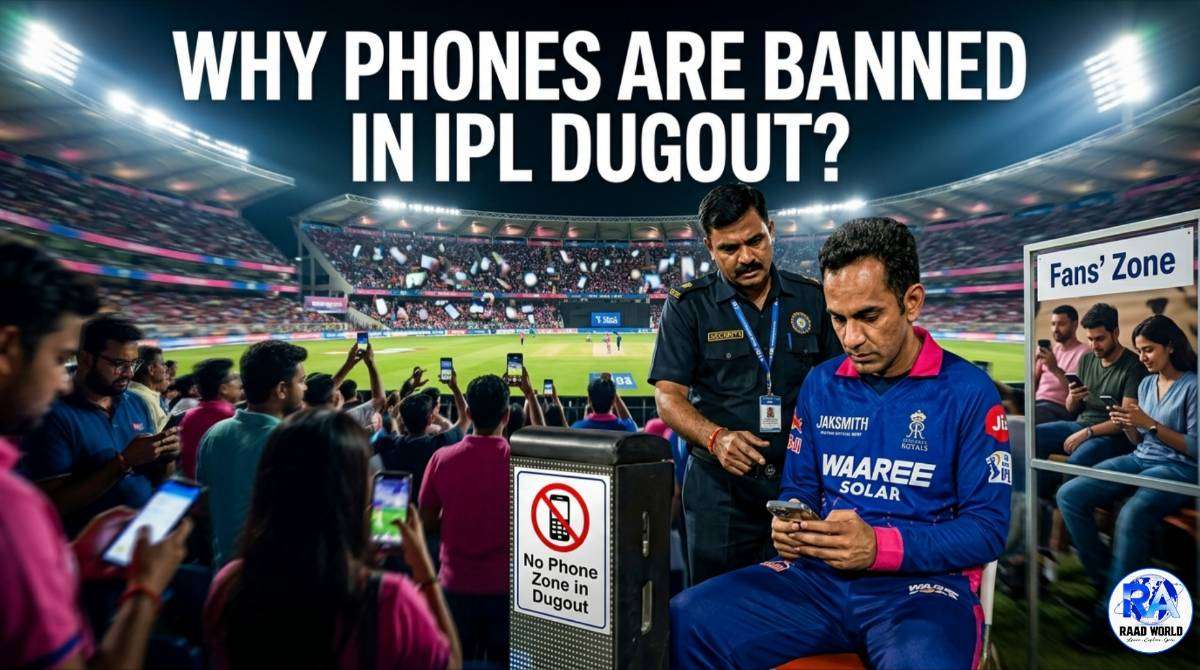
The recent fine imposed on Rajasthan Royals team manager Romi Bhinder for using a mobile phone in the dugout has raised an important question among cricket fans. If spectators in the stadium are free to use phones, why are players and team staff restricted?
The answer lies in strict anti-corruption regulations enforced by the Board of Control for Cricket in India (BCCI) and its Anti-Corruption and Security Unit (ACSU). These rules are designed to protect the integrity of the game and eliminate any possibility of unfair influence during live matches.
What Happened in the Romi Bhinder Case
During an IPL 2026 match, Rajasthan Royals manager Romi Bhinder was seen using a mobile phone in the dugout. This action violated the Players and Match Officials Area (PMOA) guidelines, which clearly prohibit the use of communication devices in restricted zones.

Credits: Official IPL Broadcast / Rajasthan Royals Coverage
READ THIS: RR vs RCB IPL 2026 Match 16 Result: Rajasthan Royals Win by 6 Wickets
After investigation, the BCCI imposed a fine of ₹1 lakh and issued a warning. The board clarified that it was a first-time offence and no evidence of corruption or wrongdoing was found. However, the rule violation was taken seriously to maintain discipline and consistency.
Why Phones Are Banned in the Dugout
1. Prevention of Match-Fixing and Spot-Fixing
Cricket has previously faced major fixing scandals. Mobile phones allow instant communication, which could be misused to pass sensitive information to illegal betting networks. Even small actions during a match can impact betting markets, making real-time communication a serious risk.
2. Strict ACSU Monitoring
The ACSU monitors all players, staff, and officials during matches. The dugout falls under a controlled zone where unauthorized devices are not allowed. This ensures that all communications remain traceable and regulated.
3. Maintaining Fair Play
Allowing phones could enable teams to receive outside strategic inputs, data analysis, or advice during the match. This would create an unfair advantage and disrupt the level playing field that cricket aims to maintain.
4. Avoiding Suspicion
Even if a phone is used for harmless reasons, it can raise doubts among viewers, officials, and regulators. A strict no-phone policy eliminates confusion and protects the credibility of the sport.
Why Fans Are Allowed to Use Phones
Spectators in the stadium are not part of the match’s decision-making system. While they can use phones freely for calls, messages, or social media, they do not have direct influence over on-field actions.
READ THIS: RCB 11 Seats Tribute Truth IPL 2026 Bengaluru Stampede Memorial Explained
In contrast, players and team staff are directly involved in gameplay. Any communication received by them during the match can immediately impact decisions such as bowling changes, batting approach, or field placements.
Understanding Restricted Zones in IPL
Dugout: Highly restricted area where phones are completely banned
Dressing Room: Limited and monitored usage allowed under guidelines
Field of Play: Strictly controlled with no external communication
These zones are part of the PMOA regulations, ensuring that players remain isolated from any external influence during the match.
READ THIS: Vaibhav Suryavanshi Orange Cap IPL 2026 RR vs RCB Match 16
How These Rules Protect Cricket
The primary objective of banning phones in the dugout is to safeguard the integrity of cricket. By eliminating unauthorized communication, the BCCI ensures that Matches are played fairly without external interference Players and officials follow transparent protocols Public trust in the sport remains strong
The Romi Bhinder case serves as a reminder that even minor violations are taken seriously under IPL regulations. While the punishment was not severe, it reinforces the importance of following established rules.
Conclusion
Mobile phones are not banned in cricket because they are harmful devices, but because of the risks they pose when used by insiders during live matches. The strict enforcement of these rules helps maintain fairness, transparency, and credibility in one of the world’s most popular sporting leagues.
As cricket continues to evolve with technology and global viewership, maintaining discipline in controlled areas like the dugout remains essential for preserving the spirit of the game.
About The Author