Karnataka Bars 249 Guest Lecturers Over Fake Ph.D. Certificates, Orders FIRs After Verification
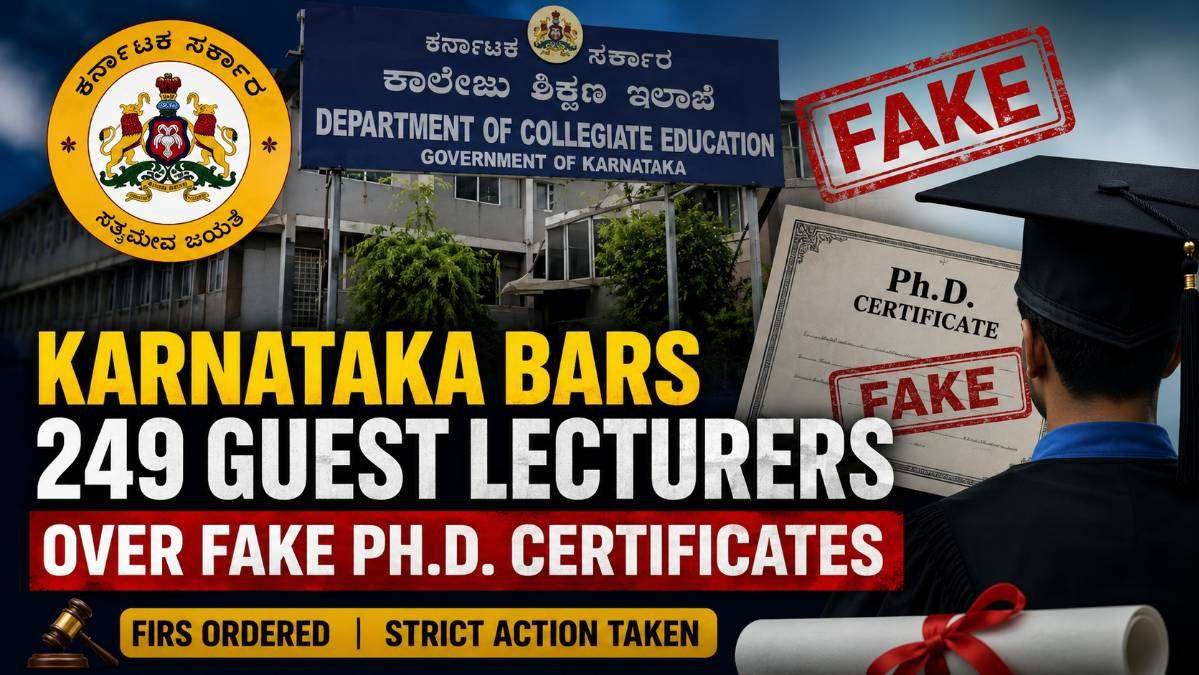
The Karnataka Government has initiated one of the most significant verification drives in the higher education sector by taking strict action against guest lecturers who were allegedly appointed using fake or invalid Ph.D. certificates.
Following a detailed document verification process, the Department of Collegiate Education (DCE), Government of Karnataka, has barred 249 guest lecturers from future recruitment and directed officials to initiate criminal proceedings against those found guilty of submitting forged academic credentials.
The action comes after complaints regarding the authenticity of educational qualifications submitted by guest faculty members working in Government First Grade Colleges across Karnataka.
The Department has stated that the move aims to protect the credibility of higher education, ensure transparency in recruitment, and maintain public confidence in government institutions.
Why the Verification Process Was Started
The Department of Collegiate Education received several complaints alleging that some guest lecturers had secured appointments by producing fake or invalid Ph.D. certificates. These complaints were also reportedly brought before the Karnataka Lokayukta, prompting the government to undertake a comprehensive verification process.
To ensure fairness, the Department instructed principals of Government First Grade Colleges to verify doctoral degree certificates directly with the universities that had issued them. Rather than relying solely on photocopies or self-attested documents, the Department sought official confirmation from universities across India.
This verification exercise was intended to identify genuine candidates while preventing individuals with forged qualifications from continuing in teaching positions.
READ THIS: NEET UG 2027 Goes Computer-Based Government Confirms CBT Exam Format for Medical Aspirants
How the Investigation Was Conducted
The Department followed a structured verification process before taking action. Educational certificates submitted during the guest faculty recruitment process were cross-checked with the respective universities. Only after receiving official responses regarding the authenticity of the degrees did the Department proceed with disciplinary action.
The verification drive involved multiple universities and required careful examination of records. Officials reviewed each case individually to ensure that decisions were based on documentary evidence rather than assumptions.
According to official reports, the Department also introduced stricter procedures for verifying educational qualifications during recruitment so that similar issues can be prevented in future appointments.
249 Guest Lecturers Found with Fake or Invalid Ph.D. Certificates
After completing the verification process, the Department concluded that 249 guest lecturers had submitted fake, forged, or otherwise invalid Ph.D. certificates during recruitment.
As a result, these individuals have been declared ineligible to continue participating in guest faculty recruitment conducted by the Department of Collegiate Education.
The government has clarified that the decision was taken only after completing document verification and receiving confirmation regarding the authenticity of the certificates.
READ THIS: Supreme Court Declines Urgent Hearing on Student Protest Plea What CJI Surya Kant Actually Said
Government’s Action Against the Lecturers
The Karnataka Department of Collegiate Education has taken several important steps following the verification exercise.
- 249 guest lecturers have been disqualified from the guest faculty selection process.
- They have been barred from participating in future guest lecturer recruitment under the Department.
- Officials have been instructed to register criminal cases (FIRs) wherever fake certificates have been confirmed.
- The Department has strengthened its verification process for future recruitments.
The government believes these measures will discourage the submission of forged academic documents and promote merit-based appointments in higher education institutions.
Importance of Genuine Academic Qualifications
Academic qualifications form the foundation of recruitment in educational institutions. A Ph.D. degree represents years of research, academic contribution, and scholarly work. Producing a fake doctoral certificate not only violates recruitment rules but also undermines the integrity of higher education.
Guest lecturers play an important role in teaching undergraduate students across Government First Grade Colleges. Therefore, appointing qualified and competent educators is essential for maintaining academic standards.
The government’s verification exercise highlights the importance of ensuring that only deserving candidates are entrusted with teaching responsibilities.
Impact on Karnataka’s Higher Education System
The action against the 249 guest lecturers is expected to have a significant impact on the state’s higher education system.
Firstly, it sends a strong message that fraudulent educational qualifications will not be tolerated. Secondly, it reassures students and parents that the government is committed to maintaining quality education by appointing only eligible faculty members.
The verification process also encourages greater transparency in recruitment and improves public confidence in government educational institutions.
Educational experts believe that such verification exercises should become a regular feature of recruitment so that academic fraud can be detected before appointments are made.
Role of Universities in Certificate Verification
Universities play a crucial role in confirming whether a degree has been genuinely awarded. During the investigation, the Department relied on official responses from universities rather than depending solely on documents submitted by applicants.
This approach reduced the possibility of forged certificates going undetected and helped ensure that decisions were supported by authentic records.
Experts suggest that future recruitment systems should increasingly adopt digital verification methods, enabling departments to confirm educational credentials more efficiently.
Legal Consequences of Submitting Fake Certificates
Submitting forged educational certificates during recruitment can attract serious legal consequences. Apart from cancellation of appointments, individuals may face criminal proceedings under applicable provisions of Indian law relating to forgery, cheating, and use of forged documents.
In this case, the Department has directed officials to initiate criminal action wherever fake certificates have been established through verification.
The legal process will proceed independently, and the individuals concerned will have the opportunity to present their defence before the appropriate authorities and courts.
Lessons for Future Recruitment
The incident demonstrates the importance of robust verification mechanisms in public recruitment.
Recruiting agencies are increasingly adopting digital document verification, direct university authentication, and stricter scrutiny of educational credentials. These measures reduce the possibility of fraudulent appointments while protecting deserving candidates who possess genuine qualifications.
Applicants are also reminded to submit only authentic documents, as any attempt to misrepresent educational qualifications can result in permanent disqualification and legal consequences.
READ THIS: Google Account Email Change Feature How to Change Your Gmail Address
Government’s Commitment to Transparency
The Karnataka Government has reiterated its commitment to maintaining transparency and accountability in higher education recruitment. By introducing stronger verification procedures and taking action against individuals found using fake qualifications, the Department aims to strengthen public trust in government colleges.
The verification drive is expected to influence future recruitment policies and encourage stricter compliance with academic standards across educational institutions.
Conclusion
The Karnataka Department of Collegiate Education’s decision to bar 249 guest lecturers over fake or invalid Ph.D. certificates marks a significant step toward safeguarding the integrity of higher education.
The action reflects the government’s determination to ensure that only genuinely qualified individuals are entrusted with teaching responsibilities in Government First Grade Colleges.
At the same time, it is important to remember that the Department’s action is based on its verification process, while any criminal proceedings will follow the due process of law. The courts will ultimately determine criminal liability wherever cases are registered.
This case serves as an important reminder that academic integrity is fundamental to the education system. Transparent recruitment, rigorous verification, and strict enforcement of rules are essential for protecting students, supporting deserving educators, and maintaining confidence in public institutions.
As Karnataka strengthens its recruitment procedures, the initiative is likely to become a benchmark for ensuring fairness and accountability in higher education appointments.
Sources:
- Department of Collegiate Education, Government of Karnataka – https://dce.karnataka.gov.in
- Government of Karnataka – https://karnataka.gov.in
- Verified reports from The Times of India regarding the Department’s verification drive and official action.
About The Author