Mobile applications have become an important part of our daily lives. People use social media, messaging platforms, online games and shopping applications to communicate and access information. However, mobile applications can also create security risks when they are used without proper precautions.
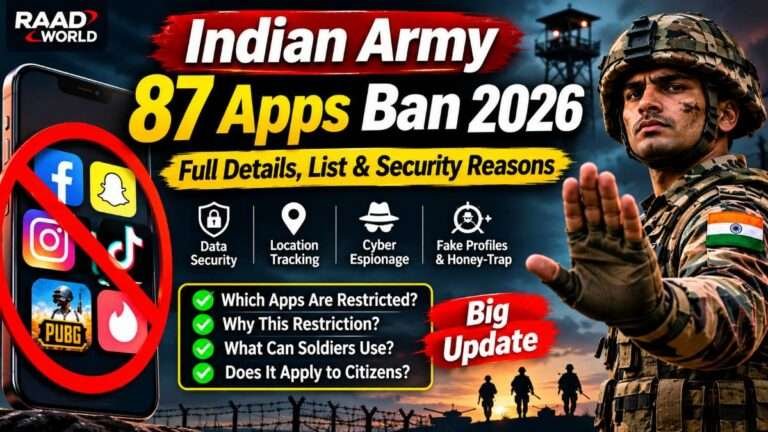
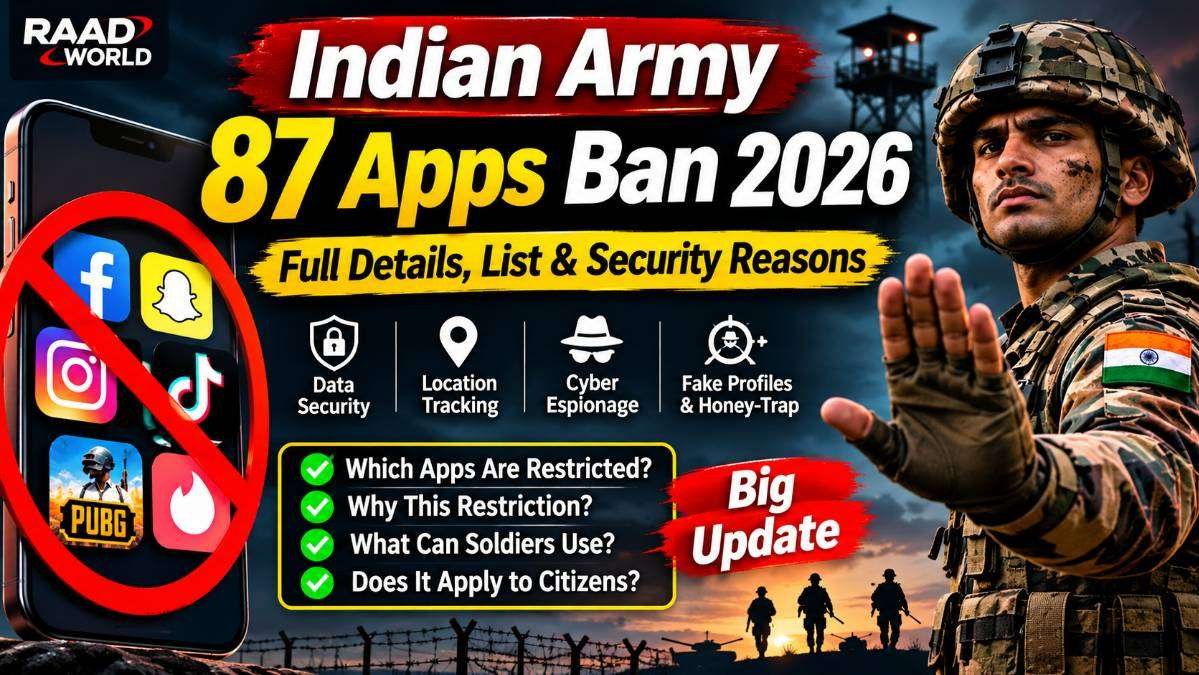
Recently, reports about the Indian Army restricting the use of 87 mobile applications have attracted public attention. According to these reports, several popular applications, including Facebook, Snapchat, Hinge and PUBG, are associated with the restrictions.
But why would the Indian Army restrict soldiers from using these applications? Does this rule apply to ordinary Indian citizens? Let us understand the details.
What Is the Indian Army App Restriction?
The Indian Army has introduced restrictions on certain mobile applications to protect military personnel, sensitive information and national security.
The main concern is that information shared through mobile applications could accidentally expose details about military personnel, their locations, activities or professional connections.
An important historical development took place in 2020, when Indian Army personnel were directed to delete 89 applications from their mobile phones. These included several social networking, messaging, gaming, shopping and dating applications.
The Army’s March 2025 publication, Baatcheet, also contains a list of 89 restricted applications. However, news reports published in November 2026 refer to 87 applications. A publicly accessible new Army order confirming the reported 87-app list has not been independently verified.
READ THIS: WhatsApp Scheduled Messages Feature: How It Works, Features and Availability
Which Popular Applications Are Mentioned?
The documented 89-app list includes several applications that were popular among smartphone users.
- Snapchat
- TikTok
- Hinge
- Tinder
- Bumble
- PUBG
- Zoom
- Viber
- SHAREit
- Xender
- UC Browser
- CamScanner
- Truecaller
- AliExpress
- Shein
This is a selection of applications mentioned in the documented 89-app publication. It should not be treated as a confirmed complete list of the reported 87 applications in November 2026.
Why Does the Indian Army Restrict These Apps?
Military security is different from ordinary personal smartphone security. Information that appears harmless to an ordinary user could become sensitive when it concerns military personnel or defence operations.
1. Location Tracking
Some applications collect or use location information. Photographs and other shared content may also reveal location details. If military personnel accidentally expose their location, it could create security concerns.
2. Personal Data Protection
Mobile applications may request access to contacts, photographs, microphones, cameras and other device information. Unnecessary permissions can increase the risk of personal data exposure.
3. Cyber Espionage
Cyber espionage involves collecting sensitive information through digital methods. Hostile individuals or organisations may attempt to collect information about military personnel and their activities.
4. Fake Profiles and Honey-Trapping
Social media platforms can be misused to create fake identities. Criminals or hostile individuals may establish relationships with military personnel to obtain confidential information. This type of activity is commonly associated with social engineering and honey-trapping.
5. Protection of Military Operations
Military personnel must protect information about their duties, locations, movements and professional activities. Even an ordinary photograph or social media comment could accidentally reveal sensitive information.
READ THIS: EPFO WhatsApp Services 2026: Check PF Balance & Download Passbook
What Are the Social Media Rules for Army Personnel?
Restrictions on social media do not necessarily mean that military personnel cannot access every digital platform.
A December 2025 report by News on AIR described revised social media guidance that allowed certain limited uses of platforms.
According to the reported guidance:
- Instagram access was permitted for viewing and monitoring purposes.
- WhatsApp and certain messaging platforms could be used for general, unclassified communication.
- YouTube and X could be accessed for passive viewing.
- LinkedIn use was subject to limited professional purposes.
These permissions are subject to military instructions and security restrictions. They do not provide permission to publish sensitive military information.
Does the Indian Army App Ban Apply to Ordinary Citizens?
This is one of the most important questions people are asking.
The restrictions discussed in this article concern Indian Army personnel. They should not be confused with nationwide application-blocking orders issued by the Central Government.
Ordinary Indian citizens are not automatically prohibited from using Facebook, Snapchat, Instagram, PUBG or dating applications because of an Army-specific restriction.
A separate government order would be required for a nationwide restriction under the applicable law.
87 Apps or 89 Apps: What Is the Difference?
There is an important difference between the numbers appearing in recent reports and the officially documented publication.
| Period | Information |
|---|---|
| 2020 | Indian Army personnel were directed to remove 89 applications. |
| March 2025 | The Army’s Baatcheet publication listed 89 applications. |
| December 2025 | Reports described revised social media guidance for Army personnel. |
| November 2026 | News reports referred to restrictions involving 87 applications. |
The difference between 87 and 89 requires further official clarification. Without a publicly accessible new Army order, it would not be appropriate to claim that the Army has officially replaced its earlier list.
READ THIS: QR Code Payment Explained What Information Is Stored in UPI QR?
Cybersecurity Lessons for Smartphone Users
This news is also a useful reminder that smartphone security is important for everyone, not only military personnel.
Here are some simple practices that can help protect your personal information:
- Download applications only from trusted official application stores.
- Check application permissions before allowing access to your personal information.
- Enable two-factor authentication on important online accounts.
- Avoid downloading unknown APK files.
- Never share OTPs, passwords or banking information with unknown individuals.
- Avoid sharing your live location publicly on social media.
- Keep your smartphone operating system and applications updated.
Following these precautions can reduce unnecessary privacy and cybersecurity risks.
Conclusion
The Indian Army’s restrictions on selected mobile applications highlight the importance of digital security and responsible social media usage. Military personnel must take additional precautions because their personal information and online activities can have national security implications.
The Army’s March 2025 publication documents 89 restricted applications, while recent November 2026 reports refer to 87 applications. The exact details of a new 87-app order remain unverified through a publicly accessible official document.
It is also important to understand that these military restrictions do not automatically apply to ordinary Indian citizens.
Technology makes communication easier, but protecting personal information is everyone’s responsibility. Staying informed, checking application permissions and following basic cybersecurity practices can help us use smartphones more safely.
Stay informed. Stay secure. Think before you share.
About The Author