Augmental MouthPad The Bluetooth Mouthpiece That Lets You Control a Computer with Your Tongue
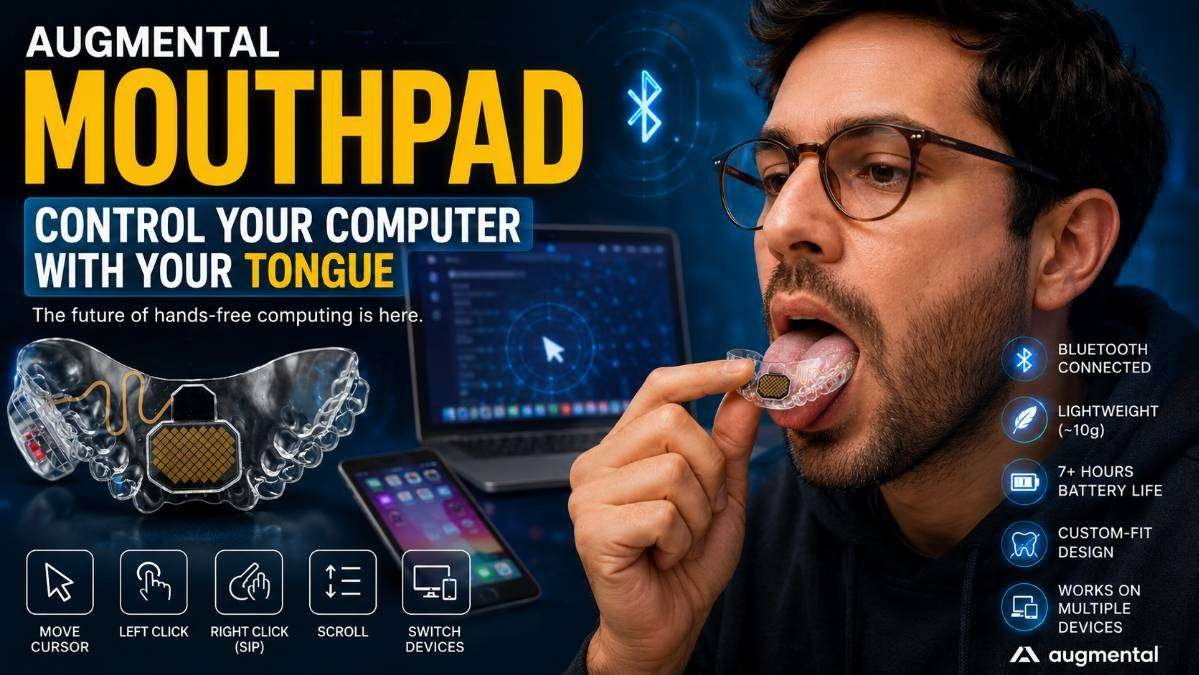
Imagine controlling your laptop, smartphone, or tablet without touching a keyboard, mouse, or touchscreen. It may sound like science fiction, but a U.S.-based startup has turned that idea into reality.
Augmental Technologies has introduced MouthPad, a custom-made Bluetooth mouthpiece that enables users to move a cursor, click, scroll, and interact with digital devices using simple tongue movements.
The innovative technology has recently gained widespread attention after viral social media posts claimed that “your tongue is now a computer mouse.” While the headline is catchy, the underlying technology is real.
MouthPad has been developed primarily as an accessibility solution for people with limited hand mobility, giving them a new way to interact with computers and smartphones without using their hands.
Here is everything you need to know about the technology, how it works, who it is designed for, and why experts believe it represents an important step forward in assistive technology.
READ THIS: Google Selfie Video Account Recovery New Security Feature
What Is Augmental MouthPad?
MouthPad is a wearable Bluetooth input device created by California-based startup Augmental Technologies, an MIT Media Lab spin-off focused on human-computer interaction. Instead of holding a traditional computer mouse, users wear a lightweight custom dental retainer that fits comfortably on the roof of the mouth.
The mouthpiece contains a highly sensitive touchpad and electronic sensors capable of detecting tongue movements. Every movement is translated into cursor navigation, clicking, scrolling, and other computer commands. Once paired through Bluetooth, the device functions similarly to a wireless mouse and supports several major operating systems.
Unlike brain-computer interfaces that require surgical implants, MouthPad is completely non-invasive. Users simply place it inside the mouth and begin controlling compatible devices after setup.
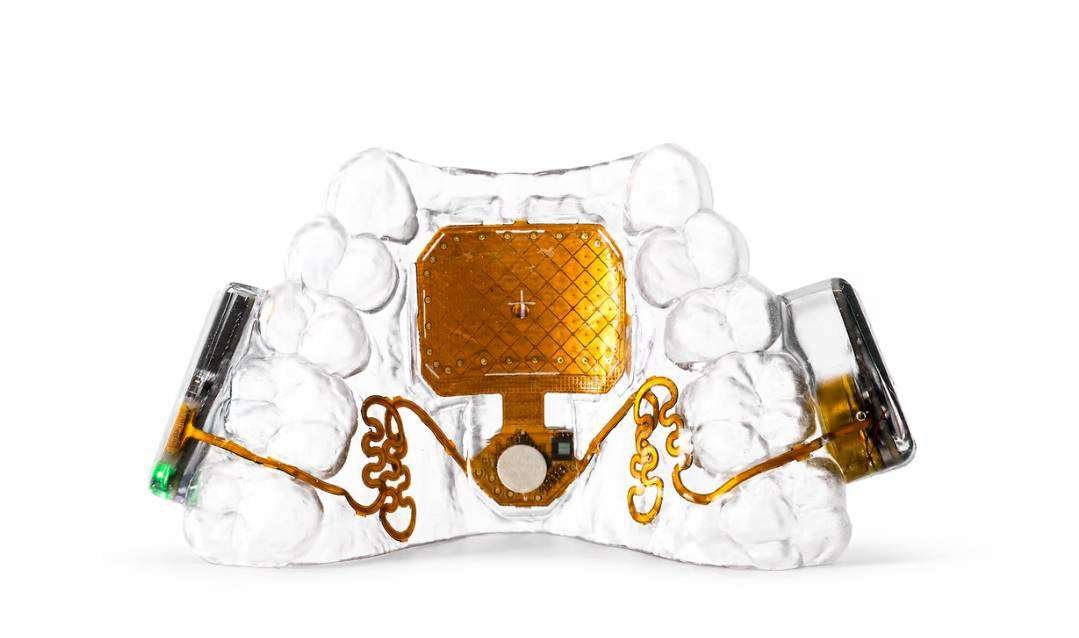
How Does MouthPad Work?
The technology is based on natural tongue movements. The tongue is one of the fastest and most precise muscles in the human body, making it an effective control method for digital interfaces.
Main Features
- Move the cursor using tongue gestures.
- Perform left-click actions with tongue presses.
- Use sip or breath gestures for additional commands.
- Scroll webpages and documents.
- Drag and drop files.
- Navigate operating systems without touching a mouse.
- Switch between paired Bluetooth devices.
The company has designed the controls to feel intuitive after a short learning period. Since the mouthpiece stays securely in place, users can continue speaking, breathing, and performing daily activities while wearing it.
Supported Devices and Platforms
According to Augmental Technologies, MouthPad supports a wide range of devices through Bluetooth connectivity.
- Windows PCs
- macOS computers
- Linux systems
- Android smartphones
- Apple iPhone (iOS)
- Tablets
Because the device behaves like a standard Bluetooth mouse, it does not require special hardware modifications on compatible devices.
READ THIS: WhatsApp Status Caption Edit Feature How to Edit Status Captions Without Deleting the Status
Why Was MouthPad Developed?
Although many people are fascinated by its futuristic design, MouthPad was created with a practical purpose: improving accessibility.
Millions of people worldwide live with conditions that make using a keyboard or mouse difficult or impossible. Individuals affected by spinal cord injuries, ALS (Amyotrophic Lateral Sclerosis), muscular disorders, stroke, or other mobility impairments often depend on specialized assistive technologies.
Augmental’s founders wanted to develop a solution that could provide greater independence without requiring invasive medical procedures. Instead of waiting for advanced brain implants to become widely available, the company focused on creating an affordable and wearable interface that people could begin using today.
Custom Design for Every User
Unlike ordinary electronic accessories, MouthPad is custom manufactured for every customer.
Each user undergoes a professional intraoral dental scan, allowing the company to create a mouthpiece that precisely matches the shape of their teeth and palate. This customized fit improves comfort, stability, and accuracy during everyday use.
The finished device is manufactured using medical-grade materials designed for long-term oral wear.
Technical Specifications
- Wireless Bluetooth connectivity
- Custom-fit dental retainer design
- Medical-grade construction materials
- Approximately 10 grams in weight
- Battery life exceeding seven hours
- Approximately 90-minute recharge time
- Rechargeable charging case included
- Supports multiple operating systems
The compact design makes the device lightweight enough for extended use throughout the day.
READ THIS: Instagram Audio Replacement Feature How to Change Music After Publishing a Post Without Deleting It
Ordering Process
Since every MouthPad is individually manufactured, purchasing the device involves several steps.
- Place an order through Augmental.
- Visit a dental professional for a digital mouth scan.
- Upload the scan to the company.
- Manufacturing begins.
- The completed custom device is shipped to the customer.
The company estimates that manufacturing and delivery can take several months due to the customized production process.
Current Price and Availability
As of the latest official information, the standard MouthPad costs approximately US$1,400. A two-device bundle is also available for customers who need multiple units.
Currently, the product is available only within the United States. International orders have not yet been widely launched, although the company plans to expand availability in the future.
MouthPad a Medical Device?
One important clarification is that MouthPad is not marketed as a treatment or cure for any medical condition.
According to Augmental Technologies, the product functions as a hands-free computer input device rather than a medical therapy. Users should not interpret it as a replacement for clinical treatment or rehabilitation.
Potential Real-World Applications
The technology has attracted attention beyond accessibility communities because of its broad range of applications.
- Office productivity
- Web browsing
- Email management
- Video conferencing
- Creative software navigation
- Gaming accessibility
- Smartphone operation
- AI assistant interaction
For people who cannot use conventional computer peripherals, these capabilities can significantly improve communication, education, employment opportunities, and overall independence.
How Is It Different from Brain-Computer Interfaces?
Brain-computer interfaces typically rely on electrodes that detect brain activity. Some experimental systems even require surgical implantation.
MouthPad follows an entirely different approach. Instead of reading brain signals, it translates physical tongue movements into digital commands. This makes the technology less invasive, easier to deploy, and suitable for everyday use without surgery.
Challenges and Limitations
Although MouthPad represents a remarkable innovation, it is not without limitations.
- High purchase cost may limit accessibility.
- Currently available only in the United States.
- Requires a professional dental scan.
- Every device is custom-built, resulting in longer delivery times.
- Users need time to learn tongue-based controls.
Despite these challenges, experts believe technologies like MouthPad could play a significant role in the future of assistive computing.
Future of Hands-Free Computing
Assistive technology continues to evolve rapidly. Devices like MouthPad demonstrate that innovation is no longer limited to laboratories. As wearable electronics become smaller, smarter, and more affordable, hands-free computing may become increasingly common across healthcare, education, workplaces, and consumer technology.
For individuals living with mobility challenges, innovations like MouthPad are more than technological achievements they represent new opportunities for independence and digital inclusion.
Conclusion
Augmental’s MouthPad proves that advanced accessibility technology can be practical, wearable, and remarkably intuitive. By transforming simple tongue movements into computer commands, the device offers a hands-free alternative to traditional input methods while opening new possibilities for people with physical disabilities.
Although the viral claim that “your tongue is now a computer mouse” simplifies the technology, the concept behind it is genuine. MouthPad does not replace the tongue with a mouse instead, it uses natural tongue movements to perform mouse-like functions through a custom Bluetooth mouthpiece.
As assistive technology continues to advance, innovations like MouthPad highlight how thoughtful engineering can make digital devices more accessible to everyone.
About The Author