Mobile recharge prices are once again attracting attention across India. Millions of people depend on affordable prepaid plans for internet access, online payments, education, entertainment and everyday communication. Recent reports about a possible 15 percent increase in mobile tariffs have therefore raised concerns among mobile users.
According to media reports published in October 2026, some financial analysts expect telecom operators to increase their tariffs in the coming months.
December 2026 has been mentioned as a possible period for the next revision. However, customers should understand that an analyst’s prediction is not the same as an official announcement from a telecom company.
Here is what is currently known about the expected recharge price hike, how it could affect customers, and where to check for reliable information.
Is a 15 Percent Mobile Recharge Price Hike Confirmed?
As of October 26, 2026, the reports reviewed for this article describe a possible tariff increase rather than a confirmed, industry-wide price revision. Ambit Capital has reportedly projected a 15 percent increase in December 2026, while Centrum Institutional Research has also forecast a possible increase of around 12 to 15 percent.
These estimates have been discussed in financial and business news reports. However, they should not be interpreted as confirmation that Jio, Airtel, Vodafone Idea, or BSNL will increase every recharge plan by the same percentage.
Telecom companies make their own pricing decisions. Each operator may revise selected plans, change benefits, introduce new packages or retain existing prices. Customers should wait for official announcements before treating any proposed price as final.
Why Could Mobile Recharge Prices Increase?
There are several reasons telecom companies may consider increasing their tariffs. Building and maintaining mobile networks requires substantial investment, particularly as operators expand their 5G services and improve coverage in different parts of the country.
Another important factor is average revenue per user, commonly known as ARPU. This figure represents the average revenue an operator earns from each subscriber over a particular period. Telecom companies generally seek to improve this figure to support network investment, operating expenses and financial stability.
Competition, subscriber growth, data consumption and the financial position of individual operators can also influence pricing decisions. However, these industry conditions do not guarantee that a tariff increase will take place on a particular date.
READ THIS: Jio IPO 2026: Price, Dates, GMP & Investment Details
Jio, Airtel, Vi and BSNL: What Should Customers Expect?
Reliance Jio
Jio is one of India’s largest telecom operators and serves customers across a wide range of prepaid and postpaid plans. If the company introduces higher tariffs in the future, the effect on customers will depend on the plans selected for revision and the benefits included in those plans.
At present, the analyst forecasts discussed in this article should not be treated as an official confirmation of a 15 percent increase in Jio’s recharge prices. Customers can check the latest plans through the official Jio website.
Bharti Airtel
Airtel revised its mobile tariffs in July 2024. Its pricing decisions are important to customers who rely on the network for daily calls, mobile data and other services. Although analysts have discussed the possibility of another increase, customers should not assume that Airtel has confirmed a December 2026 revision.
The latest available prepaid plans and recharge prices can be checked on the official Airtel prepaid recharge page.
Vodafone Idea (Vi)
Vodafone Idea, which operates under the Vi brand, is another major private telecom operator in India. Analysts have identified the company’s financial requirements and the need to strengthen its business as relevant factors in discussions about future tariff increases.
Nevertheless, an industry forecast does not confirm the exact changes Vi may make to its recharge plans. Customers should check the official Vi website for updated prices, validity periods and data benefits.
BSNL
BSNL is a state-owned telecom operator that attracts customers looking for affordable mobile services. Its pricing decisions should be considered separately from those of private telecom companies.
The analyst reports discussed here do not establish that BSNL will implement the same 15 percent increase. Customers should consult the official BSNL website for current tariff information and any future announcements.
Possible New Recharge Prices After a 15 Percent Increase
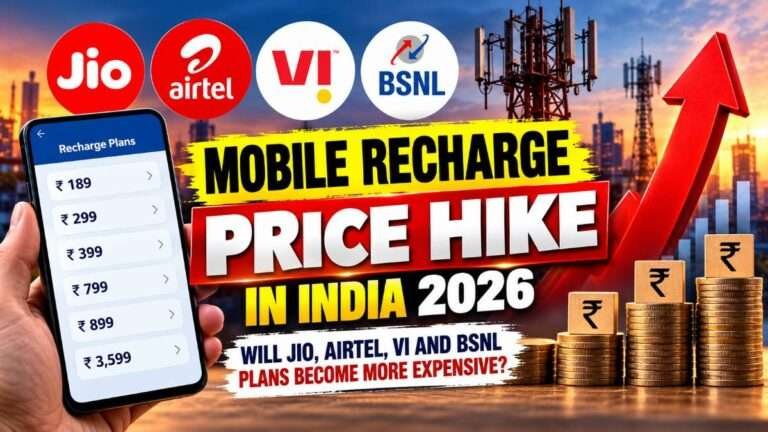
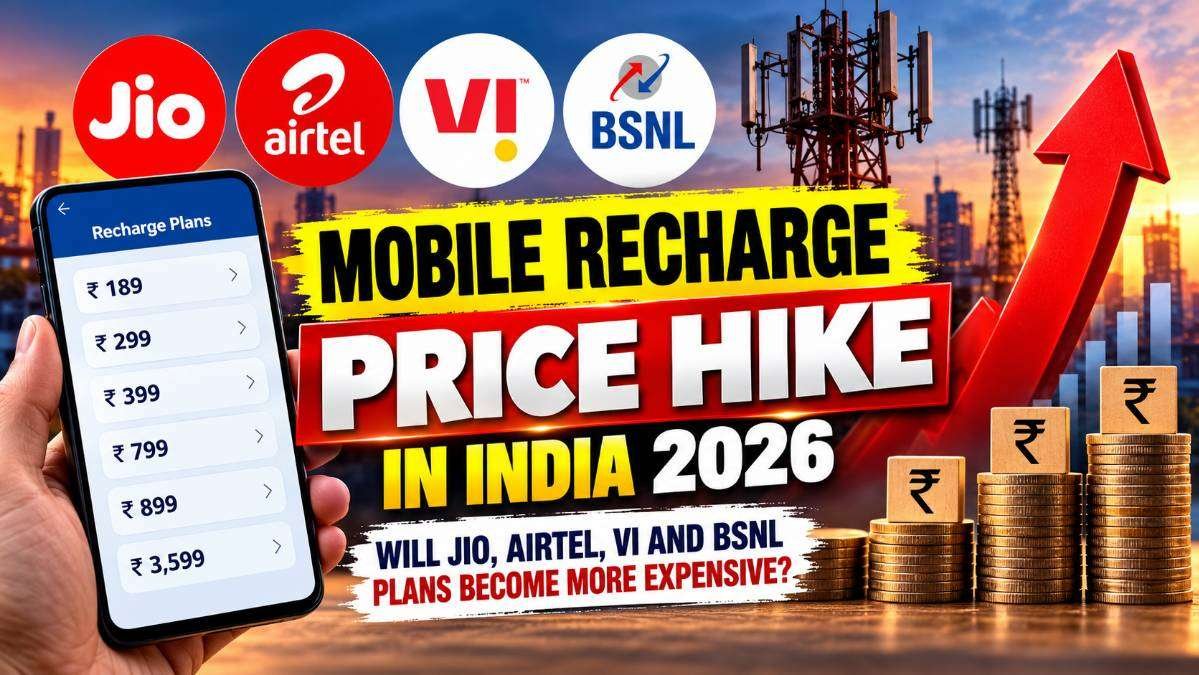
A price increase of 15 percent would make several commonly discussed recharge amounts more expensive. The following table illustrates the possible impact if the increase were applied to the prices shown in the circulating graphic.
Important: These figures are hypothetical calculations, not official revised recharge prices. Actual tariffs may differ between operators and plans.
| Existing Price | Hypothetical Price After a 15% Increase | Additional Cost |
|---|---|---|
| ₹189 | ₹218 | ₹29 |
| ₹199 | ₹229 | ₹30 |
| ₹299 | ₹344 | ₹45 |
| ₹349 | ₹402 | ₹53 |
| ₹379 | ₹436 | ₹57 |
| ₹399 | ₹459 | ₹60 |
| ₹449 | ₹517 | ₹68 |
| ₹799 | ₹919 | ₹120 |
| ₹899 | ₹1,034 | ₹135 |
| ₹3,599 | ₹4,139 | ₹540 |
The table shows why even a relatively small percentage increase can affect household budgets. For example, a customer who recharges a ₹299 plan every 28 days could pay approximately ₹45 more per recharge under this hypothetical scenario. Across 13 recharges in a year, that would amount to around ₹585 in additional spending.
Actual yearly costs will depend on the selected plan, its validity and the operator’s final pricing decisions.
What Does TRAI Say About Mobile Tariffs?
The Telecom Regulatory Authority of India (TRAI) is responsible for regulating India’s telecommunications sector. Under the applicable tariff framework, telecom operators have flexibility to set their prices, subject to regulatory requirements.
TRAI’s tariff guidance also addresses the treatment of existing plans and customer notice requirements. The precise rules applicable to a particular plan should be checked against the relevant regulatory provisions and the operator’s terms.
Customers can visit the official TRAI telecom tariff page for regulatory information. For the actual price of a recharge plan, the relevant operator’s official website or application is the more direct source.
READ THIS: Jio Canva Offer 2026: Get Canva Pro Free for 12 Months
Should Customers Recharge Before December 2026?
Customers do not need to rush into a recharge solely because of an unconfirmed price hike. First, check the current validity of your plan and decide whether an early recharge is genuinely useful.
Before purchasing a long-validity plan, review its terms carefully. Some plans may have restrictions on when a future recharge becomes active, while other plans may have different conditions. An early recharge is not automatically beneficial in every situation.
It is also worth comparing the total value of a plan rather than focusing only on its price. Validity, daily data limits, calling benefits, SMS allowances and additional services can all affect whether a recharge offers good value for money.
Most importantly, check for an official announcement before making a decision based on social media posts or viral graphics.
How to Check Official Recharge Price Updates
- Visit the official Jio, Airtel, Vi or BSNL website.
- Check the operator’s official application for the latest prepaid plans.
- Look for dated press releases or tariff announcements from the company.
- Consult TRAI for the applicable regulatory information.
- Verify the effective date, revised price and plan benefits before sharing a claim.
These steps can help customers distinguish a genuine tariff announcement from an analyst prediction or an unverified social media post.
Conclusion
The possibility of a mobile recharge price hike in India has attracted attention because analysts have forecast an increase of around 12 to 15 percent, with December 2026 mentioned as a possible period. Rising network investment, the expansion of 5G services and the need to improve revenue are among the factors that may influence future pricing decisions.
However, the forecasts should not be confused with official tariff announcements. The prices circulating online are illustrative estimates and do not prove that Jio, Airtel, Vi and BSNL will increase their recharge prices by the same amount. Each operator may make different decisions, and BSNL should not automatically be assumed to follow private telecom companies.
For now, customers should remain informed without making unnecessary purchases. Checking official operator websites and reliable regulatory information is the best way to confirm any future change. Until a company publishes its revised tariffs and effective date, the proposed 15 percent increase should be treated as a prediction rather than a confirmed fact.
About The Author