India Temporarily Restricts Telegram Ahead of NEET UG 2026 Re-Examination What Students Need to Know
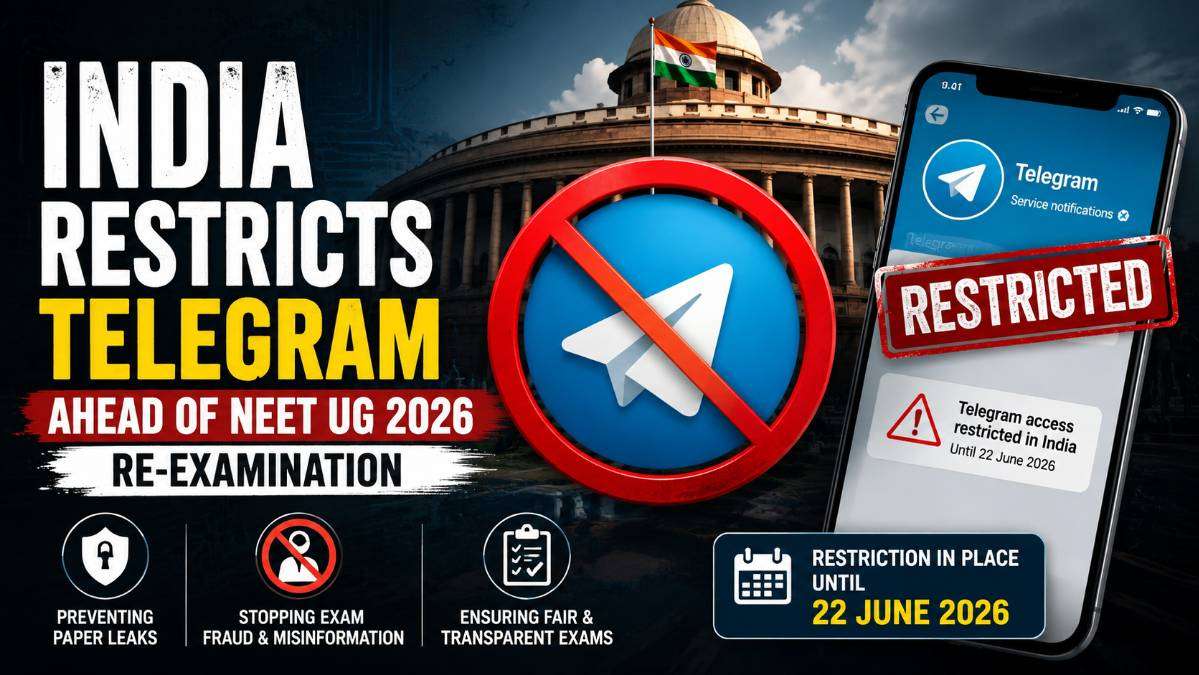
The Government of India has temporarily restricted access to the Telegram messaging platform ahead of the National Eligibility cum Entrance Test (NEET-UG) 2026 re-examination.
The decision was taken amid concerns that the platform was being used by organized groups to circulate fake question papers, spread misinformation, and facilitate examination-related fraud.
According to reports citing official statements from government authorities and the National Testing Agency (NTA), the restriction will remain in force until June 22, 2026.
Background of the NEET-UG Re-Examination
NEET-UG is India’s largest medical entrance examination and serves as the gateway for admission to undergraduate medical and dental courses across the country.
The 2026 examination cycle faced controversy after allegations of paper leaks and examination irregularities emerged. Following investigations and administrative review, authorities decided to conduct a re-examination on June 21, 2026, to ensure fairness and maintain public confidence in the examination process.
The National Testing Agency, which conducts NEET-UG, has repeatedly emphasized that maintaining the integrity of the examination is a national priority.
Ahead of the re-examination, the agency introduced additional security measures, strengthened monitoring mechanisms, and appealed to candidates to rely only on official information channels.
READ THIS: WhatsApp Status Archive Feature 2026 Explained Android Users Can Now Save Expired Status Updates
Reason Behind the Telegram Restriction
Government authorities stated that Telegram was allegedly being used by certain groups involved in examination fraud and misinformation campaigns.
Investigations reportedly revealed that several channels and groups were sharing claims of leaked question papers, selling fake examination materials, and attempting to deceive candidates preparing for the re-test.
Officials concluded that earlier efforts to remove specific content were not sufficient to curb the spread of fraudulent activities. As a result, a temporary restriction on access to the platform was imposed as an emergency measure aimed at protecting the integrity of the examination process.
The move was reportedly implemented under the legal framework available through India’s Information Technology regulations. Authorities indicated that the restriction was intended to be temporary and linked specifically to concerns surrounding the NEET-UG re-examination period.
NTA’s Position
The National Testing Agency has welcomed measures designed to prevent misinformation and malpractice. In recent weeks, the agency launched reporting mechanisms that allow students and members of the public to submit information regarding fake paper leak claims, impersonation attempts, and examination-related fraud.
The NTA has consistently maintained that candidates should trust only official notifications published through authorized government platforms and the official NEET portal. The agency has warned students against purchasing study materials or question papers from unauthorized online sources and has urged candidates to report suspicious activity immediately.
Government Efforts Against Fake Paper Leak Claims
The restriction on Telegram is part of a broader campaign to combat examination-related misinformation. Government agencies, cybercrime units, and education authorities have been monitoring social media platforms for content that could mislead students or compromise examination security.
Several fake notices and alleged paper leak documents circulated online in the weeks leading up to the re-examination. Fact-checking agencies associated with the Government of India identified multiple viral claims as false and advised students not to share or rely on such information.
Education Ministry officials also conducted high-level review meetings to assess preparedness for the re-examination and evaluate emerging threats. Particular attention was given to online platforms where fraudulent content could spread rapidly among students.
Temporary Measure, Not a Permanent Ban
An important aspect of the government’s action is that it has been described as a temporary restriction rather than a permanent nationwide ban. Reports indicate that the restriction is scheduled to remain in effect only until June 22, 2026, shortly after the re-examination is conducted.
READ THIS: India vs Pakistan Women’s T20 World Cup 2026 Match Highlights, Records & Viral Moments
This distinction is significant because some social media posts and graphics have characterized the action as a complete or permanent ban on Telegram. Available information from government-linked sources and major news organizations indicates that the measure is temporary and specifically connected to examination security concerns.
Public Debate and Reactions
The decision has generated discussion among technology experts, civil society organizations, students, and digital rights advocates. Supporters argue that extraordinary measures may be justified when protecting the integrity of a national examination that affects millions of students.
Critics, however, have expressed concerns about the broader implications of restricting access to a communication platform used by many individuals and organizations for legitimate purposes. They argue that platform-wide restrictions can affect users who have no connection to examination-related activities.
Despite these concerns, government authorities have defended the action as a limited and temporary response to an exceptional situation involving large-scale educational assessments.
Conclusion
Based on currently available official and authoritative information, India has temporarily restricted access to Telegram ahead of the NEET-UG 2026 re-examination.
The decision was taken due to concerns that the platform was being used to spread fake paper leak claims, facilitate examination fraud, and mislead candidates.
The National Testing Agency has supported efforts aimed at protecting the integrity of the examination process and has encouraged students to rely exclusively on official communications.
While many social media posts describe the development as a permanent ban, available evidence indicates that the action is a temporary restriction linked specifically to examination security measures.
The restriction is expected to remain in place until June 22, 2026, after which normal access may be restored subject to government review. The incident highlights the increasing challenge faced by authorities in combating digital misinformation and safeguarding the credibility of large-scale national examinations.
About The Author